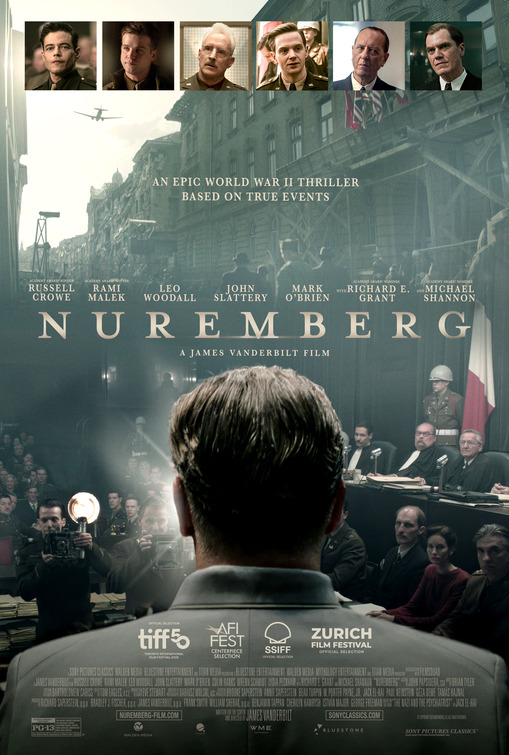
Nuremberg is a 2025 historical drama written and directed by James Vanderbilt, adapted from Jack El-Hai's nonfiction book The Nazi and the Psychiatrist. Released by Sony Pictures Classics, it dramatizes the months surrounding the first Nuremberg trial, when the surviving leaders of the Third Reich were brought before an international tribunal, and centers on the unsettling relationship that formed between a captive Nazi and the American doctor assigned to gauge his sanity.
Rami Malek plays Douglas Kelley, the U.S. Army psychiatrist tasked with evaluating the imprisoned Nazi high command, while Russell Crowe delivers a commanding turn as Hermann Göring, the charismatic and manipulative Reichsmarschall who becomes both his subject and his adversary. Michael Shannon plays Supreme Court Justice Robert H. Jackson, the chief American prosecutor determined to build a lasting framework of international law, with Richard E. Grant, Leo Woodall, John Slattery, and Colin Hanks filling out the ensemble.
Premiering at the Toronto International Film Festival to one of its longest standing ovations, the film earned praise for Crowe's magnetic, chilling performance and for its sober reckoning with how ordinary-seeming men rationalized atrocity. A courtroom drama and a psychological duel in equal measure, it grossed more than $70 million worldwide. Nuremberg is streaming on Netflix.
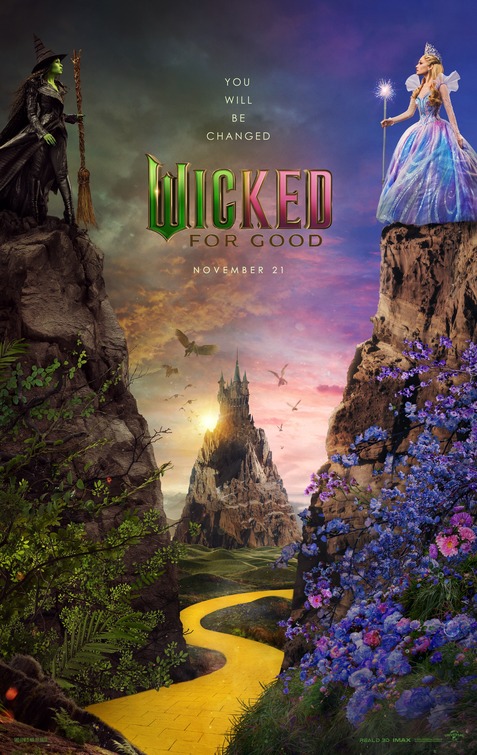
Wicked: For Good is the spectacular conclusion to the beloved two-part adaptation of the Broadway phenomenon that redefined musical theatre. Cynthia Erivo returns as Elphaba, the misunderstood green-skinned sorceress, and Ariana Grande reprises her role as Glinda, the popular blonde witch, as their extraordinary friendship is tested to its limits against the rising tide of an oppressive regime. Director Jon M. Chu delivers the emotional payoff audiences have been waiting for, bringing the iconic final act of the stage musical to life with breathtaking scale and heartfelt performances. With career-defining vocal performances and stunning production design, this is the grand finale of the most anticipated musical film event in a generation.
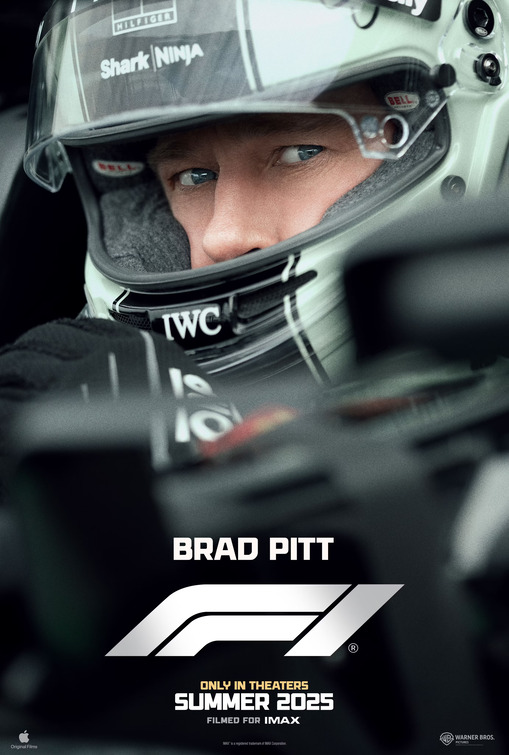
F1 is the ultimate racing experience — a cinematic adrenaline rush directed by Joseph Kosinski and produced by Jerry Bruckheimer. Brad Pitt stars as Sonny Hayes, a veteran Formula 1 driver coaxed out of retirement to mentor a rookie teammate and help a struggling team reclaim its competitive edge. Shot on location at real Grand Prix circuits during actual race weekends, the film blurs the line between sport and cinema in ways never attempted before. Damson Idris co-stars as Joshua Pearce, the talented young driver whose future depends as much on his partnership with Hayes as on his own skill behind the wheel. The result is the most authentically immersive motorsport film ever made.
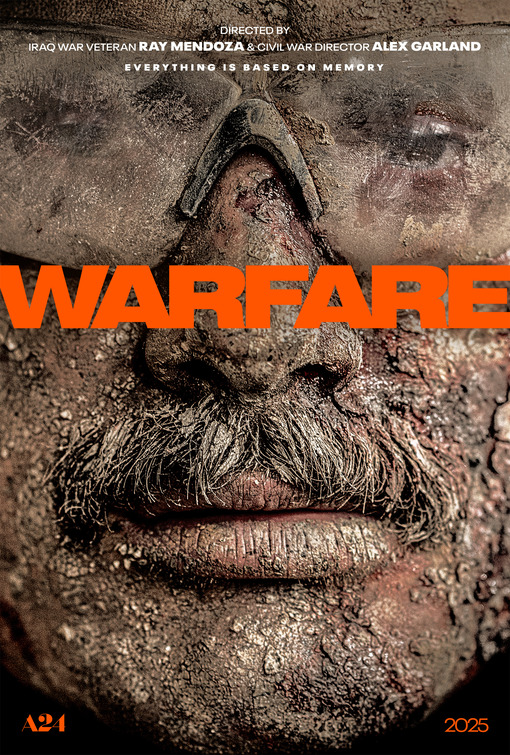
Warfare is a visceral, unflinching war film co-directed by Alex Garland and Ray Mendoza, drawn directly from Mendoza’s own harrowing experience as a Navy SEAL during a devastating mission in Ramadi, Iraq in 2006. Unlike conventional war narratives, the film presents events in real time, with no score, no heroic framing, and no conventional story arc — only the chaos, confusion, and cost of a single operation gone wrong.
The film is anchored by an ensemble cast that includes Will Poulter, Cosmo Jarvis, and Joseph Quinn, all delivering understated, immersive performances that place the audience directly inside the fog of war. Garland and Mendoza refused to editorialize or impose meaning onto the events, letting the raw footage of memory speak for itself.
Critics praised Warfare as one of the most authentic war films ever made, drawing comparisons to Black Hawk Down while noting its even more radical commitment to experiential realism. It stands as a tribute to the men involved and a stark reminder of the true cost of combat far from public view.
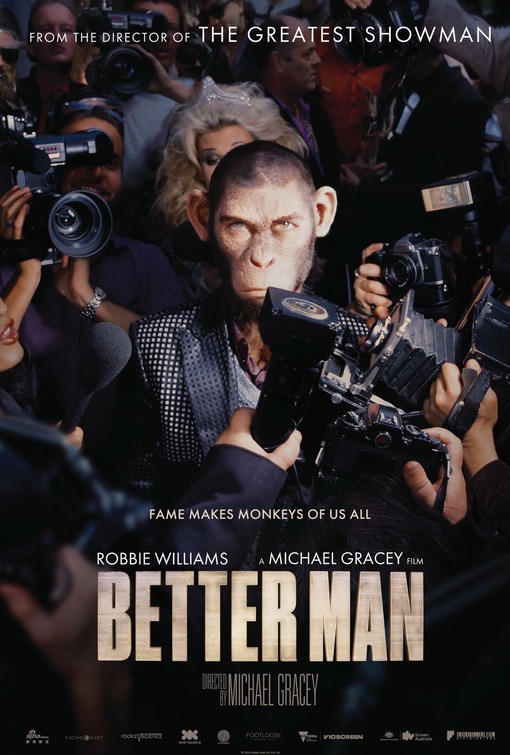
Better Man is a bold and unconventional biographical musical directed by Michael Gracey, chronicling the extraordinary rise of British pop superstar Robbie Williams. In a daring creative choice, Williams is portrayed not by a human actor but as a photorealistic CGI chimpanzee — a representation Williams himself endorsed as a reflection of how he has always felt different and out of place in the spotlight.
The film traces Williams’ journey from his early days as a member of Take That through his explosive solo career, his struggles with addiction, mental health crises, and his eventual personal redemption. Featuring both original music and beloved hits, the film is as much a concert experience as it is a biopic, with spectacular musical set pieces that bring iconic moments from Williams’ career to life.
Released to strong critical praise, Better Man is distinguished by its emotional honesty and its willingness to portray fame’s darkest corners without flinching. Williams’ vulnerability and self-deprecating wit shine throughout, making the film a deeply personal portrait of one of the UK’s most successful solo artists.
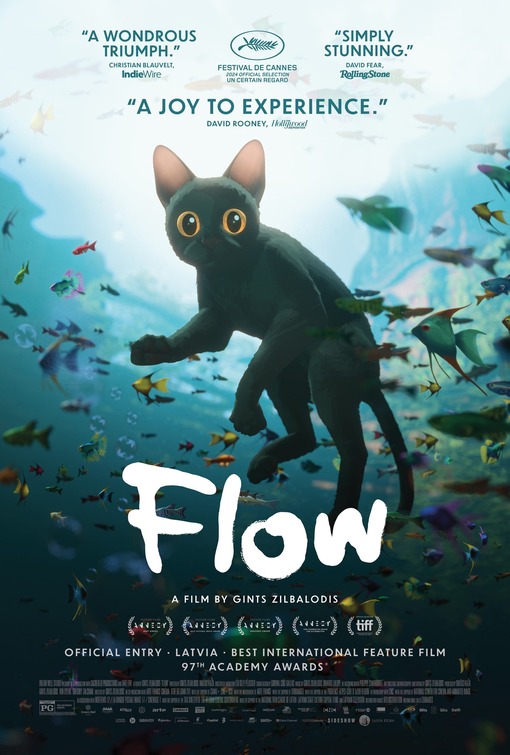
Flow is a visually stunning animated film from Latvia, directed by Gints Zilbalodis, that follows a solitary cat navigating a world flooded by rising waters alongside an unlikely group of animal companions. Without a single spoken word, the film communicates a profound story of survival, trust, and connection through breathtaking imagery and a haunting musical score.
Released in 2024 to widespread critical acclaim, Flow became the first Latvian film ever to win the Academy Award for Best Animated Feature, a historic achievement for European animation. Its wordless narrative transcends language barriers, making it universally accessible to audiences of all ages while carrying deep emotional weight.
The film draws on themes of resilience and coexistence as its animal cast — a cat, a capybara, a secretary bird, a lemur, and a Labrador — must set aside their instincts to survive the endless flood. Rendered in a beautifully stylized 3D aesthetic, Flow is both an environmental allegory and a meditation on the bonds that form between unlikely friends.
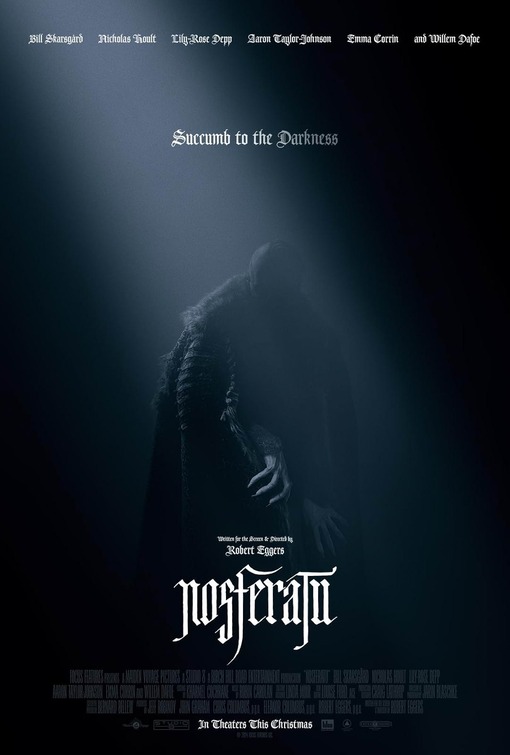
Nosferatu is Robert Eggers' long-anticipated gothic reimagining of F.W. Murnau's legendary 1922 silent film, transplanting the tale of obsessive vampiric possession into a world of oppressive shadow and period-authentic horror. Set in 1838, the film follows Ellen Hutter, a young woman haunted since childhood by a malevolent presence from the darkness. When her husband Thomas travels to Transylvania to complete a business transaction with the mysterious Count Orlok, a chain of events is set in motion that will bring ancient evil to the cobblestone streets of Wisburg.
Eggers, working in his signature mode of meticulous period recreation, transforms Nosferatu into a film of overwhelming atmosphere. Bill Skarsgård's Count Orlok is a creature of genuine horror — animalistic, pestilential, and radiating a kind of ancient wrongness that registers on a primal level. Lily-Rose Depp carries the film's emotional weight as Ellen, a woman whose psychology the script takes seriously: she is not merely a victim but a figure of tragic agency, drawn toward the horror she most fears.
Shot by Jarin Blaschke in deep shadows and cold grey light, Nosferatu is one of the most visually arresting American films of the 2020s. Willem Dafoe, Nicholas Hoult, and Aaron Taylor-Johnson round out an exceptional ensemble. The film announces itself as the definitive version of this vampire legend — a horror film of genuine artistic ambition that honours its source material while finding entirely new meanings in its most ancient imagery.
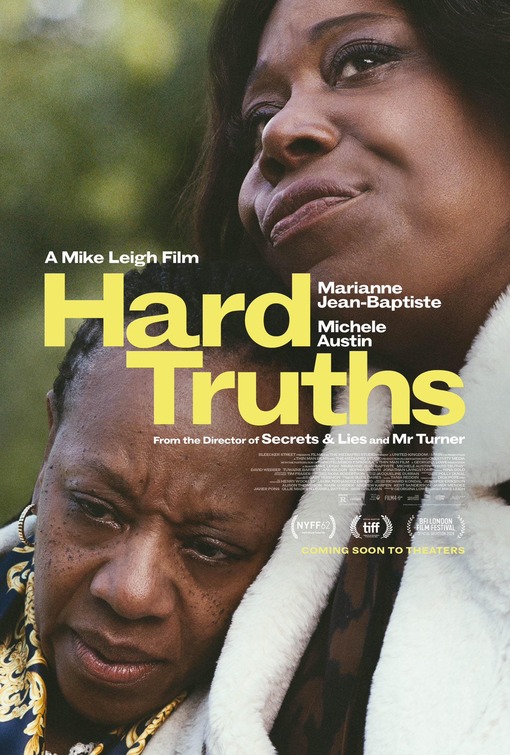
Mike Leigh's Hard Truths is a ferocious and emotionally devastating portrait of Pansy, a middle-aged Black British woman consumed by rage, anxiety, and a deep inability to connect with the people she loves. Marianne Jean-Baptiste delivers what many critics called the performance of the decade, embodying a woman whose fury pushes away her family even as it masks unbearable pain and isolation.
Leigh developed the film through his trademark method of extended improvisation and character research, spending months with Jean-Baptiste building Pansy from the inside out before a word of script was written. The result is a portrait of mental suffering simultaneously unflinching and deeply compassionate, refusing easy redemptive arcs while generating profound empathy for its difficult protagonist.
Hard Truths premiered to standing ovations at Toronto and swept major British critics awards, with Jean-Baptiste receiving BAFTA and Academy Award nominations for Best Actress. The film stands as one of the most powerful works in Leigh's extraordinary career and a landmark in British cinema. Available on MUBI and digital platforms.
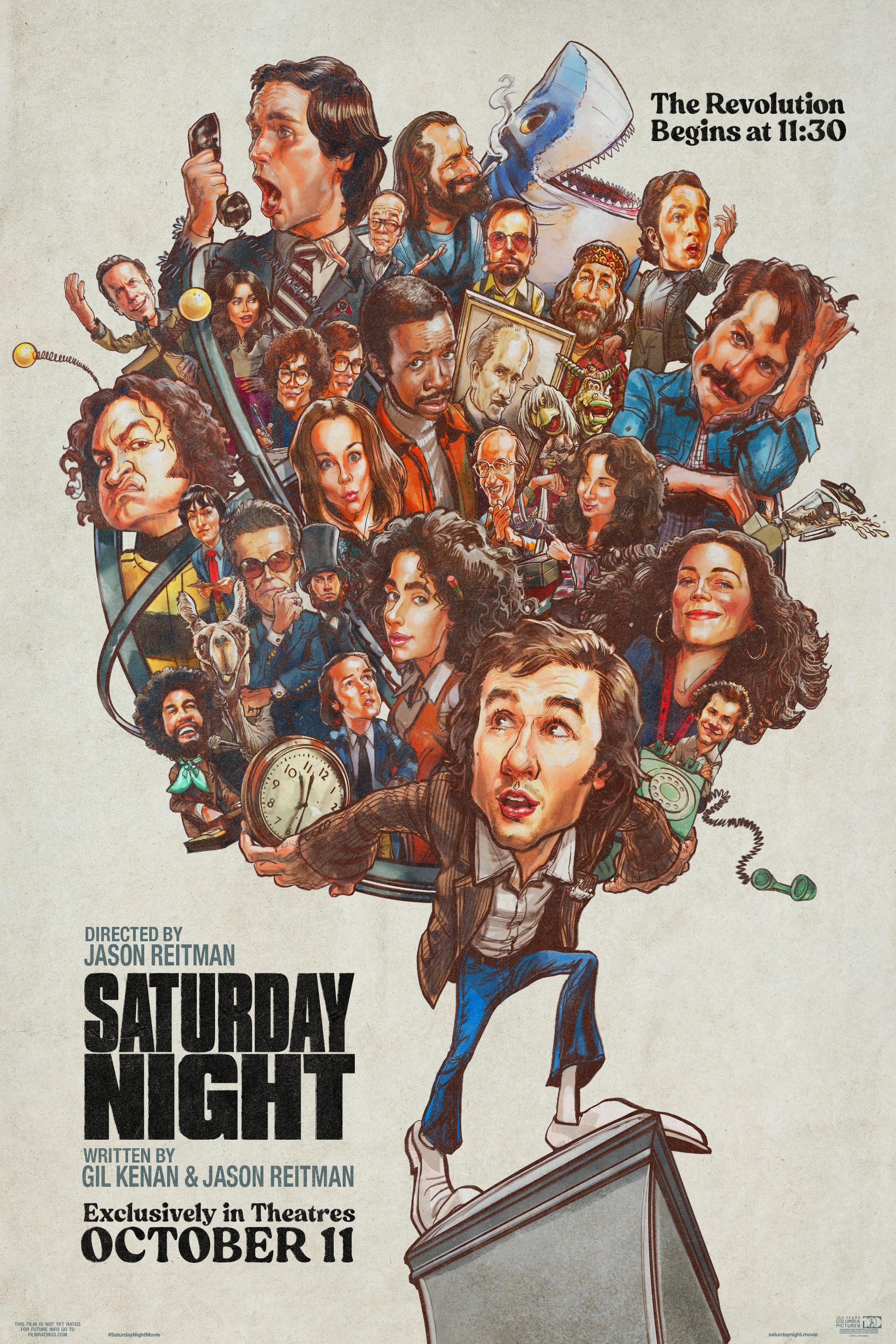
On October 11, 1975, a group of unknown comedians and writers scrambled to put together the very first episode of Saturday Night Live, transforming American television comedy forever. Director Jason Reitman's frenetic docudrama reconstructs those chaotic final 90 minutes before the show went live, capturing the panic, creative genius, and unlikely camaraderie that would birth a cultural institution.
The ensemble cast led by Gabriel LaBelle as a young Lorne Michaels brings to life the original Not Ready for Prime Time Players including John Belushi, Dan Aykroyd, Chevy Chase, and Gilda Radner. Reitman shoots with the energy of a thriller, cutting between backstage crises, network interference, and the raw creative spark that held it all together.
Fueled by period-perfect production design and career-best performances, Saturday Night is a love letter to live television and the improbable moments that define pop culture history. The film earned widespread acclaim for its kinetic energy and reverent yet honest portrait of comedy's most consequential night.
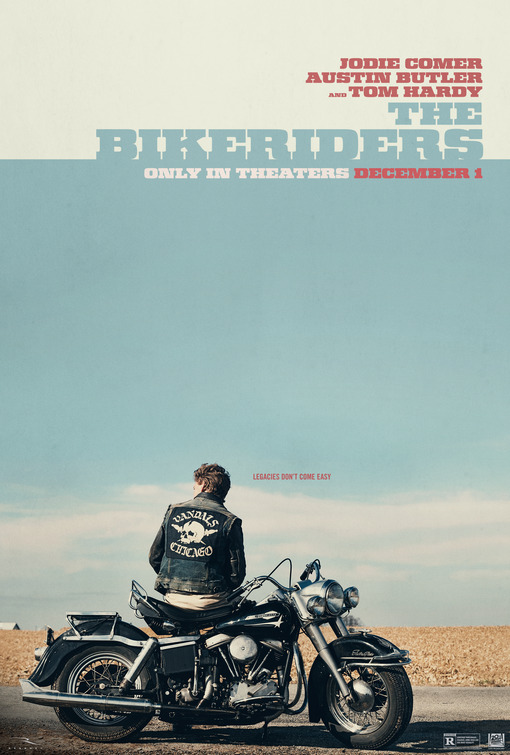
The Bikeriders (2023) is a lyrical and muscular portrait of the Vandals motorcycle club, an Illinois gang that transformed over a single decade from a band of restless working-class dreamers into something far more dangerous. Written and directed by Jeff Nichols and inspired by a legendary series of photographs taken by Danny Lyon in the 1960s, the film unfolds through the testimony of Kathy — a tough, perceptive woman played with extraordinary conviction by Jodie Comer — who recounts the club's rise and her complicated marriage to its most magnetic member, Benny, embodied by Austin Butler with a wordless, burning intensity.
Tom Hardy stars as Johnny, the club's founder and de facto patriarch — a man who built a community out of loneliness and found himself unable to control what it became. The film is structured as an oral history, its episodic scenes separated by years and marked by the subtle shift in the club's moral atmosphere. What began as a brotherhood of misfits seeking belonging gradually acquired a more violent, criminal character, and Nichols charts that transformation with precision, never romanticising the mythology while never quite letting go of the genuine beauty within it.
Shot by Nichols' longtime collaborator Adam Stone, The Bikeriders is visually stunning — all chrome and leather and wide midwestern skies — and features an ensemble that also includes Michael Shannon, Mike Faist, and Boyd Holbrook. It is a film about freedom, community, and the moment when a dream outgrows the person who dreamed it, earning it a place among the finest American period dramas of recent years.
Speak No Evil (2024) is a taut psychological horror-thriller that takes the quiet dread of the 2022 Danish original and electrifies it into something even more viscerally terrifying. Directed by James Watkins and starring James McAvoy at his most charismatic and menacing, the film follows an American couple — played by Mackenzie Davis and Scoot McNairy — who accept a weekend invitation to the English countryside home of a charming British family. What begins as an idyllic retreat slowly curdles into a nightmare they cannot escape, as social politeness becomes a weapon and every warning sign is dismissed in the name of not causing offence.
The film is a masterclass in how manners and the desire to please can be weaponised against us. Watkins builds the tension methodically through sun-drenched countryside picnics and civilised dinner conversations that feel inexplicably wrong — the horror is not in what the antagonists do, but in how long the victims allow it, and why. McAvoy delivers a performance that oscillates between disarming warmth and ice-cold menace, making him one of the most compelling screen villains of recent memory.
Released to significant critical acclaim, Speak No Evil became a word-of-mouth phenomenon in horror circles, lauded for its refusal to hand audiences easy comfort or a conventional resolution. It is a film about the violence of social compliance — and the devastating consequences of choosing not to speak up when every instinct screams that something is deeply, irreversibly wrong.