Thorny can usually leave his most annoying coworker behind at the end of a shift. Then Farva gets engaged to his sister, Sarita. Now every family celebration comes with the possibility of seeing Farva across the table for the rest of his life. Thorny hopes his parents will take one look at their future son-in-law and share his doubts. Just in case they need help getting there, he has a few ideas of his own.
Meanwhile, the Vermont troopers have an actual case to solve. A new drug ring needs their attention, and their talent for playing jokes on one another keeps getting in the way. For once, a long day investigating crime might be the most peaceful option open to Thorny.

The Rite approaches possession horror through Michael Kovak’s resistance to easy supernatural explanations. His training in Rome places psychiatric reasoning, institutional religion and personal doubt in direct conflict before Father Lucas forces him to confront evidence he cannot comfortably categorize.
Anthony Hopkins supplies the film’s volatile center, but the more distinctive angle is Michael’s gradual movement from observer to participant. Mikael Håfström favors solemn locations and procedural detail over constant shocks, making this a better fit for viewers interested in faith-versus-skepticism horror than relentless gore.

This Gulliver’s Travels relocates Jonathan Swift’s traveler to a modern newspaper mailroom and turns Lilliput into a stage for Gulliver’s exaggerated stories about himself. The central joke is not only his physical size: his invented heroic identity grows until the consequences force him to become genuinely useful.
The film is aimed at families wanting a broad fantasy comedy led by Jack Black, with Jason Segel and Emily Blunt giving the Lilliput storyline its romantic and political stakes. It borrows the scale contrast and names from Swift while functioning as a contemporary story about insecurity, honesty and earned confidence.

Don’t Be Afraid of the Dark treats its creatures less like conventional ghosts and more like malicious figures from a forgotten fairy tale. The restored Blackwood Manor, its sealed basement and Sally’s isolation create a child-level view of danger in which the adults repeatedly mistake evidence for imagination.
The film is most useful to viewers seeking atmospheric creature horror rather than a fast succession of jump scares. Guillermo del Toro’s influence is clearest in the story’s mix of domestic anxiety, Gothic architecture and folklore, while director Troy Nixey keeps the threat physically small but persistently invasive.

The Green Hornet works best as a mismatched-partners action comedy rather than a conventional superhero origin story. Britt Reid has the money and the public persona, but Kato supplies the engineering, martial-arts skill and practical judgment that keep their improvised crime-fighting operation alive.
Michel Gondry gives the film a deliberately heightened visual style built around split screens, mechanical gadgets and the weaponized Black Beauty. Viewers looking for a self-aware buddy comedy with elaborate action set pieces will find a better match here than those expecting a serious comic-book drama.

Sofia Coppola strips celebrity down to repetition: hotel rooms, publicity appearances, late nights and aimless drives circle actor Johnny Marco without giving him a clear destination. The arrival of his 11-year-old daughter Cleo interrupts that routine and turns the film into a quiet test of whether attention can become responsibility.
The story stays deliberately small, letting Stephen Dorff and Elle Fanning build the father-daughter relationship through meals, travel and unhurried stretches at the Chateau Marmont. Its observational pace is the point: instead of a dramatic reinvention, Coppola shows change beginning through ordinary time shared with another person.

The Company Men follows three GTX executives at different stages of their careers as a downsizing wave turns professional status into a family crisis. Bobby Walker is forced from executive comfort into construction work with his brother-in-law, while Gene McClary and Phil Woodward confront different costs of loyalty to the corporation they helped sustain.
The film’s strength is its split perspective: layoffs are seen through the newly unemployed, a senior executive who helped build the company and the families absorbing the consequences. That makes it a compact drama about identity, age, class and recovery rather than a simple indictment of one employer.

Julie Taymor’s The Tempest makes a defining change to Shakespeare’s late romance: Prospero becomes Prospera, played by Helen Mirren. Exiled with her daughter Miranda on an island she controls through magic, Prospera draws her former enemies into a shipwreck, forcing revenge, reconciliation and Miranda’s future into the same confrontation.
Taymor treats the play as a visual fantasy rather than a filmed stage production. Sandy Powell’s costumes, Elliot Goldenthal’s score and a cast that includes Felicity Jones, Djimon Hounsou and Ben Whishaw give the island’s factions distinct identities, making this version best suited to viewers seeking a bold reinterpretation rather than a conservative classroom rendering.
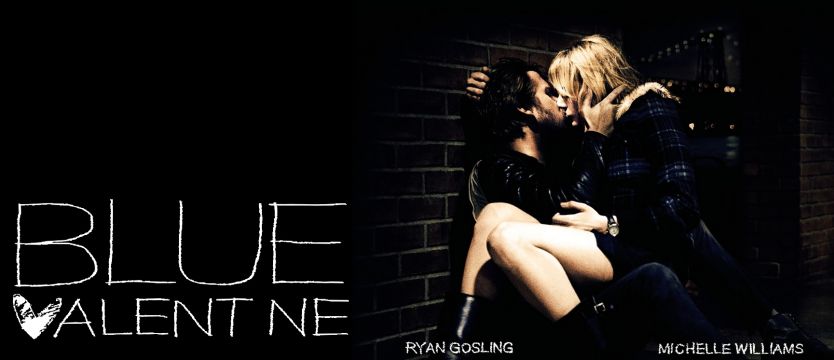
Blue Valentine avoids a straight chronology, moving between the hopeful beginning of Dean and Cindy’s relationship and a present in which their marriage is failing. That structure makes small gestures echo across time: moments that once felt spontaneous and intimate return with different weight after years of disappointment.
Ryan Gosling and Michelle Williams carry the film through sharply contrasting periods without turning either partner into a simple villain. Derek Cianfrance’s close, naturalistic approach makes the central question less about one decisive breakup than about how affection, expectations and resentment accumulate until the couple no longer reads the same history in the same way.

I’m Still Here turns a celebrity reinvention into both its subject and its method. The camera follows Joaquin Phoenix as his public identity shifts from acclaimed actor to would-be rapper, while interviews, performances and private frustration blur the boundary between documented behavior and an extended act.
The useful way to approach the film is less as a conventional career documentary than as an experiment about how fame is manufactured and consumed. Casey Affleck keeps the audience inside the uncertainty, so Phoenix’s awkward appearances and failed attempts at control become evidence of how quickly a media narrative can outrun the person supposedly creating it.

Broken Trail pairs the practical tension of a long horse drive with a rescue story that keeps testing what its two cowboys are willing to risk for strangers. Robert Duvall’s seasoned Print Ritter and Thomas Haden Church’s Tom Harte begin with a job to finish, then become protectors to five Chinese women whose safety changes the purpose of the journey.
The production rewards viewers who want a deliberate, character-led Western rather than a compressed action story. Its feature-store version runs just over three hours because it preserves the scale of AMC’s original two-part event, giving the relationships, landscape and repeated threats time to build instead of treating the rescue as a single set piece.