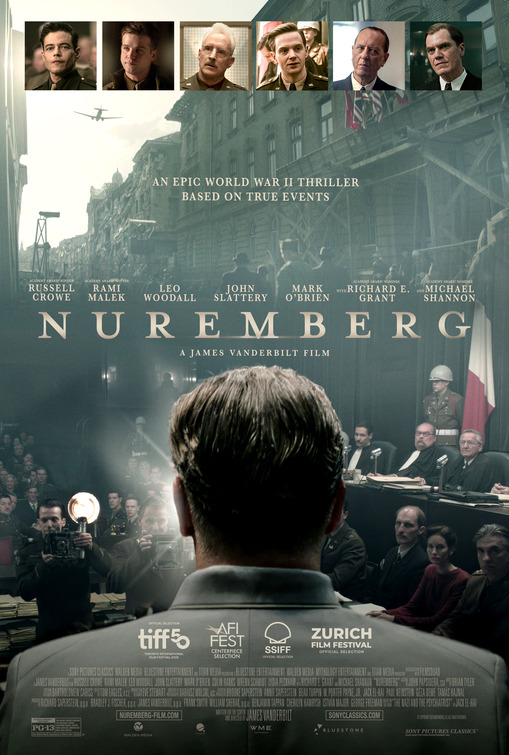
Nuremberg is a 2025 historical drama written and directed by James Vanderbilt, adapted from Jack El-Hai's nonfiction book The Nazi and the Psychiatrist. Released by Sony Pictures Classics, it dramatizes the months surrounding the first Nuremberg trial, when the surviving leaders of the Third Reich were brought before an international tribunal, and centers on the unsettling relationship that formed between a captive Nazi and the American doctor assigned to gauge his sanity.
Rami Malek plays Douglas Kelley, the U.S. Army psychiatrist tasked with evaluating the imprisoned Nazi high command, while Russell Crowe delivers a commanding turn as Hermann Göring, the charismatic and manipulative Reichsmarschall who becomes both his subject and his adversary. Michael Shannon plays Supreme Court Justice Robert H. Jackson, the chief American prosecutor determined to build a lasting framework of international law, with Richard E. Grant, Leo Woodall, John Slattery, and Colin Hanks filling out the ensemble.
Premiering at the Toronto International Film Festival to one of its longest standing ovations, the film earned praise for Crowe's magnetic, chilling performance and for its sober reckoning with how ordinary-seeming men rationalized atrocity. A courtroom drama and a psychological duel in equal measure, it grossed more than $70 million worldwide. Nuremberg is streaming on Netflix.

"Halloween Kills" is a slasher film released in 2021 and directed by David Gordon Green. Serving as a direct sequel to the 2018 film "Halloween," it is part of the popular "Halloween" franchise. The story picks up immediately after the events of the previous film, continuing the terrifying saga of Laurie Strode and her relentless pursuit of the masked killer, Michael Myers. Set in the town of Haddonfield, the movie depicts the local residents coming together to confront and stop Michael's murderous rampage.
As the plot unfolds, Laurie Strode, played by Jamie Lee Curtis, joins forces with other survivors, including her daughter and granddaughter, to take down the iconic killer once and for all. "Halloween Kills" explores the themes of resilience, fear, and the lasting impact of trauma on individuals and communities. The film portrays the strength and determination of its characters as they fight to protect themselves and their town from the unstoppable evil that is Michael Myers.
Upon its release, "Halloween Kills" garnered mixed reviews from critics. While praised for its intense and suspenseful sequences, the film also received criticism for its excessive violence and repetitive plot elements. Nevertheless, it remains a popular choice for horror enthusiasts, as it delivers on the expected thrills and chills associated with the "Halloween" franchise. With its iconic slasher villain and high-stakes tension, "Halloween Kills" offers an entertaining and frightening viewing experience for fans of the genre.

"It Chapter Two" is a 2019 supernatural horror film directed by Andy Muschietti. Serving as a sequel to the 2017 film "It," it is based on the second half of Stephen King's novel of the same name. The movie continues the story of the Losers' Club, a group of childhood friends who, as adults, reunite to confront the terrifying entity known as Pennywise the Dancing Clown.
The plot takes place 27 years after the events of the first film, when Pennywise resurfaces in the town of Derry, Maine. The Losers' Club, now grown up and scattered across the country, return to their hometown to honor their childhood pact to defeat Pennywise once and for all. As they confront their own personal fears and traumas, the friends must work together to face the malevolent clown and save their town from his reign of terror.
"It Chapter Two" features an ensemble cast of talented actors, including Jessica Chastain, James McAvoy, and Bill Hader. The film delves into themes of friendship, resilience, and the power of overcoming past traumas. While the movie received mixed reviews, it is praised for its visual effects, chilling atmosphere, and the performances of the adult Losers' Club. "It Chapter Two" offers a satisfying conclusion to the story, blending horror, drama, and nostalgia for fans of the Stephen King novel and the original 1990 miniseries.

"Phil Spector" is a 2013 biographical television film directed by David Mamet. The movie depicts the infamous murder trial of renowned music producer Phil Spector. Set in 2007, the film follows the legal proceedings and provides a fictionalized account of the events surrounding the trial.
As the plot unfolds, the audience is introduced to Phil Spector, played by Al Pacino, a music industry legend known for his Wall of Sound production technique. The film explores the relationship between Spector and his defense attorney, Linda Kenney Baden, as they prepare to fight against the accusations of murder. It delves into the intricacies of the trial and the tactics used by the defense team to present their case.
"Phil Spector" received mixed reviews from critics, with praise for Pacino's performance but criticism for its fictionalized approach. The film offers a dramatic portrayal of the high-profile trial and raises questions about Spector's guilt or innocence. It explores themes of celebrity, justice, and the nature of truth in the legal system. While it may not provide a definitive account of the real events, "Phil Spector" offers an engaging and thought-provoking exploration of a controversial and sensationalized case.

"Jennifer 8" is a crime thriller film released in 1992 and directed by Bruce Robinson. The story follows a Los Angeles police officer named John Berlin who relocates to a small town in California after experiencing a traumatic event. As he settles into his new job, he becomes involved in a serial killer investigation targeting blind women. While trying to solve the case, Berlin meets a young woman named Helena, who becomes a potential target for the killer.
As the plot unfolds, Berlin becomes increasingly obsessed with catching the serial killer. He discovers a pattern of similar murders and realizes that the killer may have a specific connection to the number 8. With the help of his partner, Freddy, Berlin delves deeper into the mystery, uncovering dark secrets and unexpected twists along the way.
"Jennifer 8" received mixed reviews from critics upon its release. The film features a talented cast, including Andy Garcia as John Berlin and Uma Thurman as Helena. It combines elements of crime, suspense, and psychological thriller to create a tense and atmospheric narrative. With its intricate plot and unpredictable storyline, "Jennifer 8" offers a captivating viewing experience for fans of the genre.

"The Public Enemy" is a 1931 American pre-Code crime film directed by William A. Wellman. The movie follows the rise and fall of Tom Powers, a young man who becomes involved in organized crime during the Prohibition era. Set in Chicago, the film explores the gritty underworld of bootlegging, violence, and criminal activities.
As the plot unfolds, Tom and his childhood friend, Matt Doyle, get involved in bootlegging and rise through the ranks of the criminal underworld. They engage in illegal activities, including smuggling alcohol and participating in violent gang wars. However, their success comes at a price, as Tom's loyalty is tested, and his reckless behavior begins to take its toll on his relationships and his own life.
"The Public Enemy" is known for its realistic portrayal of violence and its unflinching examination of the consequences of a life of crime. James Cagney delivers a standout performance as Tom Powers, embodying the charismatic yet volatile nature of his character. The film explores themes of ambition, loyalty, and the corrupting influence of power. "The Public Enemy" remains a classic of the gangster genre, showcasing the dark side of the American Dream during a tumultuous era in history.

"Down by Law" is a movie written and directed by Jim Jarmusch. It was released in 1986 and is categorized as a comedy-drama film. The story revolves around three characters: Zack, Jack, and Roberto, who end up in jail for various reasons. Despite their initial conflicts, they eventually form a bond and plan an escape together.
Zack, an unemployed DJ, is framed for a crime he didn't commit and lands in jail. Inside, he meets Jack, a pimp who is also wrongfully accused. The two initially clash but gradually develop a friendship. Their dynamics change when Roberto, an Italian immigrant, joins them. Together, they hatch a plan to break out of prison and embark on an unpredictable journey through the Louisiana bayou.
The film explores themes of friendship, redemption, and the human capacity for connection in unexpected circumstances. Jarmusch's distinctive style is evident in the movie's slow pace, deadpan humor, and black-and-white cinematography. "Down by Law" received critical acclaim for its unique storytelling and performances by actors Tom Waits, John Lurie, and Roberto Benigni. It remains a notable entry in Jarmusch's filmography, showcasing his talent for creating offbeat and character-driven narratives.

"The Naked City" is a film noir crime drama released in 1948. Directed by Jules Dassin, the movie is set in New York City and follows the investigation of a murder case. The story unfolds as Detective Lieutenant Dan Muldoon and his partner Detective Jimmy Halloran work together to unravel the mystery behind the killing of a young model named Jean Dexter.
The film takes viewers on a journey through the bustling streets of New York, capturing the city's vibrant atmosphere. As the detectives delve deeper into the case, they encounter a diverse cast of characters, each with their own secrets and motives. Through their relentless pursuit of justice, Muldoon and Halloran navigate the complex web of urban life and its underlying corruption.
"The Naked City" stands out for its innovative approach to storytelling. It incorporates a documentary-style narrative, blending fictionalized crime elements with real-life locations and interviews with actual New York residents. This technique adds a sense of authenticity to the film and immerses the audience in the gritty reality of the city. The movie received critical acclaim for its atmospheric cinematography and compelling performances, solidifying its place as a classic in the film noir genre.

"The Naked Kiss" is a 1964 neo-noir film directed by Samuel Fuller. The story centers around Kelly, a former prostitute seeking a fresh start in a small town. As she tries to leave her troubled past behind, she faces challenges and encounters the darker side of suburban life. The film explores themes of redemption, hypocrisy, and the complexities of human nature.
Kelly arrives in the town and becomes a nurse at a hospital, hoping to build a new life. However, she soon discovers that the seemingly idyllic community hides secrets and corruption. Kelly's efforts to find happiness are thwarted by the town's residents, who are not as virtuous as they appear. As the narrative unfolds, the film delves into issues such as child abuse, prostitution, and societal hypocrisy.
"The Naked Kiss" is known for its provocative and controversial subject matter. It tackles taboo topics of the time with a fearless approach, challenging societal norms and expectations. Fuller's directing style is characterized by his raw and unflinching depiction of human nature, pushing the boundaries of traditional storytelling. The film received mixed reviews upon release but has gained recognition over the years for its bold exploration of social issues and its impact on the neo-noir genre.

"Dolores Claiborne" is a film adaptation of Stephen King's novel of the same name. Released in 1995, it falls under the genre of psychological thriller. The story revolves around Dolores Claiborne, a woman living in a small town in Maine who becomes the prime suspect in her wealthy employer's murder. As the investigation unfolds, dark secrets from Dolores' past are revealed, shedding light on the complex relationship she had with her late husband and her estranged daughter.
The film explores themes of domestic abuse, trauma, and the lengths one will go to protect loved ones. Dolores, portrayed by Kathy Bates in a compelling performance, is a strong-willed woman who has endured years of emotional and physical abuse. As the events of the murder investigation unfold, the audience is taken on a journey through Dolores' troubled past, gradually unraveling the truth behind the complex dynamics within her family.
Directed by Taylor Hackford, "Dolores Claiborne" masterfully combines elements of mystery and psychological suspense. The narrative seamlessly shifts between past and present, weaving together a tale of personal struggle and resilience. The film received critical acclaim for its gripping storytelling, atmospheric cinematography, and the powerful performances of its cast. It serves as a haunting exploration of the human psyche and the consequences of long-held secrets.

"Lizzie" is a film released in 2018 that tells a fictionalized account of the infamous Lizzie Borden case. Directed by Craig William Macneill, the movie is a psychological thriller based on the events surrounding the murder of Lizzie's father and stepmother in 1892. The story explores the strained relationship between Lizzie and her strict, controlling father, as well as the influence of the family's maid, Bridget Sullivan.
In the film, Lizzie Borden, played by Chloë Sevigny, is depicted as a young woman trapped in a repressive and oppressive household. She forms a close bond with Bridget, portrayed by Kristen Stewart, leading to a romantic relationship between the two. As tensions rise within the family, Lizzie and Bridget conspire to escape their dire circumstances, ultimately culminating in a shocking act of violence.
"Lizzie" delves into themes of gender inequality, abuse, and societal constraints. It offers a fresh perspective on the infamous Borden murders, exploring the psychological motivations and suppressed desires of the characters involved. The film received praise for its atmospheric cinematography, powerful performances, and its attempt to provide a nuanced portrayal of Lizzie Borden's life and the factors that may have contributed to the tragic events.