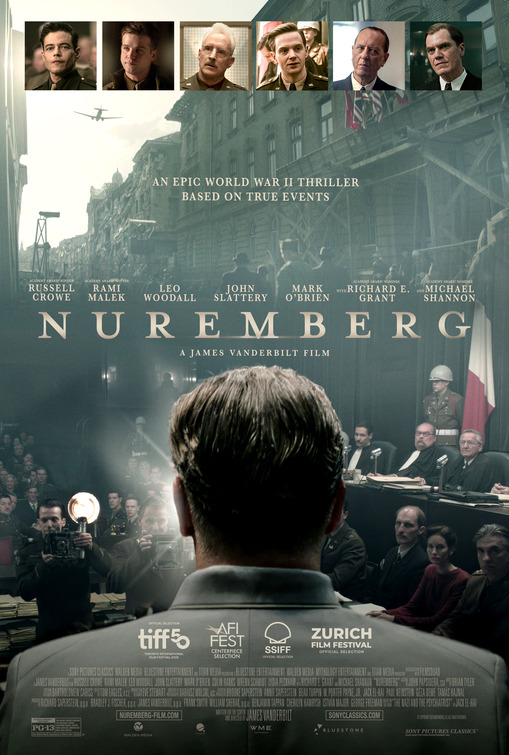
Nuremberg is a 2025 historical drama written and directed by James Vanderbilt, adapted from Jack El-Hai's nonfiction book The Nazi and the Psychiatrist. Released by Sony Pictures Classics, it dramatizes the months surrounding the first Nuremberg trial, when the surviving leaders of the Third Reich were brought before an international tribunal, and centers on the unsettling relationship that formed between a captive Nazi and the American doctor assigned to gauge his sanity.
Rami Malek plays Douglas Kelley, the U.S. Army psychiatrist tasked with evaluating the imprisoned Nazi high command, while Russell Crowe delivers a commanding turn as Hermann Göring, the charismatic and manipulative Reichsmarschall who becomes both his subject and his adversary. Michael Shannon plays Supreme Court Justice Robert H. Jackson, the chief American prosecutor determined to build a lasting framework of international law, with Richard E. Grant, Leo Woodall, John Slattery, and Colin Hanks filling out the ensemble.
Premiering at the Toronto International Film Festival to one of its longest standing ovations, the film earned praise for Crowe's magnetic, chilling performance and for its sober reckoning with how ordinary-seeming men rationalized atrocity. A courtroom drama and a psychological duel in equal measure, it grossed more than $70 million worldwide. Nuremberg is streaming on Netflix.
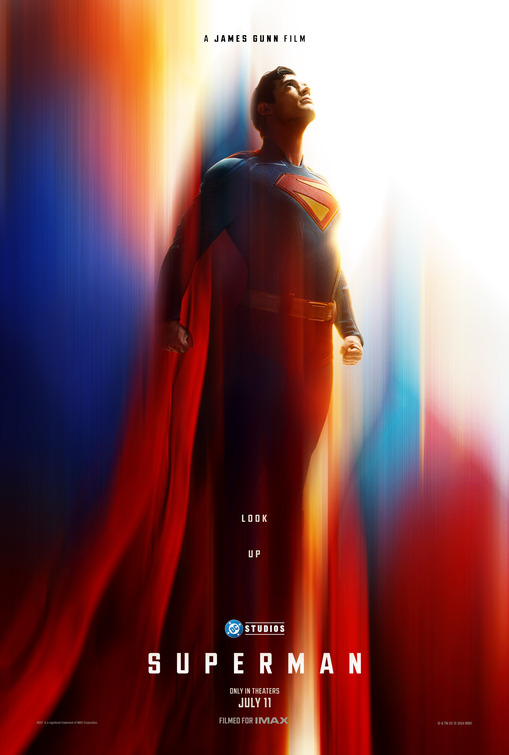
Superman is writer-director James Gunn's bold reboot of the Man of Steel, arriving as the flagship launch of the newly reorganized DC Universe under DC Studios, which Gunn runs alongside producer Peter Safran. David Corenswet steps into the cape as Clark Kent, a Superman who is already established in the world rather than an untested newcomer, giving the film license to skip the familiar origin beats and dive straight into the character at work. It is the first chapter of a wholly new interconnected franchise, and it carries the weighty task of resetting one of the most iconic superheroes in popular culture.
Rather than another origin story, the film drops in on a Superman balancing his Kryptonian heritage and his small-town human upbringing while Lex Luthor (Nicholas Hoult) wages a calculated campaign to turn public opinion against him. Rachel Brosnahan plays a sharp, self-possessed Lois Lane, and the sprawling cast fills out Gunn's optimistic vision of the DC world with Edi Gathegi as Mr. Terrific, Nathan Fillion as Guy Gardner, Isabela Merced as Hawkgirl, Skyler Gisondo as Jimmy Olsen, and a scene-stealing canine sidekick in Krypto the Superdog. Gunn's screenplay leans into kindness and hope as radical choices, framing Superman's decency as his real superpower.
Released in July 2025, Superman grossed more than $600 million worldwide and drew broadly positive reviews, with critics praising its warmth, humor, and unabashedly hopeful tone after years of grittier takes on the character. The film successfully relaunched DC's cinematic ambitions and re-established Superman as a box-office force, setting the table for an entire slate of interconnected films and series. It streams on HBO Max.
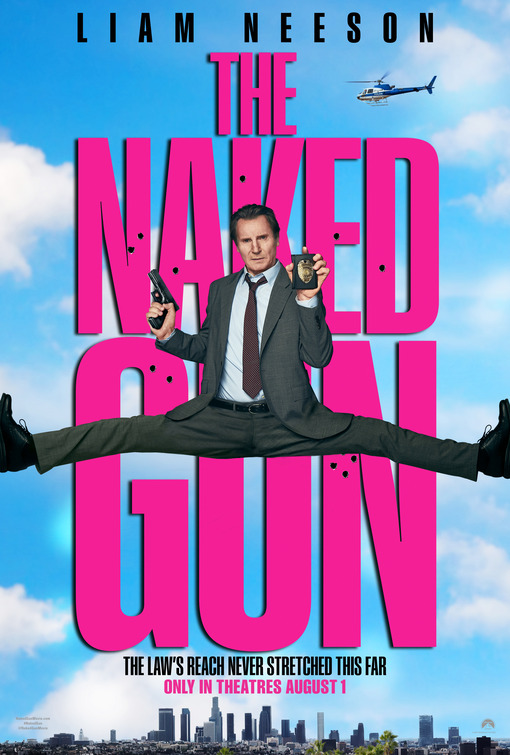
The Naked Gun is a legacy sequel and reboot of the beloved slapstick crime-comedy franchise, directed by Akiva Schaffer of The Lonely Island and produced by Seth MacFarlane. Arriving three decades after the last entry, it revives the anything-goes spirit of the original Leslie Nielsen films while handing the badge to a new generation of Police Squad.
Liam Neeson stars as Lieutenant Frank Drebin Jr., the gloriously incompetent son of Nielsen's original detective, who must save Police Squad from being shut down while unraveling a scheme by tech mogul Richard Cane (Danny Huston) to reduce humanity to its primitive instincts. Pamela Anderson co-stars as Beth, Paul Walter Hauser plays Captain Ed Hocken Jr., and Priscilla Presley returns from the original trilogy, threading the reboot back to its roots.
Critics greeted the film as a rare successful revival of a classic comedy brand, awarding it an 88% Rotten Tomatoes score and praising Neeson's willingness to play his stone-faced action persona for pure absurdist laughs. A modestly budgeted crowd-pleaser, it found an even bigger audience on streaming, where its relentless gag-per-second density made it one of the most-watched comedies of the year.

Lilo & Stitch is Disney's live-action and CGI reimagining of its beloved 2002 animated classic, directed by Dean Fleischer Camp, the filmmaker behind the Oscar-nominated Marcel the Shell with Shoes On. The remake brings the studio's most unruly little alien back to the screen with a blend of live-action performances and photoreal animation, aimed squarely at both nostalgic adults and a new generation of children.
Set on the islands of Hawaii, the film follows Lilo, a lonely and imaginative little girl being raised by her overwhelmed older sister Nani after the loss of their parents. When Lilo adopts what she believes is a scruffy blue dog, she has no idea she has taken in Experiment 626 — a fugitive alien engineered for destruction. Newcomer Maia Kealoha stars as Lilo in her screen debut, Sydney Agudong plays Nani, and Chris Sanders returns to voice Stitch, the character he originated more than two decades earlier.
Lilo & Stitch became a box-office juggernaut, sailing past the billion-dollar mark worldwide to rank among the biggest films of 2025 and one of Disney's most successful live-action remakes ever. While reviews were mixed-to-positive, audiences embraced the film's warmth and its central message of ohana — the idea that family means nobody gets left behind — and it topped the Disney+ charts the moment it began streaming.
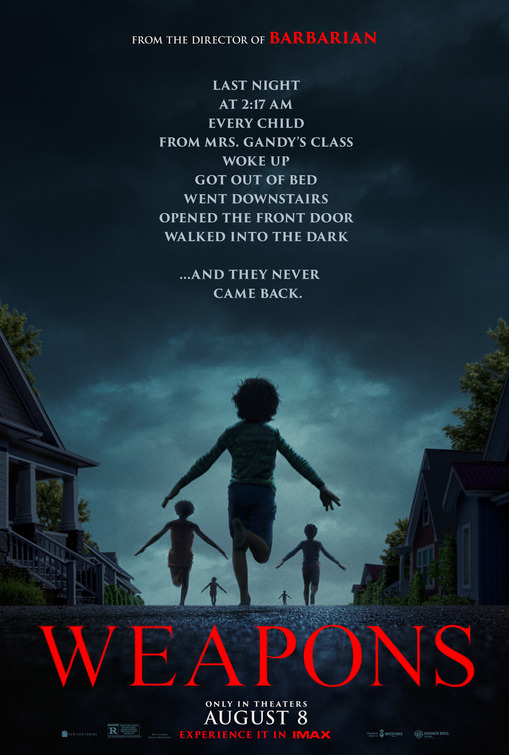
Weapons is a supernatural horror film written and directed by Zach Cregger, his hotly anticipated follow-up to the 2022 breakout Barbarian. Produced by New Line Cinema and Warner Bros., the film confirmed Cregger's reputation as one of the most distinctive new voices in American horror, trading conventional scares for a dread-soaked mystery told through interlocking chapters that gradually assemble into a single nightmarish picture.
The story begins with an impossible event: seventeen children from the same third-grade class rise from their beds at exactly 2:17 a.m. and run out into the dark, never to be seen again — all except one. As a grieving father (Josh Brolin) mounts his own investigation and the children's teacher (Julia Garner) becomes the town's prime suspect, the film shifts between perspectives, each chapter deepening the unease. Alden Ehrenreich, Austin Abrams, Benedict Wong, and a scene-stealing Amy Madigan round out the ensemble.
Made for a modest budget, Weapons became one of the year's genuine phenomena, grossing well over $250 million worldwide and earning near-universal acclaim, with a 93% Rotten Tomatoes score and an A-minus CinemaScore. Critics hailed Cregger as a bona fide horror auteur and singled out the film's audacious structure and its unforgettable, folkloric menace, cementing it as one of the most talked-about genre films of 2025.
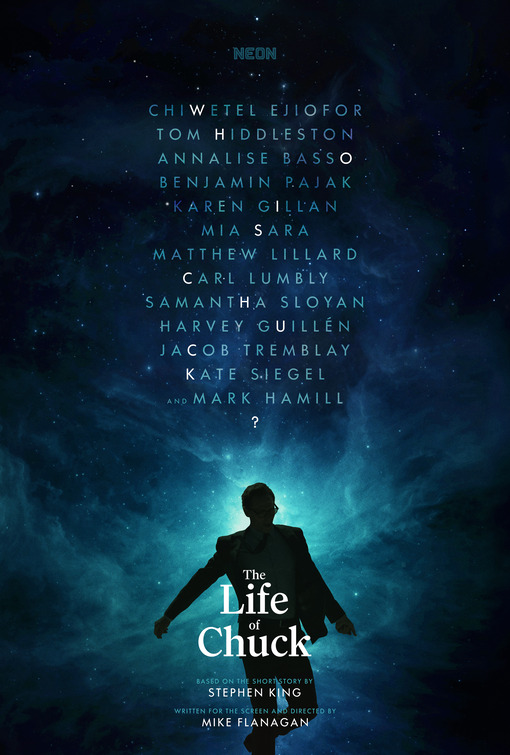
Mike Flanagan adapts Stephen King's novella "The Life of Chuck" — from the 2020 collection If It Bleeds — into a film of staggering emotional scale and strange, tender beauty. The story unfolds in three acts presented in reverse chronological order, each moving closer to the beginning of a life that, when the film opens, the audience already knows is approaching its end. Tom Hiddleston plays Charles Krantz — "Chuck" — whose life the film traces backward from professional adulthood through middle age to a transcendent moment of childhood. Chiwetel Ejiofor, Mark Hamill, Karen Gillan, and a vast ensemble populate a world that is simultaneously realistic and quietly mystical.
Flanagan — best known for his Netflix horror output including The Haunting of Hill House, Midnight Mass, and The Fall of the House of Usher — demonstrates here that the darkness he is celebrated for is the shadow cast by his investment in the light. The Life of Chuck is, at its core, a celebration of individual human existence: the argument that one ordinary life, fully lived, contains more wonder than the universe gives us credit for. King's novella is among his most personal works, and Flanagan's adaptation honors both its mystery and warmth. The reverse structure becomes the film's most affecting device — understanding what was lost before learning what it once was.
The Life of Chuck won the People's Choice Award at the Toronto International Film Festival — the prize previously won by films that went on to win Best Picture — and arrived in theaters to near-universal acclaim. It has been compared to Forrest Gump and Big Fish as a work of magical realism that takes human mortality seriously without surrendering to despair. The result is among the most purely moving films of the decade: an experience that asks you to hold contradictory things at once and finds that the heart is large enough to do so.
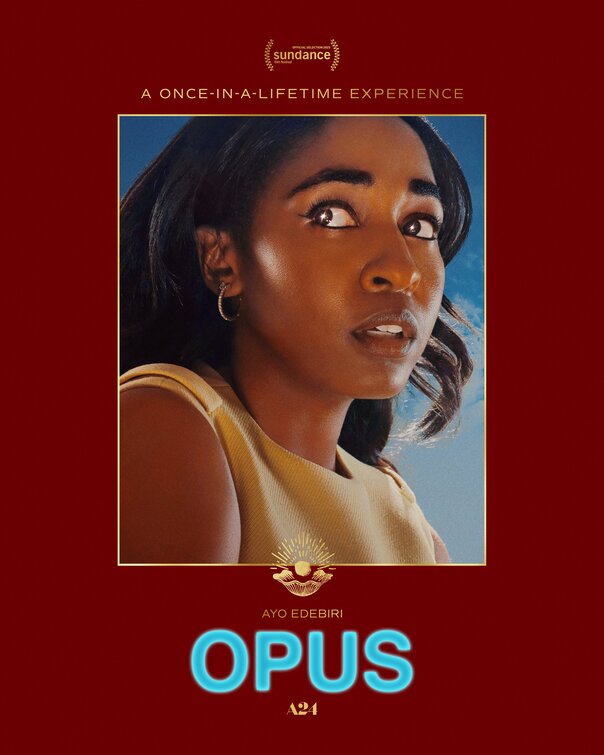
Opus is a wickedly inventive horror-thriller that announces writer-director Mark Anthony Green as a major new voice in genre cinema. Ayo Edebiri stars as Ariel Ecton, a music journalist invited to cover the long-awaited return of reclusive pop legend Alfred Moretti (John Malkovich) — an iconic figure who vanished from public life thirty years ago and is now resurfacing with a final album. Ariel arrives at Moretti's remote desert compound along with a handful of journalists and devoted fans, and what begins as an exclusive access story unravels rapidly into something far more sinister.
Green's script draws from the tradition of cult horror — the isolated compound, the charismatic patriarch with terrifying control over his followers, the outsider who sees what others cannot — while filtering it through a sharp satirical intelligence about celebrity worship, artistic legacy, and the parasocial devotion that pop culture inspires. John Malkovich is mesmerizing and deeply unsettling, oscillating between warmth and menace with the precision of a conductor, while Edebiri grounds the film in sharp, credible intelligence. Juliette Lewis contributes a standout supporting turn as a follower whose devotion has curdled into something frightening.
Opus premiered to strong notices at Sundance 2025 and was acquired by A24, the studio that has made prestige horror its signature. It is one of the most formally playful genre films of the year — genuinely funny, genuinely scary, and genuinely interested in what it means to sacrifice reason at the altar of genius. For Edebiri, it represents another leap into full leading-lady territory; for Green, it is a debut of remarkable confidence and singular vision.
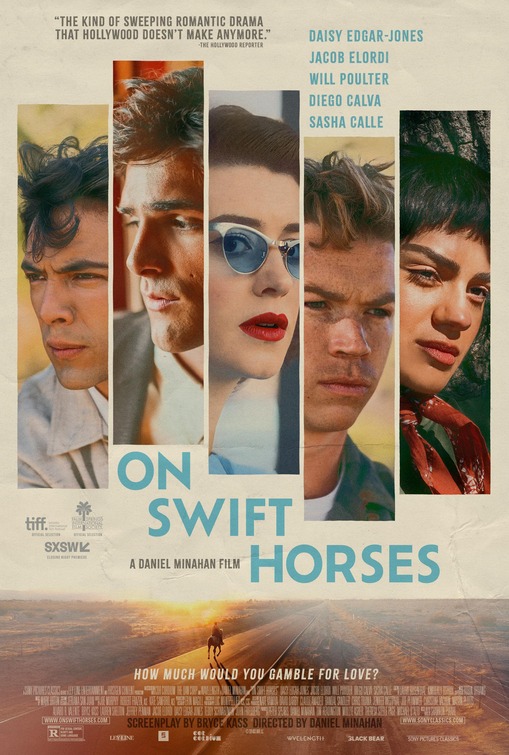
On Swift Horses is a sweeping romantic drama set against the sun-bleached landscapes of 1950s Kansas and Las Vegas, adapted by director Daniel Minahan from Shannon Pufahl's acclaimed debut novel. At its center is Muriel (Daisy Edgar-Jones), a young woman newly married to Lee (Will Poulter) who forms an unexpected bond with Julius (Jacob Elordi), Lee's restless younger brother. When Julius heads west to Las Vegas with dreams of fortune, Muriel finds herself drawn after him in spirit — and eventually in fact — as the boundaries of her suburban life dissolve against the heat of a decade defined by conformity and suppressed desire.
The film is simultaneously a story of queer longing and a meditation on the price of belonging. Muriel and Julius are kindred spirits — each concealing a self that 1950s America has no language for, each gambling their futures on something the world refuses to validate. Minahan's direction captures the period with atmospheric precision, drawing from the visual idiom of classic American cinema while allowing the story's emotional and erotic currents to run close to the surface. Diego Calva and Sasha Calle round out an ensemble that complicates the film's central triangle with depth and moral weight.
On Swift Horses premiered at SXSW 2025 as one of the year's most admired works of literary adaptation — quiet where other films shout, devastatingly precise in its portrait of lives lived in the margins of their own time. Based on a novel that NPR called "a brilliant debut," the film honors both its source and the generation of Americans whose loves and identities went unnamed. It is a film about freedom and its costs, rendered with uncommon beauty and enormous feeling.
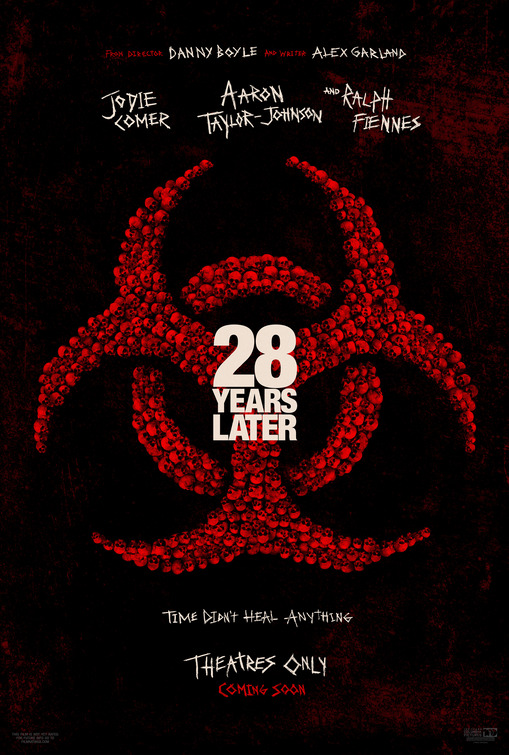
Three decades after 28 Days Later transformed the zombie genre and became a cultural touchstone of early 2000s British cinema, Danny Boyle returns to the infected world he helped create. Set in a Britain that has quarantined itself from the rest of the world, 28 Years Later follows Isla (Jodie Comer), a nurse living in a survivor settlement, whose son's dangerous curiosity sets in motion a journey into the infected zones that will upend everything she thought she knew about the outbreak and its origins. The island is now a strange, enclosed ecosystem of communities built alongside — and in constant danger from — the rage-infected who still roam the countryside.
Boyle shoots the film in a raw, immediate style that recalls the original's documentary aesthetic while pushing further into painterly expressionism in its more hallucinatory sequences. Aaron Taylor-Johnson plays a charismatic outsider whose motives remain opaque throughout, and Ralph Fiennes appears in a mesmerizing supporting role as a reclusive doctor who has spent decades studying the infected — and who may know far more than he's willing to share. The film expands the mythology of the franchise in meaningful ways without letting backstory overwhelm the moment-to-moment dread.
28 Years Later is the first of a planned trilogy — a confident, terrifying return to form that works equally well as a standalone thriller and as a setup for what's to come. Danny Boyle and screenwriter Alex Garland have constructed a film that earns its place beside the classics of the genre, delivering genuine horror while engaging seriously with questions of isolation, community, and what it means to survive in a world permanently altered by catastrophe. A Sony Pictures release.

Wes Anderson's The Phoenician Scheme is the director at his most extravagantly conceived: an elaborate ensemble piece following a dying arms dealer named Zsa-zsa (Benicio del Toro) who summons his various children and associates to a series of increasingly eccentric meetings in an attempt to set his affairs in order. With an A-list cast that includes Tom Hanks, Scarlett Johansson, Michael Cera, Jeffrey Wright, and Mia Threapleton, the film is a symphony of Anderson's signature aesthetic concerns — symmetrical compositions, deadpan delivery, and meticulous production design elevated to almost satirical heights.
The screenplay, co-written with Roman Coppola, takes the form of a series of nested stories and theatrical scenes, each episode moving to a different European location rendered in Anderson's characteristic palette of mustards, teals, and deep reds. The film is ostensibly a comedy about family dysfunction and the moral complications of inherited wealth, but Anderson's true subject — as always — is the performance of identity, and the way people use elaborate rituals and costumes to manage the grief of living.
The Phoenician Scheme wears its ambition openly and revels in its own artifice in ways that will delight Anderson's devoted audience. It is also one of his most emotionally substantial films, with del Toro delivering a genuinely moving performance beneath all the whimsy. For those already attuned to Anderson's singular frequency, the film offers moments of startling beauty and genuine feeling. Anderson's eleventh feature film premiered at Cannes to strong reviews.

Celine Song's eagerly anticipated follow-up to her Oscar-nominated debut Past Lives arrives with Materialists, a sharp and emotionally intelligent romantic drama set in the competitive world of Manhattan matchmaking. Dakota Johnson delivers a magnetic performance as Lucy, a matchmaker who has built a career on understanding what her wealthy clients want — only to find herself caught in an impossible triangle between her charming new client, a silver-haired billionaire played by Pedro Pascal, and her beloved ex-boyfriend, played by Chris Evans. The film is a genuine star vehicle in the classic sense, and Johnson holds every scene with a quiet, beguiling authority.
Song writes with the kind of precision that makes seemingly minor moments feel revelatory. The tension in Materialists is not built from plot twists or melodrama, but from the accumulated weight of small decisions — a lingering glance held too long, a question answered with another question. The New York of the film is lush and aspirational, the world of the ultra-wealthy rendered with a wry eye that never tips into satire. Song is clearly interested in the way money shapes desire, and whether compatibility can ever be engineered from the outside in.
After the understated emotional power of Past Lives, Materialists demonstrates a comfortable command of scale and register. It trusts its audience to sit with discomfort and ambiguity, rewarding patience with a genuinely surprising emotional payoff. With three charismatic leads firing on all cylinders and Song's singular directorial voice firmly in place, Materialists confirms its director as one of the most distinctive romantic filmmakers working today. Streaming on Netflix.