Thorny can usually leave his most annoying coworker behind at the end of a shift. Then Farva gets engaged to his sister, Sarita. Now every family celebration comes with the possibility of seeing Farva across the table for the rest of his life. Thorny hopes his parents will take one look at their future son-in-law and share his doubts. Just in case they need help getting there, he has a few ideas of his own.
Meanwhile, the Vermont troopers have an actual case to solve. A new drug ring needs their attention, and their talent for playing jokes on one another keeps getting in the way. For once, a long day investigating crime might be the most peaceful option open to Thorny.
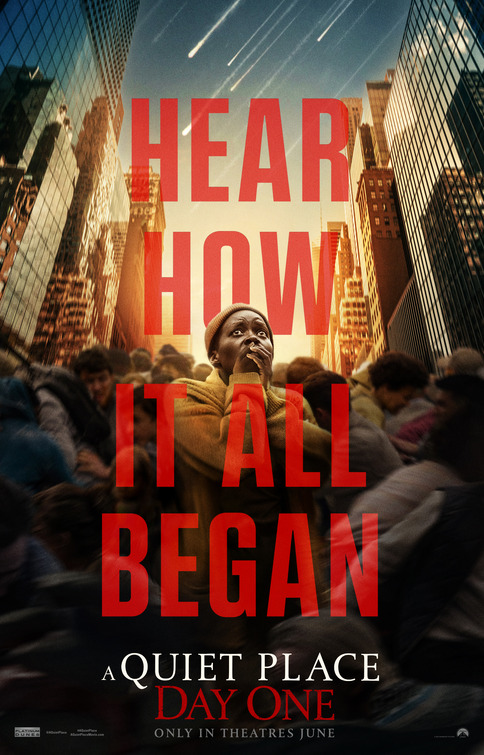
A Quiet Place: Day One is a 2024 science fiction horror film directed by Michael Sarnoski and produced by John Krasinski, who created the franchise with the 2018 original. The film serves as a prequel set during the first hours of the alien invasion that defined the series — not a continuation of the Abbott family story but a standalone narrative set in New York City as the creatures arrive and silence becomes the only strategy for survival. The premise positions the film as a different kind of Quiet Place story: expansive, urban, and populated by characters encountering the invasion without the foreknowledge the Abbotts would develop over years.
The film stars Lupita Nyong'o as Samira, a terminally ill woman in a Manhattan hospice who finds herself caught in the initial wave of the invasion. Her arc — from a person with reasons to give up to one fighting desperately to survive — gives the film an emotional specificity that distinguishes it from the franchise entries before it. Joseph Quinn plays Eric, an English law student she encounters in the chaos, and their unlikely partnership becomes the film's emotional spine. Sarnoski takes advantage of New York's density and architecture to explore how the silence imperative plays out in an environment the franchise had never visited.
A Quiet Place: Day One opened in June 2024 to strong reviews praising Lupita Nyong'o's committed performance and Sarnoski's efficient command of suspense, earning approximately $261 million worldwide on a modest budget and confirming the franchise's continued commercial vitality. It streams on Paramount+.
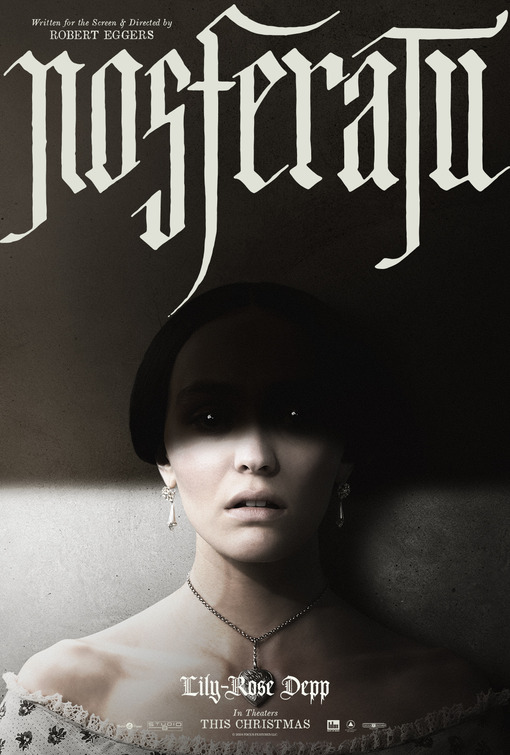
Nosferatu is a 2024 gothic horror film written and directed by Robert Eggers, whose previous work — The Witch, The Lighthouse, and The Northman — established him as one of contemporary cinema's most distinctive voices. The film is a full reimagining of F.W. Murnau's 1922 silent horror classic, transposed into 19th-century Wallachia and the fictional German city of Wisborg. Eggers had been developing the project for nearly a decade, and the result is a film of extraordinary period precision and psychological intensity — less a remake than a genuine reckoning with the source material from a filmmaker who has spent years thinking about it.
The story follows Ellen Hutter (Lily-Rose Depp), a young woman in 1830s Germany tormented since childhood by a presence she cannot name. When her husband Thomas (Nicholas Hoult) travels to Transylvania to finalize a real estate deal with the reclusive Count Orlok (Bill Skarsgård), he draws the ancient vampire's obsession toward Ellen into their home. Eggers renders the relationship between Ellen and Orlok as something magnetic and deeply interior — far removed from the theatrical villain tradition the character has accumulated across a century of adaptations.
Nosferatu opened on Christmas Day 2024 to some of the most enthusiastic reviews of the year, earning particular praise for Jarin Blaschke's sinuous cinematography, Bill Skarsgård's genuinely unsettling transformation into Orlok, and Lily-Rose Depp's performance carrying the film's psychological architecture nearly alone. It became one of the most acclaimed horror films of the decade and is available to stream on Peacock.

Based on Priscilla Presley’s memoir Elvis and Me, the film tells the story of a lonely teenager who falls under the spell of Elvis Presley when she meets him at a party in Germany in 1959. As she grows into a young woman inside the gilded cage of Graceland, Priscilla must find her own identity in the shadow of the world’s biggest star.
Sofia Coppola brings her signature sensibility — delicate, interior, deeply sympathetic to women in gilded cages — to a story that could easily have become hagiography. Instead, Priscilla is a quietly devastating portrait of a young woman whose formative years are shaped entirely by one man’s gravitational pull, and whose eventual awakening to her own personhood costs her everything she has known.
Cailee Spaeny won the Best Actress award at the Venice Film Festival for her performance, embodying Priscilla’s transformation from a wide-eyed teenager to a grown woman whose quiet dignity becomes its own form of resistance. Jacob Elordi’s Elvis is charming, possessive, and fundamentally unknowable — a figure who fills the frame without ever quite becoming a person.

A reclusive gym manager in a small New Mexican desert town falls for an ambitious bodybuilder passing through on her way to a competition in Las Vegas. Their intense romance quickly spirals into violence and crime when Jackie’s past and Lou’s dangerous family collide in ways neither anticipated.
British director Rose Glass follows up her debut Saint Maud with a film that defies easy categorization: part neo-noir, part body-horror, part love story, and part fever dream. Love Lies Bleeding wraps genuine human longing inside a plot of escalating menace, building toward sequences that embrace pure surrealist cinema while never losing sight of its characters’ raw vulnerability.
Kristen Stewart delivers one of her most physically and emotionally committed performances, while Katy O’Brian transforms herself convincingly into a competitive bodybuilder with dreams too big for the desert that surrounds her. Ed Harris and Dave Franco round out an ensemble that gives even the film’s most morally compromised characters their own warped internal logic.
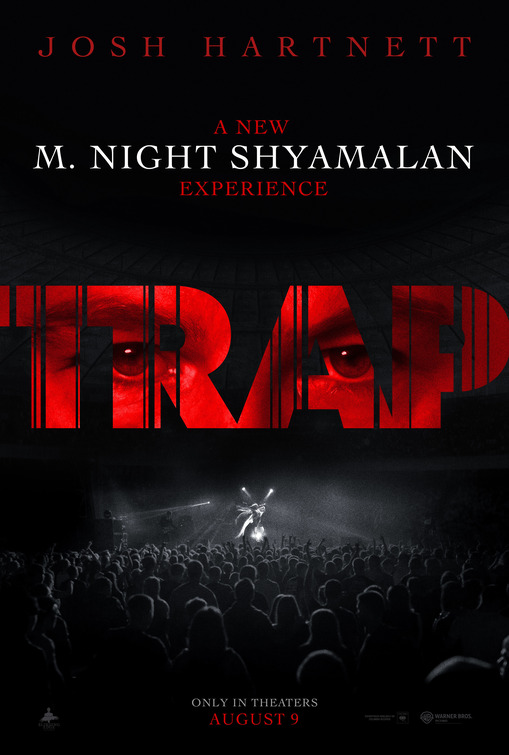
A father takes his teenage daughter to a pop concert only to discover that the entire event is a massive police trap designed to capture a notorious serial killer — and he is that killer. As the walls close in around him, he must use every tool at his disposal to evade capture while keeping his double life hidden from his own daughter.
Set almost entirely within the walls of a packed arena, Trap is a high-concept thriller that turns the spectacle of a live concert into a nerve-shredding game of cat and mouse. Director M. Night Shyamalan shoots the neon-soaked venue as a place of claustrophobic dread, packing the frame with thousands of unsuspecting witnesses while his protagonist silently dismantles escape route after escape route.
Josh Hartnett delivers a performance of coiled menace and darkly comic domesticity as Cooper, a man whose suburban warmth masks something truly terrifying. The film’s willingness to play its central premise straight — never winking at its own absurdity — makes its genre shifts and escalating revelations land with maximum impact.
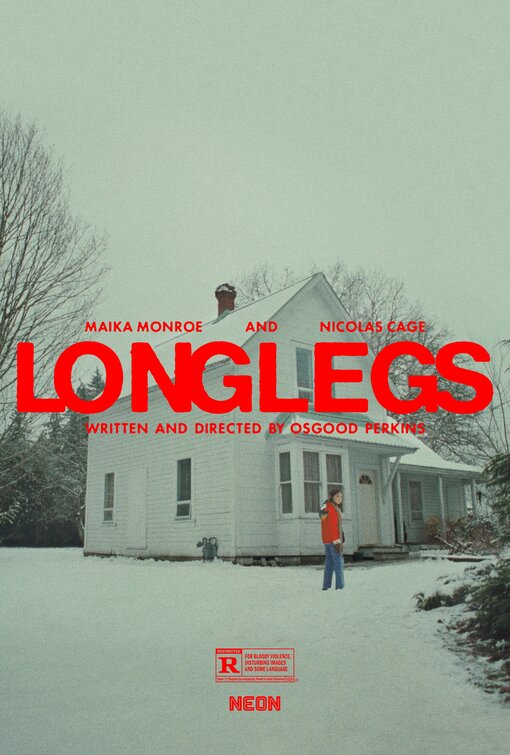
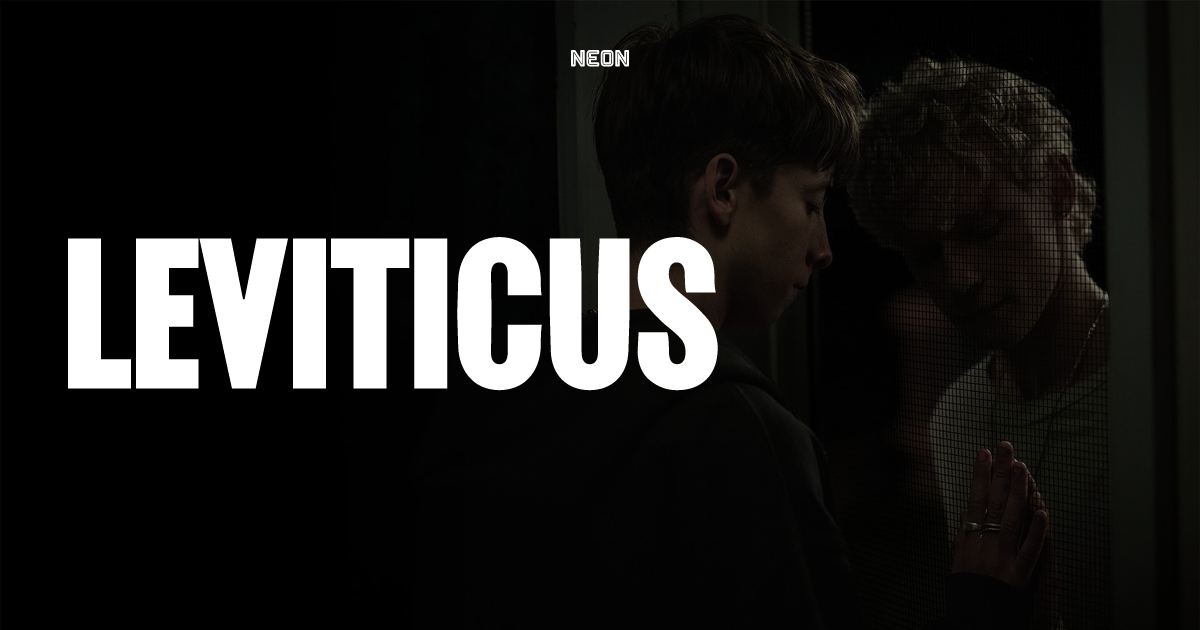
Longlegs is Osgood Perkins's audacious, unsettling horror film — the most genuinely disturbing wide-release American horror movie in years — starring Maika Monroe as Lee Harker, an FBI agent with an inexplicable intuitive gift for anticipating the movements of a serial killer whose cases have confounded law enforcement for decades. The killer is Longlegs (Nicolas Cage), a figure whose crimes are so strange and so consistent over thirty years that the FBI has never been able to identify a pattern. Lee is assigned to the case by her supervisor (Blair Underwood) and immediately begins to sense a connection to the murders that goes beyond professional insight — something more personal, more dreadful, and harder to name.
Perkins shoots Longlegs with the compositional precision and ambient dread of classic European horror, building unease through framing, sound design, and a color palette that feels perpetually overexposed and wrong. Monroe delivers one of the finest horror performances in recent memory — introverted, strange, perceptive in ways she cannot explain — and she grounds the film when Cage threatens to tip it into pure expressionism. And Cage's Longlegs is extraordinary: a creation of pure theatricality and genuine menace, a figure so physically committed and so free of vanity that the performance crosses from alarming into something closer to awe.
Longlegs became one of the biggest horror hits of 2024, distributed by NEON and earning more than $70 million on a tiny budget. It divided critics who wanted conventional horror mechanics and won passionate admirers who recognized Perkins as a filmmaker working in a mode closer to Argento or Lynch than to mainstream genre filmmaking. It streams on Hulu and rewards multiple viewings for viewers willing to let it work on its own unsettling terms.
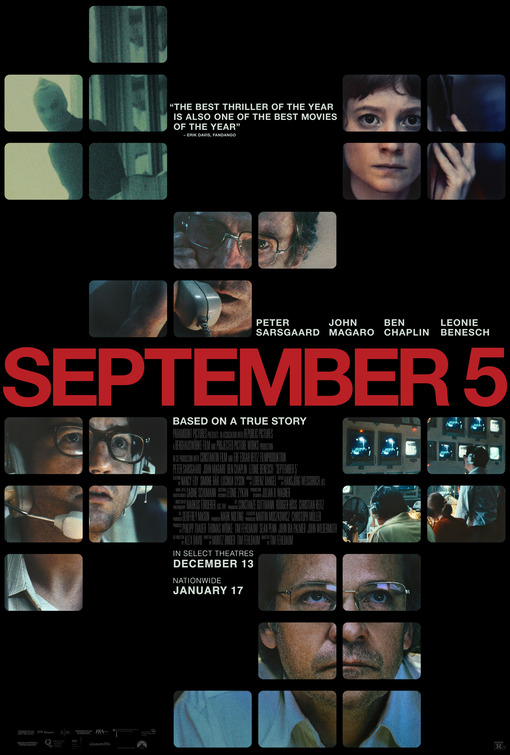
September 5 follows the ABC Sports team covering the 1972 Munich Olympics when a hostage crisis suddenly forces its broadcast operation to become a live-news desk. Producer Geoff Mason must decide what the team can verify, what it should put on air and how to report while lives remain at risk. The film keeps its focus on the newsroom decisions that changed live television coverage.
Tim Fehlbaum directed and co-wrote the thriller, starring Peter Sarsgaard, John Magaro, Ben Chaplin and Leonie Benesch. Paramount opened the film in U.S. theaters on November 29, 2024; the studio lists a 91-minute theatrical runtime. September 5 is now available with a Paramount+ subscription in the United States.

Mickey 17 is currently available to stream with an HBO Max subscription in the United States. Warner Bros. Pictures released the film nationwide on March 7, 2025, and its running time is 137 minutes.
Written and directed by Bong Joon Ho, this darkly comic science-fiction story follows Mickey Barnes, an “expendable” worker whose body is reprinted after each fatal assignment on a hostile colonization mission. Robert Pattinson stars alongside Naomi Ackie, Steven Yeun, Toni Collette and Mark Ruffalo.
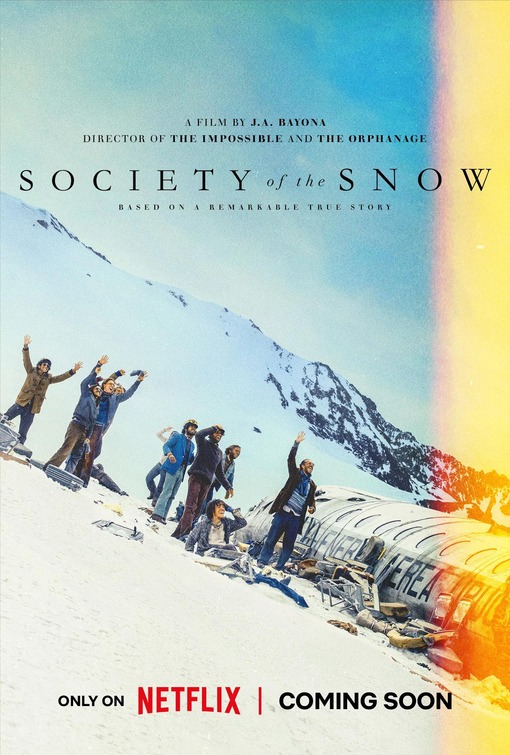
Society of the Snow is J.A. Bayona's devastating and visually extraordinary retelling of the 1972 Andes flight disaster, in which Uruguayan Air Force Flight 571 crashed in the remote Andes mountains carrying the Old Christians Rugby Club and their families. Forty-five people were aboard; sixteen survived after seventy-two days of desperate improvisation, extreme cold, starvation, and the agonizing moral decision to consume the flesh of their dead teammates in order to stay alive. Bayona's film — a Spanish-language production drawn from Pablo Vierci's 2008 book of survivor testimonies — distinguishes itself from Peter Weir's 1993 Alive by its collective focus: this is an ensemble story, not a hero's journey.
Shot in the actual Andes at altitude and with meticulous period detail, the film achieves a physical authenticity that previous versions could not match. The survivors are presented not as extraordinary individuals but as ordinary young men placed in an impossible situation and forced to discover resources within themselves they could not have imagined. The decision to use flesh for survival is treated with exactly the moral and spiritual gravity it demands — not sensationalized, not glossed over, but examined as an act of love and community, a final gift from those who died to those who still lived.
Society of the Snow won the BAFTA Award for Best Film Not in the English Language and was Spain's submission for the Academy Award for Best International Feature Film, where it earned a nomination. The film is available on Netflix and represents one of the finest survival dramas ever committed to film — a work that honors its subjects by refusing to simplify the profound ethical territory they were forced to occupy.
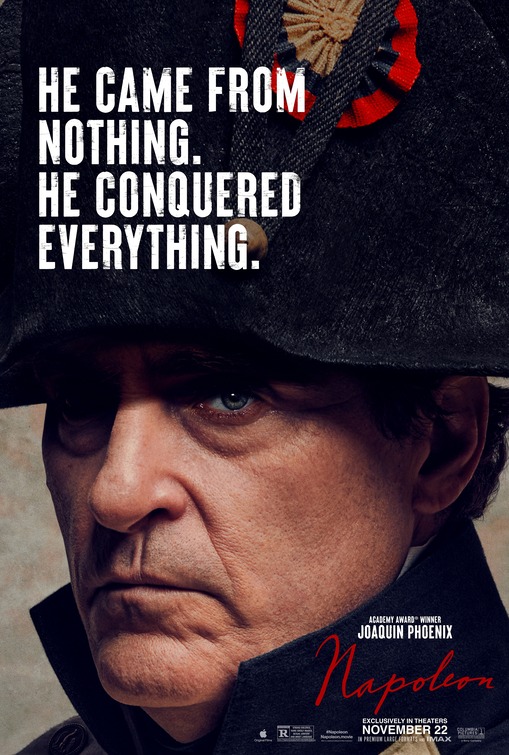
Napoleon is Ridley Scott's grand, irreverent, and deliberately provocative biography of France's most consequential military and political figure, played with idiosyncratic intensity by Joaquin Phoenix. The film chronicles Napoleon Bonaparte's rise from a relatively obscure Corsican artillery officer to Emperor of France, his campaigns across Europe, and his obsessive, mercurial relationship with Joséphine de Beauharnais (Vanessa Kirby) — the woman whose influence over him rivaled even his own ambition. Scott approaches the subject not with reverence but with a destabilizing bluntness, presenting Napoleon as a man of exceptional tactical intelligence married to crippling emotional neediness.
The film's spectacular battle sequences — Toulon, Austerlitz, Waterloo — are staged with Scott's characteristic sweep and visceral precision, finding the chaos and carnage of Napoleonic warfare in a way that makes the glory almost inseparable from the butchery. Joaquin Phoenix refuses to play Napoleon as a legend: this is a man who is awkward at dinner, petulant in defeat, and capable of genuine vulnerability in the bedroom. Vanessa Kirby holds her own in every scene against Phoenix, giving Joséphine a layered intelligence that makes her the film's most compelling character.
Napoleon is not a careful, consensus-seeking portrait of its subject — Scott freely acknowledges his willingness to sacrifice historical accuracy to serve the film's emotional and dramatic logic, and the result is something more vivid and alive than many more dutiful biopics. The film is available to stream on Apple TV+ after its theatrical release, and an extended director's cut running over four hours brings additional scenes and a deeper portrait of the marriage.