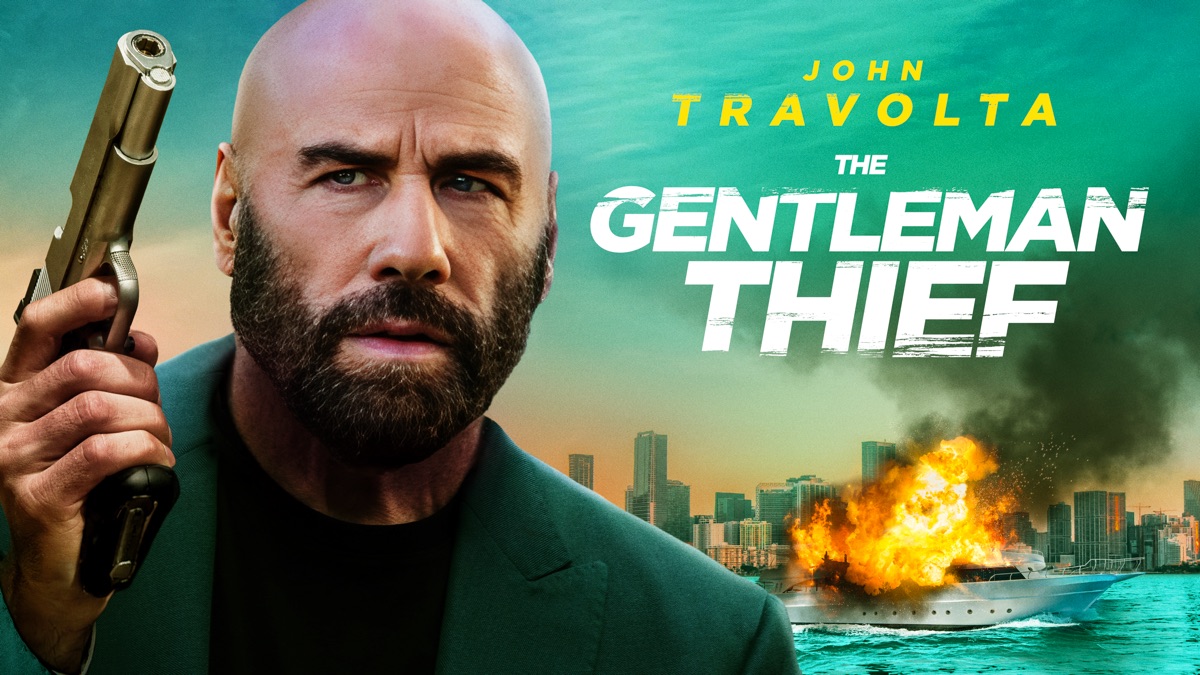
Thorny can usually leave his most annoying coworker behind at the end of a shift. Then Farva gets engaged to his sister, Sarita. Now every family celebration comes with the possibility of seeing Farva across the table for the rest of his life. Thorny hopes his parents will take one look at their future son-in-law and share his doubts. Just in case they need help getting there, he has a few ideas of his own.
Meanwhile, the Vermont troopers have an actual case to solve. A new drug ring needs their attention, and their talent for playing jokes on one another keeps getting in the way. For once, a long day investigating crime might be the most peaceful option open to Thorny.

Mister Roberts is a 1955 American comedy-drama film directed by John Ford and Mervyn LeRoy. It is based on the 1946 play of the same name by Thomas Heggen and Joshua Logan. The movie follows the misadventures of the crew of a cargo ship during World War II. The titular character, Lieutenant Roberts, is a charismatic officer who chafes under the tyrannical rule of his commanding officer, Captain Morton. Roberts dreams of being transferred to a combat ship, but is stuck on the cargo vessel due to his popularity among the crew.
The film stars Henry Fonda as Mister Roberts, James Cagney as Captain Morton, and Jack Lemmon in his Academy Award-winning role as Ensign Pulver. The performances are a highlight of the film, with Fonda delivering a nuanced portrayal of a man torn between duty and personal ambition, while Cagney imbues Captain Morton with a manic energy that masks his insecurities. The movie's depiction of life on a cargo ship during wartime is gritty and realistic, with the crew facing constant danger and uncertainty.
Mister Roberts is a classic example of the war comedy genre, blending humor with serious themes of duty and sacrifice. The film's success was due in part to its stellar cast and crew, including directors Ford and LeRoy, who brought their expertise in both drama and comedy to the project. The movie's themes of leadership, camaraderie, and sacrifice continue to resonate with audiences today, making Mister Roberts a timeless classic.

Alfie is a 2004 British-American romantic comedy-drama film directed by Charles Shyer and starring Jude Law in the title role. It is a remake of the 1966 film of the same name, which starred Michael Caine. The film follows the life of Alfie, a charming and charismatic womanizer in modern-day New York City. As he navigates his way through a series of relationships with various women, he begins to question the meaning of his existence and the consequences of his actions.
The film features an ensemble cast, including Marisa Tomei, Susan Sarandon, Nia Long, and Sienna Miller, who all give strong performances. The movie's visual style is colorful and modern, with a soundtrack that includes both contemporary and classic songs. The film's themes of love, sex, and relationships are explored with a mix of humor and drama, as Alfie confronts the consequences of his behavior and begins to grow as a person.
Alfie received mixed reviews from critics upon its release, with some praising Jude Law's performance and the film's modern take on the story, while others criticized it as shallow and lacking in substance. Despite this, the film was a moderate box office success, grossing over $35 million worldwide. It remains a popular choice for fans of romantic comedies and dramas, and its exploration of modern relationships and the search for meaning continues to resonate with audiences.

Network is a 1976 American satirical drama film directed by Sidney Lumet and written by Paddy Chayefsky. The film follows a fictional television network, UBS, and its struggling news division, as they try to boost their ratings by any means necessary. When one of their veteran news anchors, Howard Beale, has an on-air breakdown and begins ranting against society, the network sees an opportunity to exploit his popularity and turn him into a media sensation.
The film features an all-star cast, including Peter Finch, Faye Dunaway, William Holden, and Robert Duvall, all of whom give powerful performances. The movie's themes of media manipulation, corporate greed, and the dehumanization of society are explored with a mix of satire, drama, and black comedy. The film's iconic scene, in which Howard Beale encourages viewers to open their windows and shout, "I'm as mad as hell, and I'm not gonna take this anymore!", has become a pop culture reference and a symbol of public frustration with the media and politics.
Network received critical acclaim upon its release, with many praising its performances, writing, and social commentary. The film was nominated for ten Academy Awards, winning four, including Best Actor for Peter Finch, who died before the awards ceremony and became the first actor to win a posthumous Oscar. The film's impact on popular culture and its commentary on the media and society continue to resonate today, making it a timeless classic of American cinema.

"Gray's Anatomy" is a 1996 experimental film directed by Steven Soderbergh. The film presents the monologue of Spalding Gray, a famous storyteller and actor, who shares his experiences of visiting various alternative medicine practitioners to cure an eye condition known as a macular pucker. The film intercuts Gray's monologue with dramatized reenactments and actual footage of surgeries.
The film premiered at the 1996 Cannes Film Festival and received positive reviews from critics for its unique presentation and Gray's performance. The film's title is a reference to the medical textbook "Gray's Anatomy," which serves as a metaphor for the human body and the various medical procedures and treatments that Gray undergoes.
Soderbergh's use of experimental techniques and the film's mixture of fact and fiction make it a fascinating exploration of human vulnerability and the search for a cure. Gray's candid and humorous monologue, combined with the surreal imagery and reenactments, provides an intriguing commentary on the limits of traditional medicine and the ways in which we cope with illness and mortality. The film's innovative approach to storytelling and its subject matter make it a unique and compelling piece of cinema.

"The Great Dictator" is a 1940 American political satire comedy-drama film written, produced, directed by, and starring Charlie Chaplin. It tells the story of a Jewish barber who is mistaken for a ruthless dictator named Adenoid Hynkel, and is thrown into a series of absurd situations. The film criticizes Hitler, fascism, anti-Semitism, and the Nazi regime.
The film's production was met with controversy and backlash, particularly from the Nazi regime and American isolationists who feared that the film would provoke Germany and harm the country's relationship with the US. Despite this, the film was a commercial success and received critical acclaim, with many praising Chaplin's performance and the film's message.
"The Great Dictator" has since been considered a classic and one of Chaplin's greatest works. In 1997, it was selected for preservation in the United States National Film Registry by the Library of Congress for being "culturally, historically, or aesthetically significant." The film's final speech by Chaplin, in which he directly addresses the audience, has become particularly famous and is still widely remembered and quoted today.

Withnail and I is a British comedy-drama film that was released in 1987. It was written and directed by Bruce Robinson, and stars Richard E. Grant, Paul McGann, and Richard Griffiths. The movie is set in 1969 and follows two unemployed actors, Withnail and Marwood, as they leave their squalid apartment in London and escape to the countryside for a holiday.
The movie was not a box office success upon its release, but it has since become a cult classic. It is known for its witty dialogue, memorable characters, and dark humor. The movie also features an iconic performance by Richard E. Grant as the flamboyant and alcoholic Withnail.
Withnail and I is often praised for its depiction of a generation that was disillusioned with society and struggling to find their place in the world. The movie also explores themes of friendship, addiction, and the search for meaning in life. The movie's ending is bittersweet, with Withnail choosing to remain in his destructive lifestyle while Marwood moves on to a new chapter in his life. The movie's final scene, in which Withnail recites a soliloquy from Hamlet, has become one of the most famous moments in British cinema.

Sweetie is a 1989 Australian drama film directed by Jane Campion. The film follows Kay, a woman in her twenties who lives with her parents in their suburban home and works at a motel. Her life is turned upside down when her estranged sister, Sweetie, comes to live with the family. Sweetie is mentally unstable and has a history of causing chaos wherever she goes. Her presence causes tension and reveals the dysfunctional nature of the family.
The film explores themes of family dysfunction, mental illness, and the complexity of sibling relationships. Kay's attempts to understand and connect with her sister are met with resistance, as Sweetie's erratic behavior and refusal to conform to societal norms create conflict. The film is noted for its unconventional narrative structure and use of surreal imagery to convey the characters' emotional states.
Sweetie premiered at the Cannes Film Festival in 1989 and received critical acclaim for its originality and boldness. The film was a commercial success in Australia and helped to establish Campion as a major talent in international cinema. Sweetie is now considered a classic of Australian cinema and a landmark in feminist filmmaking, with its exploration of the complexity of women's lives and relationships.

"The Kid" is a silent film from 1921, written, directed, produced and starring Charlie Chaplin. The film tells the story of a single mother who abandons her newborn child, which is later discovered by Chaplin's character, the Tramp. He decides to take care of the baby, raising him as his own son. When the child is around five years old, the mother returns and tries to reclaim her son, but the Tramp fights to keep the child in his care.
"The Kid" was a commercial and critical success, and it is still regarded as one of Chaplin's finest films. The film's themes of poverty, parenthood, and the human condition still resonate with audiences today. The film also marked the debut of child actor Jackie Coogan, who played the young boy.
"The Kid" was Chaplin's first full-length feature, and it cemented his status as one of the greatest filmmakers of the silent era. The film's blend of comedy and drama was revolutionary for its time, and it influenced countless filmmakers who came after Chaplin. Today, "The Kid" is considered a classic of early cinema and an important piece of film history.

"Lola" is a 1981 drama film directed by Rainer Werner Fassbinder. The movie is set in post-World War II Germany and tells the story of Lola, a young and ambitious cabaret singer who dreams of becoming a famous actress. She becomes involved with a powerful businessman, Schuckert, who helps her career but also leads her down a path of corruption and compromise.
As the story unfolds, Lola becomes torn between her love for Schuckert and her desire for independence and self-respect. She also becomes embroiled in a political scandal involving Schuckert and a corrupt city government. These conflicts come to a head in a powerful and tragic climax.
The film explores themes of love, power, and corruption in post-war Germany. It has been praised for its complex characters, sharp social commentary, and stylish cinematography. The movie is remembered as one of Fassbinder's best works and a classic of German cinema. It stars Barbara Sukowa as Lola and Mario Adorf as Schuckert.

"Divorce Italian Style" is a 1961 Italian comedy film directed by Pietro Germi. The movie stars Marcello Mastroianni as Ferdinando Cefalù, a Sicilian nobleman who is unhappily married to his cousin, Rosalia. Divorce was illegal in Italy at the time, so Ferdinando concocts a plan to make his wife cheat on him so he can catch her in the act and legally kill her.
As the story progresses, Ferdinando's plan becomes more complicated as he falls in love with his teenage cousin, Angela, played by Stefania Sandrelli. Ferdinando's attempts to win Angela's love while still married to Rosalia lead to a series of hilarious and absurd situations.
The film explores themes of love, marriage, and societal expectations. It won the Academy Award for Best Original Screenplay and was nominated for Best Director and Best Actor for Marcello Mastroianni's performance. The movie is remembered as a classic example of Italian cinema and is often cited as one of the best comedies ever made.