Nuremberg is a 2025 historical drama written and directed by James Vanderbilt, adapted from Jack El-Hai's nonfiction book The Nazi and the Psychiatrist. Released by Sony Pictures Classics, it dramatizes the months surrounding the first Nuremberg trial, when the surviving leaders of the Third Reich were brought before an international tribunal, and centers on the unsettling relationship that formed between a captive Nazi and the American doctor assigned to gauge his sanity.
Rami Malek plays Douglas Kelley, the U.S. Army psychiatrist tasked with evaluating the imprisoned Nazi high command, while Russell Crowe delivers a commanding turn as Hermann Göring, the charismatic and manipulative Reichsmarschall who becomes both his subject and his adversary. Michael Shannon plays Supreme Court Justice Robert H. Jackson, the chief American prosecutor determined to build a lasting framework of international law, with Richard E. Grant, Leo Woodall, John Slattery, and Colin Hanks filling out the ensemble.
Premiering at the Toronto International Film Festival to one of its longest standing ovations, the film earned praise for Crowe's magnetic, chilling performance and for its sober reckoning with how ordinary-seeming men rationalized atrocity. A courtroom drama and a psychological duel in equal measure, it grossed more than $70 million worldwide. Nuremberg is streaming on Netflix.
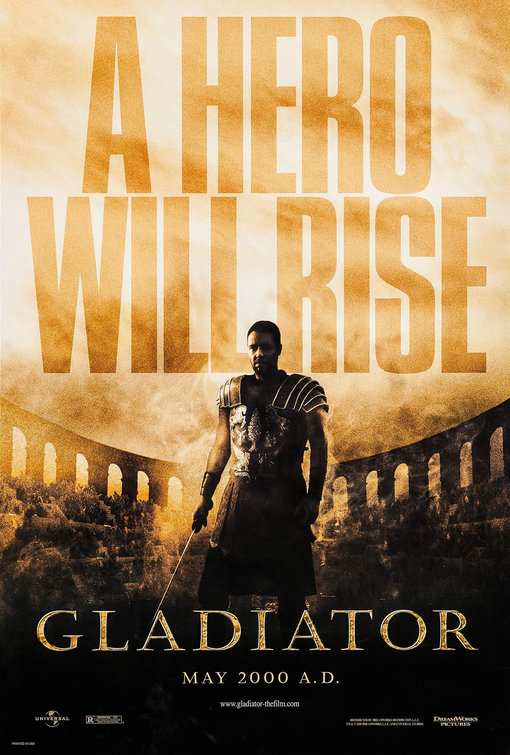
Gladiator is a 2000 epic historical action film directed by Ridley Scott, starring Russell Crowe as Maximus Decimus Meridius — a powerful Roman general who is betrayed by the corrupted prince Commodus (Joaquin Phoenix), sold into slavery, and rises through the gladiatorial arenas to exact his revenge. The film blends sweeping historical spectacle with intimate character drama, set against the backdrop of the Roman Empire's political turbulence in the 2nd century AD.
Produced by DreamWorks and Universal Pictures with a budget of approximately $103 million, the film features a score by Hans Zimmer and Lisa Gerrard and a distinguished cast including Connie Nielsen, Oliver Reed, Derek Jacobi, Richard Harris, and Djimon Hounsou. The production was notably complicated: the screenplay was still being written during filming, and Oliver Reed died of a heart attack during production in Malta, requiring his remaining scenes to be completed using CGI compositing — one of the earliest major uses of digital resurrection in Hollywood.
Gladiator opened in theaters on May 5, 2000, and was both a critical and commercial triumph, winning five Academy Awards including Best Picture and Best Actor for Russell Crowe. It grossed over $457 million worldwide and revived the epic historical genre that had been dormant since the 1960s. The film inspired a generation of filmmakers and historical epics including Troy, 300, and Alexander, and a direct sequel — Gladiator II — was released in November 2024.
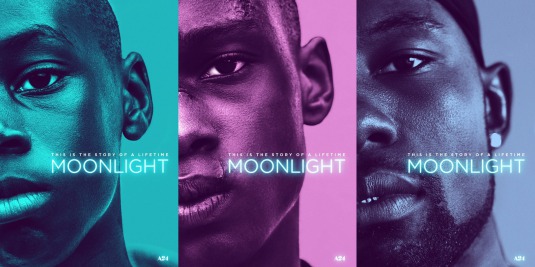
Moonlight is a 2016 American coming-of-age drama film written and directed by Barry Jenkins, based on the unpublished semi-autobiographical play "In Moonlight Black Boys Look Blue" by Tarell Alvin McCraney. The film is set in Miami's Liberty City neighborhood and follows the life of a young Black man named Chiron at three pivotal stages of his life — as a child, a teenager, and an adult — as he grapples with questions of identity, sexuality, and belonging amid poverty and drug addiction.
The film features an ensemble cast across three chapters: Alex R. Hibbert, Ashton Sanders, and Trevante Rhodes each portray Chiron at different ages, while Mahershala Ali, Naomie Harris, Janelle Monáe, and André Holland round out the cast. Cinematographer James Laxton shot the film in a lush, intimate style, drawing comparisons to the work of Wong Kar-wai. The score, composed by Nicholas Britell, blends string arrangements with hip-hop influences to create a deeply emotional soundscape.
Moonlight premiered at the Telluride Film Festival in September 2016 and was released in theaters on October 21, 2016. It received widespread critical acclaim and won three Academy Awards at the 89th ceremony: Best Picture, Best Supporting Actor for Mahershala Ali, and Best Adapted Screenplay — making it the first LGBTQ-themed film and the first film with an all-Black cast to win Best Picture. Made on a budget of approximately $1.5 million, it grossed over $65 million worldwide.
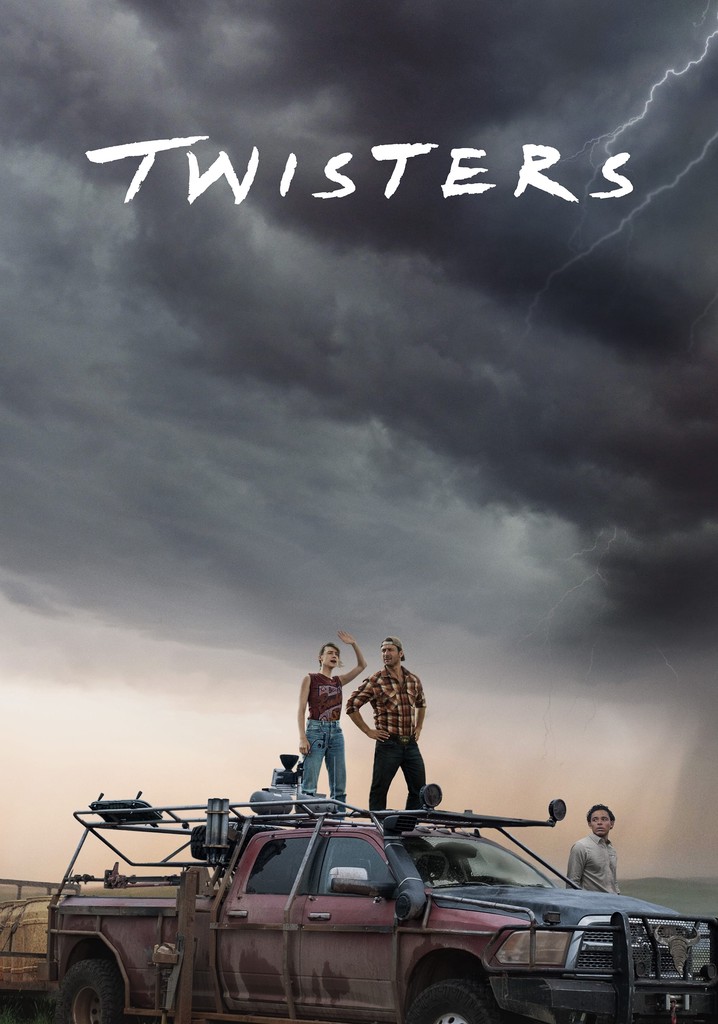
Set in the heart of tornado alley, Twisters follows Kate Carter (Daisy Edgar-Jones), a brilliant meteorologist haunted by a tragic storm encounter in her past, who reluctantly returns to the field when her college friend Javi (Anthony Ramos) recruits her for his cutting-edge storm-tracking program. What begins as a technological mission quickly becomes personal when Kate crosses paths with Tyler Owens (Glen Powell), a social-media-famous storm chaser whose reckless bravado masks a surprisingly deep understanding of the storms he pursues. Director Lee Isaac Chung — known for the Oscar-winning Minari — brings emotional grounding to the spectacle, ensuring that even amid the chaos, audiences genuinely care about the people on screen.
The tornadoes are rendered with state-of-the-art visual effects that represent a significant leap beyond what was possible in the 1996 original. Giant EF5 storms tear through drive-in theaters, small towns, and open plains in sequences that are as terrifying as they are jaw-dropping in their scale. IMAX screenings in particular showcased the full power of the film's sound design and cinematography, praised for capturing the visceral, unpredictable nature of severe weather. Practical elements — real wind, debris, and on-location shoots in Oklahoma — ground the CG in a tangible reality that gives every storm scene an authentic edge.
Beyond the spectacle, Twisters works as a character study about risk, loss, and the fine line between courage and recklessness. Glen Powell's performance as Tyler became a genuine pop-culture moment — charismatic, funny, and unexpectedly moving — while Daisy Edgar-Jones anchors the film with the same quiet intensity she brought to Normal People. The film's country-music-inflected soundtrack and its loving portrait of rural Oklahoma communities gave it a distinctive regional identity that separated it from generic blockbuster fare, making it one of summer 2024's most crowd-pleasing surprises.
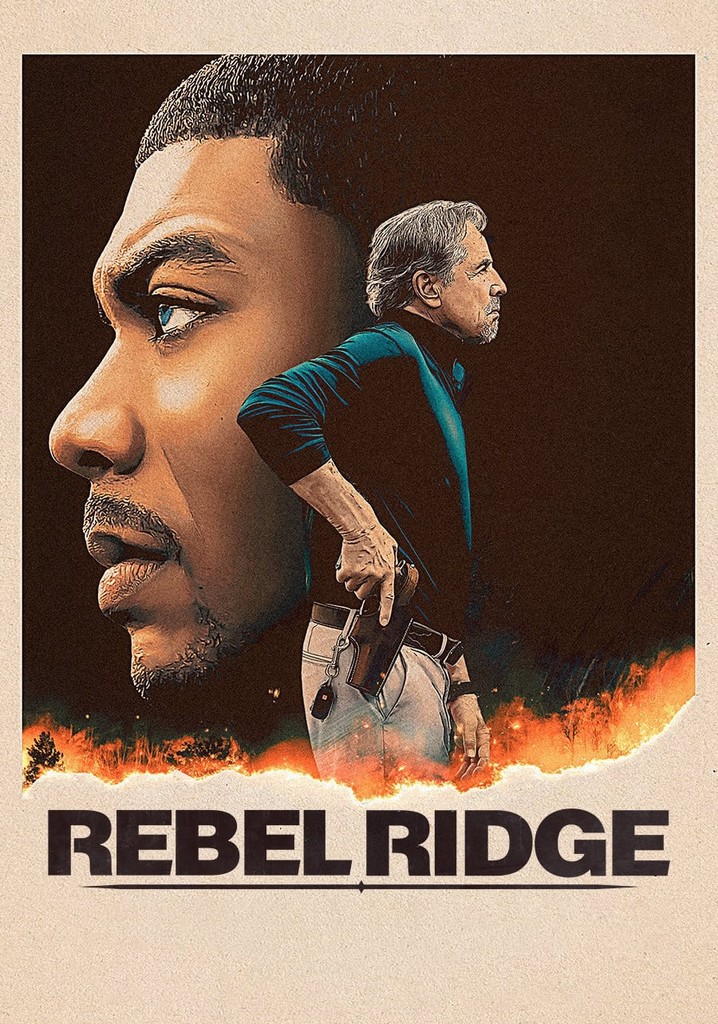
From writer-director Jeremy Saulnier, the filmmaker behind Green Room and Blue Ruin, Rebel Ridge is a tightly coiled action thriller that transforms a seemingly simple premise — a man trying to bail out his arrested cousin — into a searing examination of civil asset forfeiture, systemic corruption, and the quiet violence of institutionalized power. Aaron Pierre stars as Terry Richmond, a calm, meticulous former Marine who arrives in the fictional small town of Shelby Springs, Louisiana, with $36,000 in cash to post bail. Within minutes of arriving, a routine bicycle stop becomes a confrontation that ends with local police seizing his money under civil forfeiture laws — setting off a chain of events that exposes the entire town's corrupt infrastructure.
Saulnier's mastery of sustained tension is on full display throughout. Rather than delivering a conventional action spectacle, Rebel Ridge builds its stakes through dialogue, legal procedure, and the accumulating menace of institutional power. Terry is not a bruising action hero but a man who understands systems — constitutional law, police protocols, bureaucratic process — and his methodical approach to dismantling the town's corruption is as thrilling as it is disquieting. Don Johnson delivers one of his finest performances in years as the town's chief of police, a man whose genial surface barely conceals a willingness to do whatever is necessary to protect his domain. AnnaSophia Robb is equally compelling as a conflicted courthouse intern caught between complicity and conscience.
Released directly on Netflix in September 2024, Rebel Ridge became one of the platform's most talked-about original films of the year, praised universally for its restraint, its moral seriousness, and Aaron Pierre's star-making performance. The film works as a thriller but also as an accessible entry point into the genuinely disturbing legal reality of civil asset forfeiture — a systemic issue Saulnier researched extensively. It is the rare action film as interested in the law as it is in violence.
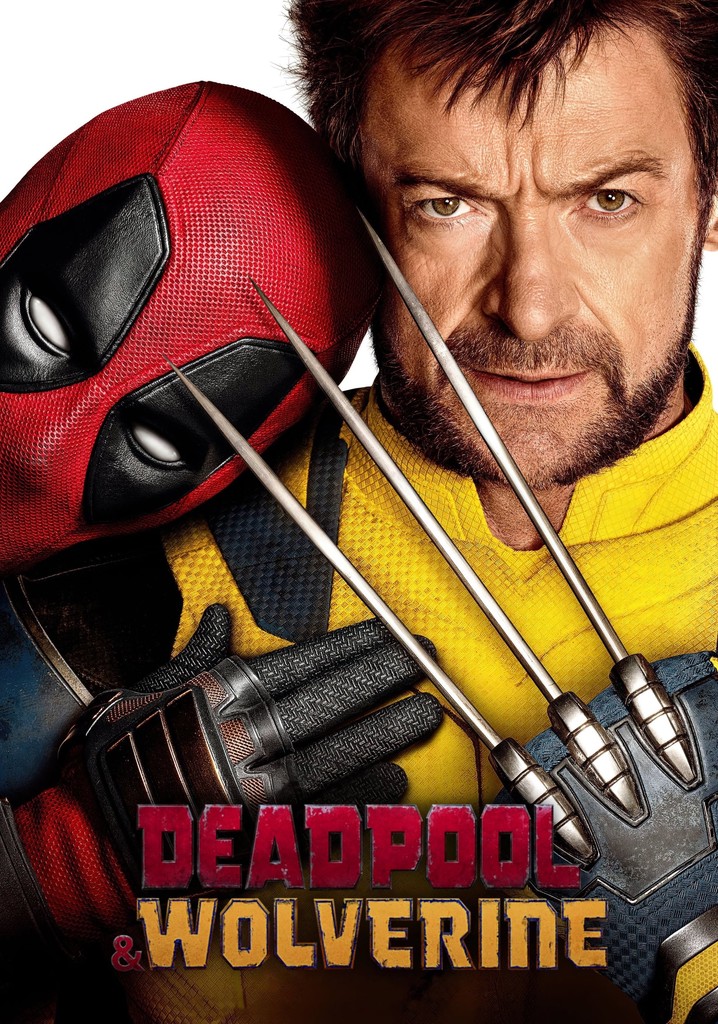
Deadpool & Wolverine is the irreverent, fourth-wall-shattering Marvel event that reunites Ryan Reynolds' motormouth mercenary with Hugh Jackman's gruff, reluctant hero for the first time in live-action. When the Time Variance Authority informs Wade Wilson that his universe is scheduled for annihilation, a last-ditch gamble leads him into the Marvel Multiverse in search of a Logan capable of saving his world. The Logan he finds is a broken, self-exiled version who long ago gave up on heroism — making their forced partnership as combustible as it is unexpectedly tender.
Director Shawn Levy matches the film's manic energy with visual set-pieces designed to delight fans of both franchises, while Reynolds and Jackman's real-world friendship gives their on-screen bickering a warmth no amount of CGI could manufacture. The film commits fully to its R rating, delivering the profanity, gore, and meta-commentary that have defined the Deadpool series, while also making room for genuinely affecting character moments — particularly for Jackman, who imbues his final Logan with aching depth despite the comedic register surrounding him.
Beyond its crowd-pleasing spectacle, Deadpool & Wolverine represents a landmark moment for Marvel Studios: the first R-rated MCU theatrical release, and a long-awaited formal integration of the Fox X-Men legacy into the larger universe. It does not require familiarity with either previous franchise to be enormously entertaining, but rewards those who bring it with an avalanche of nostalgia, callbacks, and cameos that sent cinema audiences worldwide into delirious cheering.

Luca Guadagnino's Challengers is a kinetic, sexually charged drama about three people bound together by ambition, tennis, and a triangle of desire that refuses to resolve itself cleanly. Tashi Duncan, played with ferocious intelligence by Zendaya, is a former prodigy whose career-ending injury redirects her drive into managing her husband Art Donaldson — the world's top-ranked player. When Art faces elimination at a challenger tournament, his opponent turns out to be Patrick Zweig, Tashi's ex-boyfriend and Art's oldest friend, a man who has tumbled down the rankings and nearly out of the sport entirely.
The film unfolds across two timelines — a sweltering Connecticut weekend and the previous thirteen years of these characters' entangled lives — with Guadagnino cutting between them with the precise rhythm of a tiebreak. Trent Reznor and Atticus Ross deliver an electronic score so propulsive it practically serves as a fourth character, driving scenes of trophy ceremonies and locker-room confrontations with equal force. Zendaya, Josh O'Connor, and Mike Faist are uniformly exceptional, their chemistry so combustible you feel it through the screen.
Challengers is ultimately less about tennis than about the psychology of competition — who controls a match, a marriage, or an entire life. Guadagnino refuses to frame any of his three protagonists as purely sympathetic or purely villainous, instead rendering each as flawed and fascinating in equal measure. It arrives as one of the most formally dazzling American films of recent years, guaranteed to spark arguments long after its final, delirious freeze-frame.

Kingdom of the Planet of the Apes is a 2024 science fiction action film directed by Wes Ball and produced by 20th Century Studios, serving as a new chapter set many generations after the events of the Caesar trilogy — the acclaimed reboot series that concluded with War for the Planet of the Apes in 2017. Rather than continuing Caesar's story directly, the film builds a new civilization where ape society has evolved into something far more complex, hierarchical, and politically stratified, offering the franchise a genuine fresh start without abandoning its thematic DNA around power, memory, and the uses of ideology.
The film follows Noa (Owen Teague), a young chimpanzee from a peaceful clan of eagle-keeping apes, whose village is destroyed by followers of Proximus Caesar (Kevin Durand) — a tyrannical bonobo king who has twisted Caesar's liberationist legacy to justify conquest and dominion. Noa's journey brings him into contact with Mae (Freya Allan), a human woman with her own hidden agenda, and the wise elder orangutan Raka (Peter Macon), who carries the truest memory of what Caesar actually taught. The plot draws on the franchise's long tradition of political allegory, exploring what happens when a liberator's words are weaponized by those who claim his inheritance.
Kingdom of the Planet of the Apes opened in May 2024 to strong reviews and earned approximately $397 million worldwide, comfortably outperforming its production budget and greenlit a direct sequel. Critics praised Wes Ball's command of large-scale action, the impressive motion-capture performances — particularly Durand's chilling villain — and the screenplay's engagement with questions of power, history, and ideological mutation. The film was widely received as a worthy reinvention of a franchise that had seemed to reach its natural conclusion. It streams on Hulu.

A Real Pain is a 2024 comedy-drama written and directed by Jesse Eisenberg, marking his second feature as a filmmaker following When You Finish Saving the World. The film follows two adult cousins — the anxious, emotionally guarded David (Eisenberg) and the spontaneous, charismatic Benji (Kieran Culkin) — who travel to Poland to honor the memory of their recently deceased grandmother, a Holocaust survivor who escaped Warsaw as a teenager. What they discover on the trip is not just a country's buried history, but the profound distance that has grown between them over the years.
The film operates with remarkable economy — at just 90 minutes, it packs an extraordinary emotional range into a deliberately intimate frame. Eisenberg's screenplay finds comedy and tragedy in the same moments, particularly in Benji's provocations during a guided Holocaust memorial tour, where his refusal to perform decorum reads as both deeply inappropriate and deeply honest. Culkin delivers a performance of such uncontained vitality and devastating warmth that it functions as a complete character study within the film's minimalist structure. Will Sharpe, Liza Sadovy, and Jennifer Grey round out the supporting cast.
A Real Pain premiered at Sundance in January 2024 to immediate awards buzz and was acquired by Searchlight Pictures. Kieran Culkin won the Academy Award for Best Supporting Actor at the 97th Academy Awards — the film's most prominent recognition among multiple nominations including Best Original Screenplay. Critics praised the film's tonal precision, its ability to shift from laugh-out-loud humor to genuine grief without warning, and its refusal to deliver the easy catharsis that stories about loss so often reach for. The film streams on Hulu.
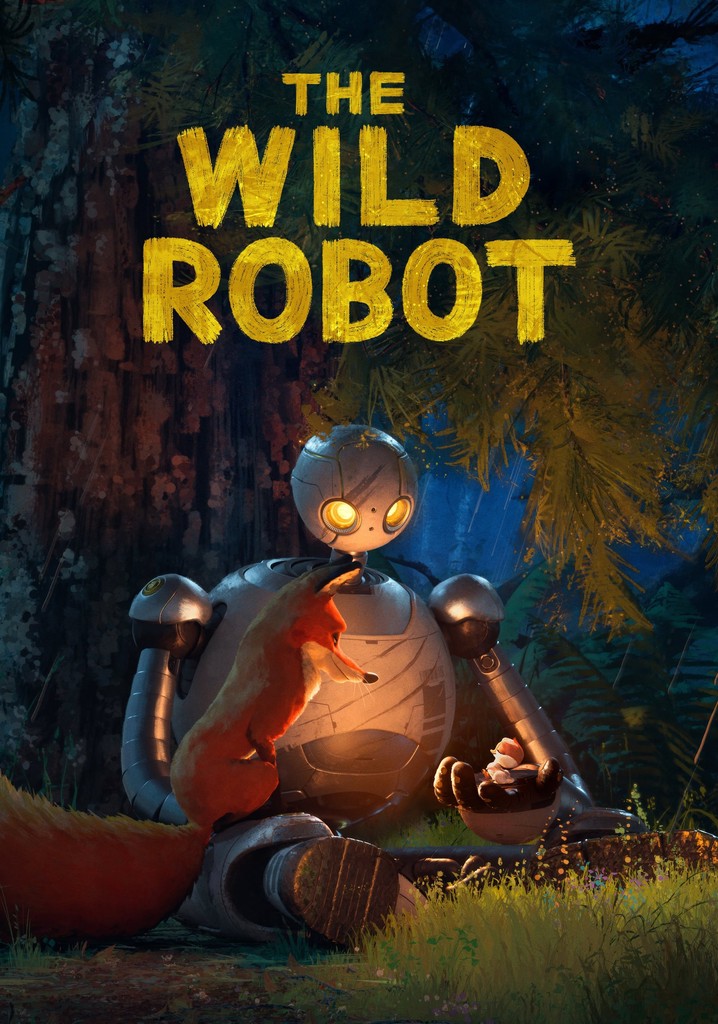
The Wild Robot is a 2024 animated feature film written and directed by Chris Sanders, produced by DreamWorks Animation, and based on Peter Brown's beloved 2016 middle-grade novel. The film follows ROZZUM unit 7134 — Roz — a robot who washes ashore on a remote, uninhabited island after a cargo ship disaster and must learn to survive in a wilderness she was never designed for. What begins as a behavioral study becomes something far more profound as Roz adopts an orphaned gosling she names Brightbill and discovers that the line between programming and purpose is not as clear as her code would suggest.
Lupita Nyong'o voices Roz with extraordinary nuance, conveying a mechanical being slowly coming to life through accumulated experience rather than designed capacity. Pedro Pascal provides warmth and sly humor as Fink, a scheming red fox who becomes an unlikely ally. The supporting cast includes Kit Connor, Mark Hamill, Bill Nighy, Stephanie Hsu, and Catherine O'Hara. DreamWorks' animation team developed a distinctive visual style that blends painterly naturalism — rich with the textures of wildlife illustration — with the crisp precision of contemporary computer animation, evoking the look of a living storybook.
The Wild Robot was released in September 2024 to rapturous critical reception and a strong domestic opening, eventually earning over $323 million worldwide against a production budget that made it one of the year's most commercially successful animated films. It won the Academy Award for Best Animated Feature at the 97th Academy Awards, completing one of the most acclaimed animated film campaigns in recent memory. Critics and audiences praised it equally for its emotional ambition, visual beauty, and its willingness to treat children's storytelling with the seriousness it deserves. The film streams on Peacock.
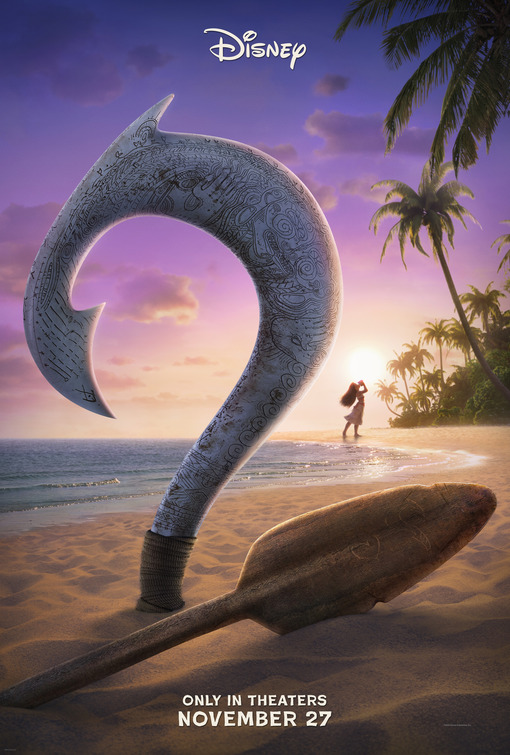
Three years after the events of the original film, Moana 2 sends the beloved wayfinder on her most ambitious voyage yet — a deep-sea journey across uncharted Polynesian waters to find a legendary island hidden by the demigod Nalo. Auli'i Cravalho returns with unmistakable warmth as Moana, now a seasoned navigator leading a crew of fellow voyagers rather than sailing alone. The film expands the world of the original significantly, introducing new cultures, creatures, and musical traditions rooted in authentic Polynesian mythology.
Maui (Dwayne Johnson) rejoins the adventure with his signature humor intact, though the sequel wisely pushes both characters to grow beyond their original dynamic. New characters — including Moana's spirited younger sister Simea and the inventive Loto — add fresh energy to the ensemble, while action sequences reach a scale beyond anything attempted in the first film. Directors Dana Ledoux Miller, David G. Derrick Jr., and Jason Hand bring kinetic visual energy that turns every ocean sequence into a dazzling spectacle.
Moana 2 is a film genuinely committed to delivering on every promise of its predecessor while charting bold new territory. Lin-Manuel Miranda, Abigail Barlow, and Emily Bear deliver a robust new song roster that echoes the original's emotional range while introducing its own musical identity. It is a sequel that respects its audience, offering adventure, heart, and mythology in generous measure.