Nuremberg is a 2025 historical drama written and directed by James Vanderbilt, adapted from Jack El-Hai's nonfiction book The Nazi and the Psychiatrist. Released by Sony Pictures Classics, it dramatizes the months surrounding the first Nuremberg trial, when the surviving leaders of the Third Reich were brought before an international tribunal, and centers on the unsettling relationship that formed between a captive Nazi and the American doctor assigned to gauge his sanity.
Rami Malek plays Douglas Kelley, the U.S. Army psychiatrist tasked with evaluating the imprisoned Nazi high command, while Russell Crowe delivers a commanding turn as Hermann Göring, the charismatic and manipulative Reichsmarschall who becomes both his subject and his adversary. Michael Shannon plays Supreme Court Justice Robert H. Jackson, the chief American prosecutor determined to build a lasting framework of international law, with Richard E. Grant, Leo Woodall, John Slattery, and Colin Hanks filling out the ensemble.
Premiering at the Toronto International Film Festival to one of its longest standing ovations, the film earned praise for Crowe's magnetic, chilling performance and for its sober reckoning with how ordinary-seeming men rationalized atrocity. A courtroom drama and a psychological duel in equal measure, it grossed more than $70 million worldwide. Nuremberg is streaming on Netflix.

Scream 7 is a 2026 slasher from Paramount Pictures and Spyglass Media, the seventh entry in the meta-horror franchise launched by Wes Craven and screenwriter Kevin Williamson in 1996. In a first for the series, Williamson, who created Ghostface and wrote the original film, steps behind the camera to direct, bringing the saga full circle to one of its founding voices.
The film marks the long-awaited return of Neve Campbell as Sidney Prescott, the franchise's original heroine, after she sat out the previous installment. Courteney Cox also returns as reporter Gale Weathers, anchoring a story that once again pits familiar survivors and a new generation against a masked killer wielding a knife and a phone. As always, the whodunit turns on the question of who is under the Ghostface mask this time.
Following a turbulent stretch behind the scenes for the franchise, Scream 7 refocused on Sidney Prescott and the legacy characters who made the series a phenomenon. Released in February 2026, it drew fans back with the promise of Campbell's homecoming and Williamson's intimate knowledge of what made the original a genre landmark before arriving on streaming.
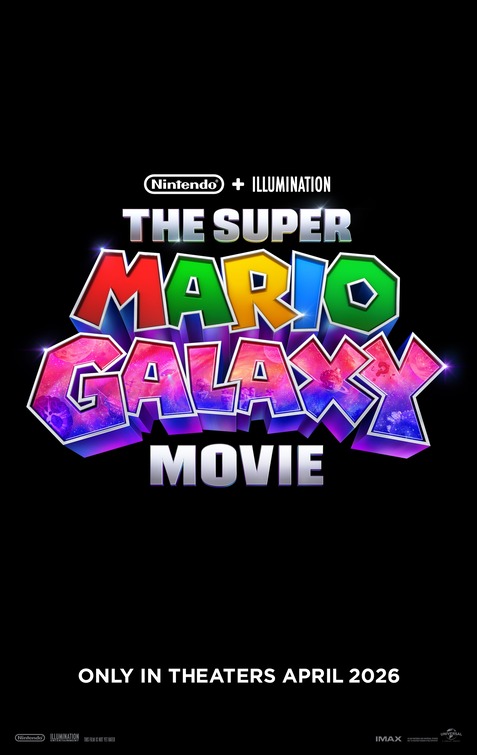
The Super Mario Galaxy Movie is a 2026 animated adventure comedy from Illumination and Nintendo, distributed by Universal Pictures, and the eagerly awaited sequel to 2023's The Super Mario Bros. Movie, the highest-grossing video game film ever made. It sends Nintendo's flagship characters beyond the Mushroom Kingdom and into outer space, drawing inspiration from the acclaimed Super Mario Galaxy games.
Chris Pratt returns as Mario alongside the original film's ensemble, including Anya Taylor-Joy as Princess Peach, Charlie Day as Luigi, Jack Black as Bowser, and Keegan-Michael Key as Toad. They are joined by Donald Glover as Yoshi, as the story rockets the brothers across galaxies filled with new cosmic allies and threats. Series creator Shigeru Miyamoto again produces, continuing Nintendo's close creative oversight of the franchise on film.
Released in April 2026, the sequel arrived as one of the year's biggest family-film events, backed by the enormous goodwill and box-office success of its predecessor. Its move into the star-hopping worlds of the Galaxy games gave the animators a vast new visual playground, and the film continued Illumination and Nintendo's reshaping of how video game properties are brought to the screen.
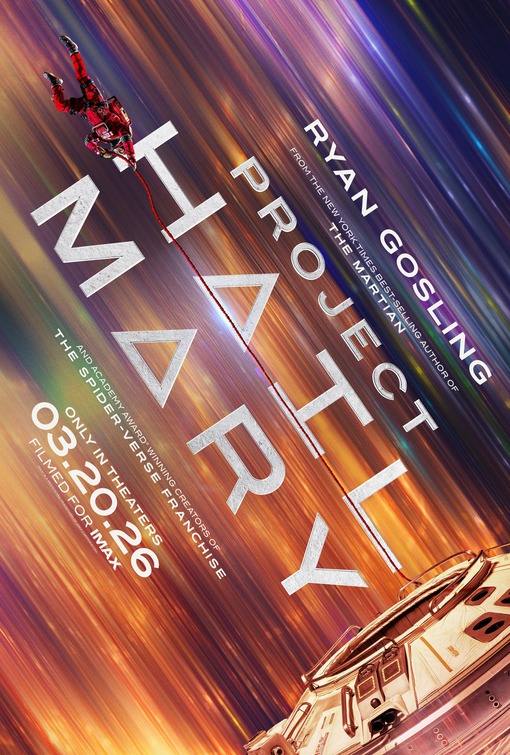
Project Hail Mary is a 2026 science-fiction epic directed by Phil Lord and Christopher Miller and adapted from Andy Weir's best-selling 2021 novel. Distributed by Amazon MGM Studios and written for the screen by Drew Goddard, who also adapted Weir's The Martian, the film marks a rare live-action tentpole from the directing duo best known for the animated Spider-Verse films and The Lego Movie.
Ryan Gosling stars as Ryland Grace, a former schoolteacher who wakes from an induced coma aboard a spacecraft light-years from home with no memory of who he is or why he is there. As his past returns to him, he realizes he is humanity's last hope against a stellar catastrophe threatening to extinguish life on Earth, and that he is not alone on his mission. Sandra Huller, Lionel Boyce, Ken Leung, and Milana Vayntrub round out the cast.
Positioned as one of the year's marquee original science-fiction releases, the film pairs Weir's rigorously worked-out science with the humor and heart that define Lord and Miller's work, and was shot with IMAX cameras for maximum spectacle. It arrived as a high-profile theatrical event in spring 2026 before reaching streaming, drawing praise for Gosling's performance and for a central relationship that gives the survival story unexpected warmth.
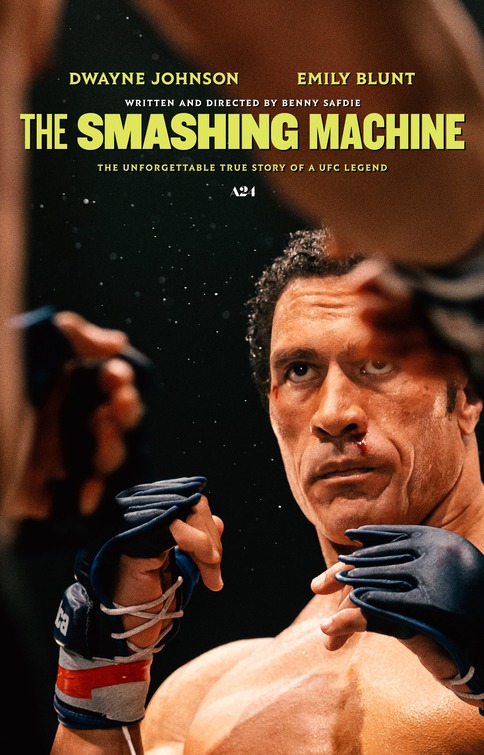
The Smashing Machine is a biographical sports drama written, directed, and edited by Benny Safdie, marking his first solo directorial feature away from his brother Josh. It stars Dwayne Johnson in a startling dramatic departure as Mark Kerr, the pioneering mixed-martial-arts champion who dominated the sport's brutal early days in the late 1990s. Produced by A24, the film premiered at the Venice Film Festival, where Safdie won the Silver Lion for Best Director.
The film charts Kerr's rise through the no-holds-barred world of early mixed martial arts and Japan's Pride Fighting Championships, while unsparingly documenting the toll of that life: a spiraling dependence on painkillers, a near-fatal overdose, and a volatile relationship with his partner Dawn, played by Emily Blunt. Johnson, buried under prosthetics and physically transformed, strips away his movie-star charisma to portray a gentle giant whose hardest battles happen outside the ring. Real-life fighters including Ryan Bader and Bas Rutten appear alongside him, lending the fight world a documentary authenticity.
Reviews singled out Johnson's raw, vulnerable performance as a career high and a genuine awards-season talking point, even as the film struggled commercially, posting the lowest opening weekend of his career. Shot on a mix of film formats to evoke the era, it stands as one of the most ambitious swings of Johnson's career. The Smashing Machine is streaming on HBO Max.

Caught Stealing is a propulsive crime thriller directed by Darren Aronofsky, adapting Charlie Huston's 2004 cult novel, with Huston himself writing the screenplay. A change of pace for the director of Requiem for a Dream and Black Swan, it trades his usual psychological anguish for a violent, blackly comic New York crime caper, and gives Austin Butler one of his most purely charismatic roles to date.
Set in the grimy, pre-gentrification New York of 1998, the film follows Hank Thompson (Butler), a washed-up former high-school baseball star turned East Village bartender whose life implodes when he agrees to look after his punk neighbor's cat. The favor drags him into a brutal turf war between Russian mobsters, Hasidic gangsters, and crooked cops, all convinced he is sitting on something they want. Zoe Kravitz plays his girlfriend, with Regina King, Matt Smith, Liev Schreiber, Vincent D'Onofrio, and the musician Bad Bunny filling out a sprawling ensemble of hustlers and heavies.
Reviews praised the film's kinetic energy, its needle-drop evocation of late-'90s Manhattan, and Butler's committed everyman performance, even as some judged it a minor entry in Aronofsky's filmography. A modest performer in theaters, it found a far larger audience on streaming, where it climbed the charts as a slick, adrenalized crowd-pleaser. Caught Stealing is streaming on Netflix.
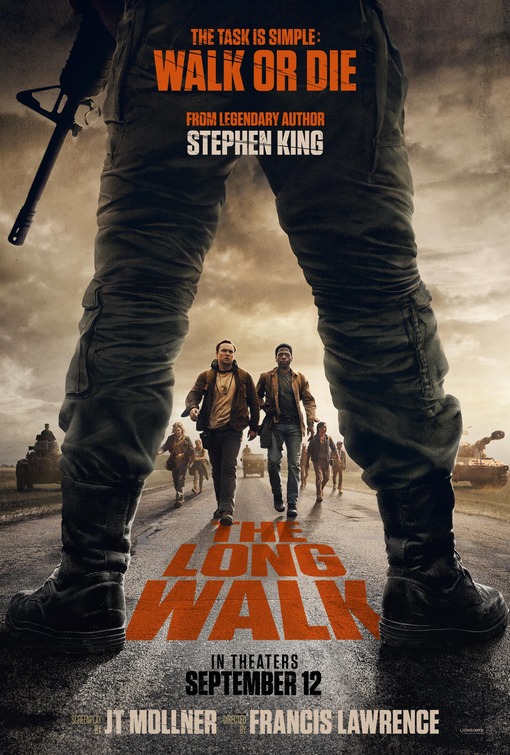
The Long Walk is a dystopian survival thriller directed by Francis Lawrence, adapting the very first novel Stephen King ever wrote, published in 1979 under his Richard Bachman pseudonym. Released by Lionsgate in September 2025 from a screenplay by JT Mollner, it brings to the screen a story King drafted as a teenager, long considered one of the most unfilmable entries in his bibliography, and does so with a stripped-down intensity that critics called the best King adaptation in decades.
In an alternate, totalitarian America, fifty teenage boys are chosen for an annual endurance contest with a single, merciless rule: keep walking above a set speed or be shot. There is no finish line, only a last survivor, who is promised a fortune and one wish. Cooper Hoffman stars as Ray Garraty and David Jonsson as the compassionate Peter McVries, whose bond anchors the film, while Mark Hamill plays the regime's chilling overseer, the Major, and Judy Greer appears as Garraty's mother. As the miles accumulate and the ranks thin, the movie becomes an unbearably tense study of endurance, friendship, and cruelty.
Made for a modest twenty million dollars, the film earned strong reviews and an 88% Rotten Tomatoes score, with praise for its young ensemble, its unflinching direction, and the raw emotion Hoffman and Jonsson bring to the road. It went on to win the Robert Altman Award at the Film Independent Spirit Awards, and admirers have predicted it will endure as a genre classic. The Long Walk is streaming on HBO Max.
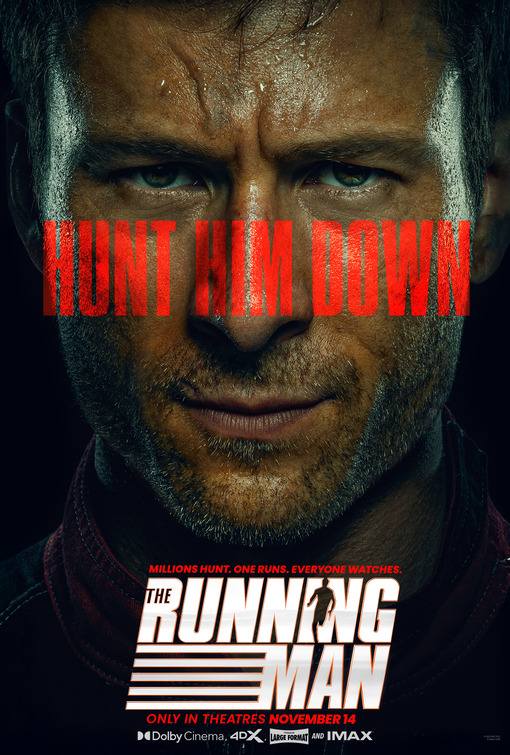
The Running Man is Edgar Wright's kinetic new adaptation of Stephen King's 1982 dystopian novel, written under his Richard Bachman pseudonym, and a far more faithful rendering of the book than the campy 1987 Arnold Schwarzenegger film. Glen Powell stars as Ben Richards, a desperate working-class man in a near-future America who, unable to afford care for his sick child, signs up for the deadliest game show on television. The premise is brutally simple: survive thirty days while professional Hunters and an incentivized public try to kill him, with the prize growing for every hour he stays alive.
Wright surrounds Powell with a rich supporting cast, including Josh Brolin as the show's ruthless producer and Colman Domingo as its flamboyant, all-powerful host, turning the story into a savage satire of media spectacle, wealth inequality, and manufactured consent. The film restores the novel's cross-country chase structure and its bleak, uncompromising vision, trading the original adaptation's neon arena for a sprawling nation that has turned human suffering into entertainment.
Marrying Wright's signature visual energy to King's furious social commentary, The Running Man arrived as one of the most anticipated genre films of the year. Powell's everyman charisma anchors the escalating chaos, and the movie's prescient themes gave it a sharp contemporary edge. It streams on Paramount+.
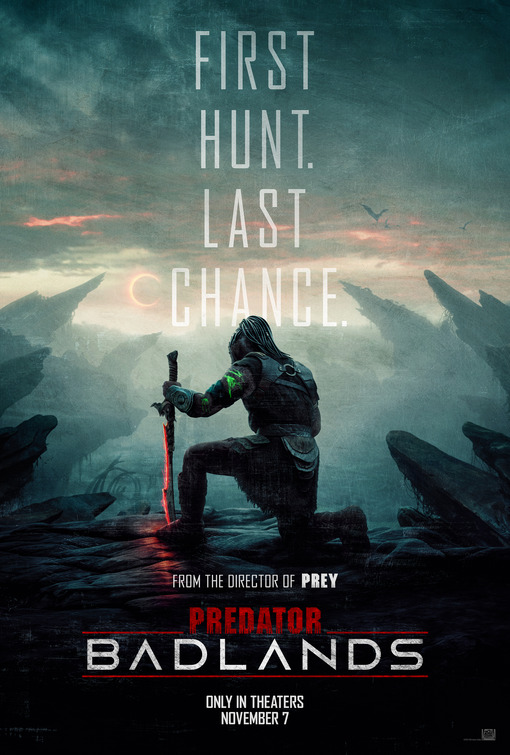
Predator: Badlands is the boldest reinvention the franchise has attempted, the first film in the series to place a Predator — a Yautja — at the center of its own story as the hero rather than the hunter of humans. Directed by Dan Trachtenberg, who revitalized the property with the acclaimed Prey, the film follows Dek, a young outcast Predator banished from his clan who sets out on a dangerous rite-of-passage journey across a hostile alien world. Newcomer Dimitrius Schuster-Koloamatangi plays Dek, performing largely without dialogue and beneath extensive prosthetics.
Elle Fanning co-stars in a dual role as synthetic androids connected to the Weyland-Yutani Corporation, explicitly tying the Predator universe to the world of Alien. Her damaged synth becomes Dek's unlikely companion, and the odd-couple dynamic gives the film an unexpected streak of humor and heart amid its creature-feature spectacle. Set entirely on a remote planet teeming with monstrous predators, the movie plays as a survival adventure and buddy story rather than a straightforward slasher.
Trachtenberg's gamble — building an entire tentpole around a non-human protagonist audiences had only ever known as a villain — paid off with strong reviews and box office, cementing his stewardship of the franchise. Praised for its world-building, its practical creature design, and Fanning's committed performance, Predator: Badlands streams on Hulu and Disney+.
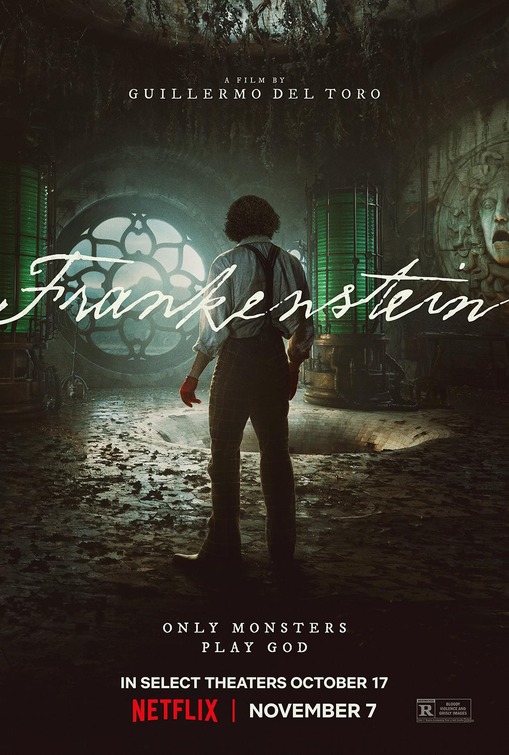
Guillermo del Toro's Frankenstein is the culmination of a lifelong obsession — a lavish, deeply personal adaptation of Mary Shelley's 1818 novel that the Oscar-winning director had dreamed of making since childhood. Oscar Isaac stars as Victor Frankenstein, a brilliant and arrogant scientist whose hubris drives him to conquer death itself, while Jacob Elordi plays the tragic Creature he assembles and then abandons. Mia Goth, Christoph Waltz, and Charles Dance round out an ensemble that treats Shelley's Gothic parable of creation and responsibility with operatic grandeur.
True to del Toro's sensibility, the film is a sumptuous work of practical craftsmanship, built around enormous physical sets, handcrafted creature effects, and painterly cinematography rather than digital spectacle. Del Toro reframes the familiar story as a mournful tragedy told from two perspectives — the maker's and the made — locating genuine pathos in a Creature who is less monster than abandoned child. It is at once a horror film, a lament for fractured fathers and sons, and a meditation on mortality that reflects the director's own preoccupations.
Premiering at the Venice Film Festival to a lengthy standing ovation, Frankenstein was praised as one of del Toro's most ambitious and emotionally resonant works, extending the monster-as-outsider empathy that has defined his career from The Shape of Water to Pan's Labyrinth. Released in select theaters before arriving on Netflix, it stands as a definitive modern rendering of a story that helped invent science fiction. It streams on Netflix.

From the World of John Wick: Ballerina expands the neon-soaked assassin universe of the John Wick films into a ferocious revenge story of its own, directed by Len Wiseman. Ana de Armas stars as Eve Macarro, a young killer trained in the traditions of the Ruska Roma, the same crime organization that raised John Wick. Set between the events of John Wick: Chapter 3 - Parabellum and Chapter 4, the film slots seamlessly into the larger saga while giving de Armas a showcase all her own as a new and lethal protagonist.
When Eve uncovers the truth about the men who murdered her father, she sets out on a globe-trotting campaign of vengeance that pits her against a shadowy cult of assassins led by a chilling figure known as the Chancellor, played by Gabriel Byrne. The cast is stacked with franchise royalty and heavyweight talent, including Anjelica Huston reprising her role as the Director, Ian McShane as Winston, Norman Reedus, Keanu Reeves appearing as John Wick himself, and the late Lance Reddick in one of his final performances as the concierge Charon. The result delivers exactly the balletic, bone-crunching action choreography the series is famous for.
Reviewers praised the film's inventive set pieces and de Armas's committed, physically punishing lead performance, and although its theatrical run underperformed at the box office, Ballerina found a large and enthusiastic second life on streaming, repeatedly topping the charts. A confident extension of one of modern action cinema's most distinctive worlds, it is now streaming on HBO Max.