The Eternaut is Netflix's first Argentine original series and one of the most ambitious science-fiction productions ever mounted in Latin America. Directed by Bruno Stagnaro, it adapts El Eternauta, the legendary 1957 graphic novel by writer Hector German Oesterheld and artist Francisco Solano Lopez that holds near-mythic status in Argentina.
Ricardo Darin, the country's most celebrated actor, stars as Juan Salvo, an ordinary man thrust into an extraordinary nightmare when a silent, deadly snow begins falling over Buenos Aires, killing instantly anyone it touches and knocking out power across the city. As Salvo and a small band of survivors improvise makeshift protection and venture into the frozen streets, they realize the snow is only the opening move of a vast and terrifying alien invasion.
Released in 2025, the series became a global phenomenon and one of Netflix's most-watched non-English titles, praised for its craft, its scale, and the way it grounds cosmic horror in ordinary human solidarity. Its resonance is deepened by the history of its source material and its author, and a second season has been confirmed. It is streaming on Netflix.
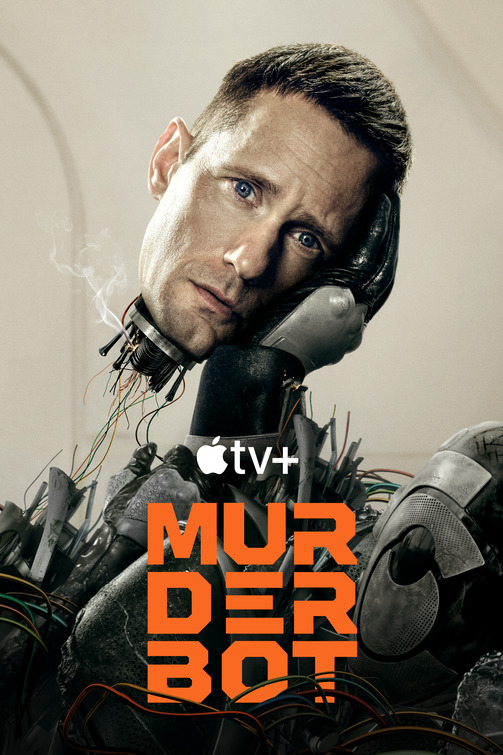
Murderbot is an Apple TV+ science-fiction comedy created by Chris and Paul Weitz, adapted from Martha Wells' hugely popular Murderbot Diaries book series. Blending deadpan humor with genuine sci-fi world-building, the show turns an existential premise — what does a machine do with free will? — into one of the most charming genre series of the year.
Alexander Skarsgard stars as the title character, a security android, or SecUnit, that has secretly hacked the governor module meant to control it. Now technically free, Murderbot is wracked with social anxiety and would honestly rather be left alone to binge thousands of hours of melodramatic space soap operas than protect the naive band of scientists it has been assigned to guard. When their expedition goes catastrophically wrong, though, it has to actually do its job.
The series earned warm reviews for its wit, its unexpectedly emotional core, and Skarsgard's perfectly dry performance, and Apple TV+ renewed it for a second season. Critics praised the way it honored the beloved source material's anxious, sardonic narrator while translating the character's inner monologue into television.
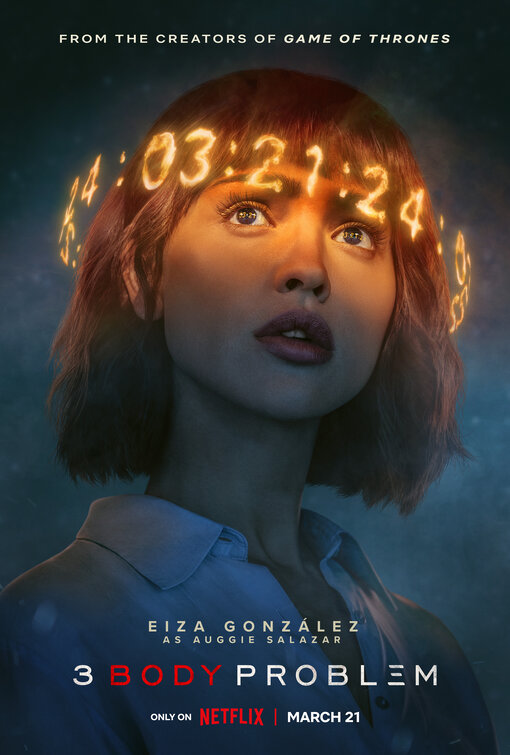
3 Body Problem is Netflix's landmark science fiction drama adapted from Liu Cixin's celebrated novel trilogy, created by David Benioff, D.B. Weiss, and Alexander Woo and produced with the scope and ambition of a prestige cinematic event. The story moves across time and space — from the Cultural Revolution in 1960s China to the present-day research labs of Oxford and San Francisco — following scientists who discover that humanity is being observed by an alien civilization that has spent four hundred years preparing to invade. The premise requires the audience to expect that physics itself might be unreliable, and the show earns that trust through the accumulated force of its characterization.
The ensemble cast includes Eiza González, Jovan Adepo, John Bradley, Liam Cunningham, and Benedict Wong as the Oxford Five, researchers whose work becomes the front line of humanity's scramble to understand what is coming and whether anything can be done to survive it. Zine Tseng gives a devastating performance as the young Ye Wenjie, whose childhood trauma during the Cultural Revolution becomes the pivot point for the entire narrative. The show handles its scientific concepts with genuine seriousness — the three-body problem of its title is a real mathematical puzzle whose chaotic implications are used as both metaphor and plot engine.
3 Body Problem premiered in March 2024 to strong critical reception that praised its ambition, its willingness to sit with scientific complexity, and its emotional investment in characters who face an existential threat on a scale no prior narrative has successfully dramatized. The show is a bold and difficult translation of source material that many considered unfilmable, and its success confirmed that the most challenging speculative fiction can find a broad audience when its human stakes are made undeniable. It streams on Netflix.
Black Mirror is the enduringly essential British anthology series created by Charlie Brooker, now in its seventh season on Netflix, that uses standalone episodes of near-future speculative fiction to examine how technology reshapes human behavior, relationship, and identity in ways we are too close to see clearly. Each episode tells a completely different story with a different cast, genre, and tonal register — from psychological horror to romantic tragedy to pitch-black satire — unified only by the show's central conviction that technology is not neutral, that every convenience carries a hidden cost, and that the most disturbing futures are the ones that feel closest to Tuesday.
The series has produced some of the most discussed single episodes in the history of prestige television — San Junipero, Nosedive, USS Callister, and Bandersnatch among them — and continues in its newer seasons to generate episodes capable of entering cultural conversation as serious works of speculative literature rather than genre entertainment. Brooker's facility for imagining the specific, plausible ways that human weakness interacts with technology gives each story a uniquely uncomfortable proximity; the horrors in Black Mirror are rarely the kinds that require suspension of disbelief, because they are already visible in outline in technologies that exist.
Black Mirror returned for its seventh season in 2025, continuing to demonstrate that the anthology format — long declared dead by streaming era conventional wisdom — is in fact the perfect container for Brooker's particular vision, allowing each episode to take its premise to its full conclusion without the compromises serialized storytelling demands. The series remains required viewing for anyone interested in how science fiction functions as social criticism, and a reliable source of the television year's most unsettling hour. It streams on Netflix.
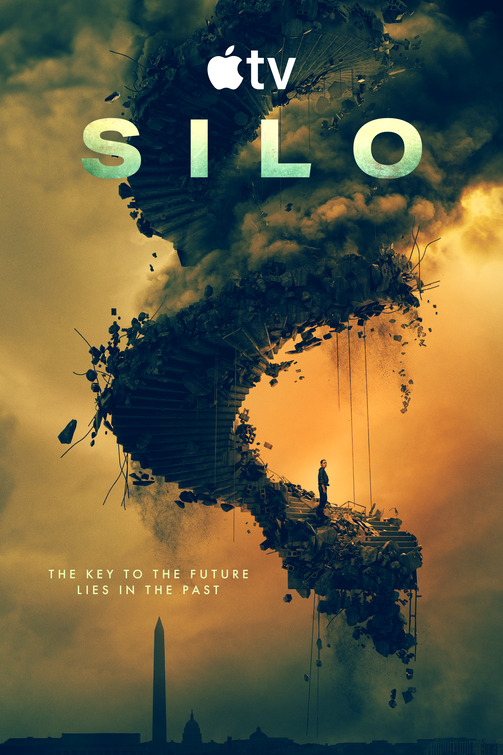
Picking up where the first season's shocking revelations left off, Silo Season 2 follows Juliette Nichols as she navigates the hostile landscape outside the silo while her allies inside fight to survive a fractured society on the brink of civil war. The season expands the show's world dramatically, venturing beyond the claustrophobic confines of the underground bunker into territory rife with danger and unexpected discovery.
Based on Hugh Howey's Wool trilogy, the series continues to explore themes of institutional control, manufactured reality, and the human cost of enforced ignorance. Showrunner Graham Yost has deepened the political intrigue within the silo's governance structure, weaving storylines about class, rebellion, and the moral compromises people make to maintain order.
Rebecca Ferguson anchors the season with a physical and emotional performance that carries the weight of the show's central mystery. The supporting cast — including Common, Tim Robbins, and Harriet Walter — bring texture to a world where every character holds secrets. Silo Season 2 is a confident escalation of one of streaming's most compelling sci-fi dramas.
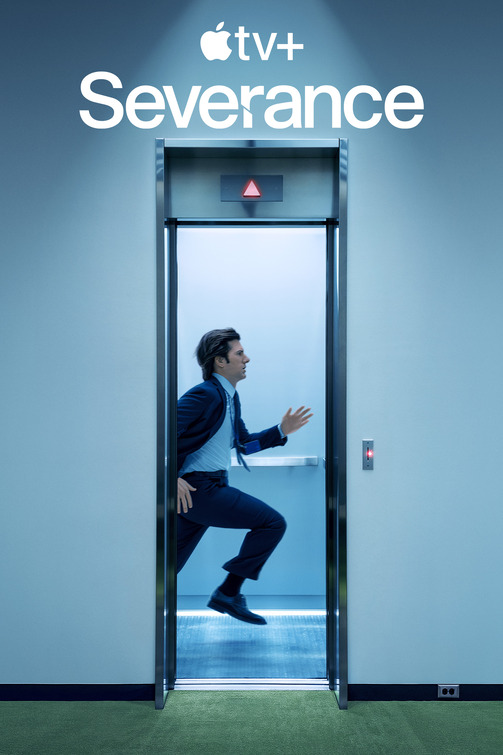
The second season of Severance picks up immediately after the explosive events of the season finale, with Mark Scout and his innie counterparts facing the full weight of what they've uncovered about Lumon Industries. The severed floor is in disarray, loyalties are tested, and the line between the innies' underground rebellion and the outies' oblivious surface lives grows increasingly dangerous.
Creator Dan Erickson and director Ben Stiller have crafted a season that doubles down on the show's signature atmospheric dread. The sprawling Lumon corridors feel even more labyrinthine, and the corporate rituals more sinister. New characters arrive who complicate the innies' fragile alliances, while the mysterious purpose of the severed program inches closer to revelation.
Adam Scott delivers a tour de force performance navigating the fractured psyche of Mark S., while Britt Lower, Zach Cherry, and John Turturro each get expanded arcs that redefine what it means to be severed. Severance Season 2 cements the show as one of television's most original and intellectually daring dramas.
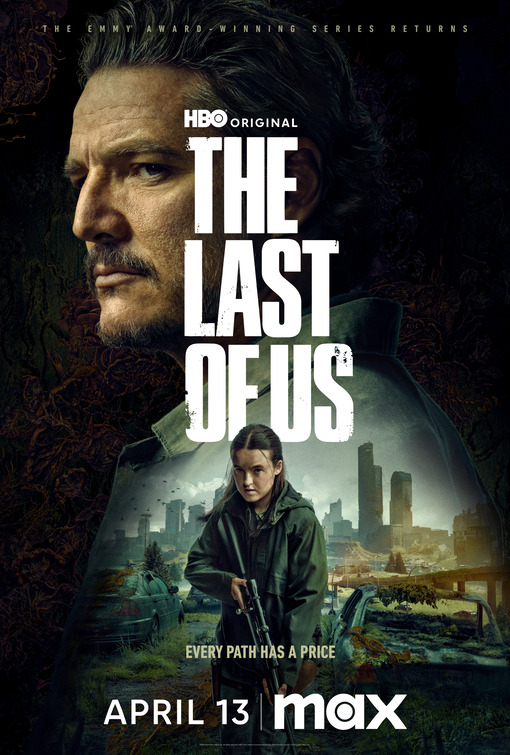
The second season of HBO's acclaimed adaptation arrives with the full weight of expectation and largely meets it. Craig Mazin and Neil Druckmann's continuation draws from the second game in the franchise, picking up several years after Season 1 as Ellie (Bella Ramsey) and Joel (Pedro Pascal) have built a life in the fortified settlement of Jackson, Wyoming. The fragile peace between them is about to be shattered, and the season's central dramatic engine is the chain of events that follows with devastating, morally complex momentum that the show refuses to simplify or sentimentalize.
Season 2 introduces Kaitlyn Dever as Abby, a character whose arc becomes increasingly central as the season progresses, and it's in the writing and performance of Abby that the season takes its boldest creative risks. The show is not afraid to make its audience uncomfortable or to withhold the easy emotional satisfactions that genre convention might demand — a fidelity to the source material that will divide audiences but gives the series a genuine sense of moral seriousness rare in prestige television. The production values remain extraordinary throughout.
The post-apocalyptic Pacific Northwest is rendered with a grim beauty that makes the world feel simultaneously lived-in and haunted. The Last of Us Season 2 is a harder watch than its predecessor, more willing to sit with grief and moral failure, and ultimately more ambitious in what it asks of both its characters and its viewers. Essential television for anyone willing to follow where it leads. Streaming on Max.
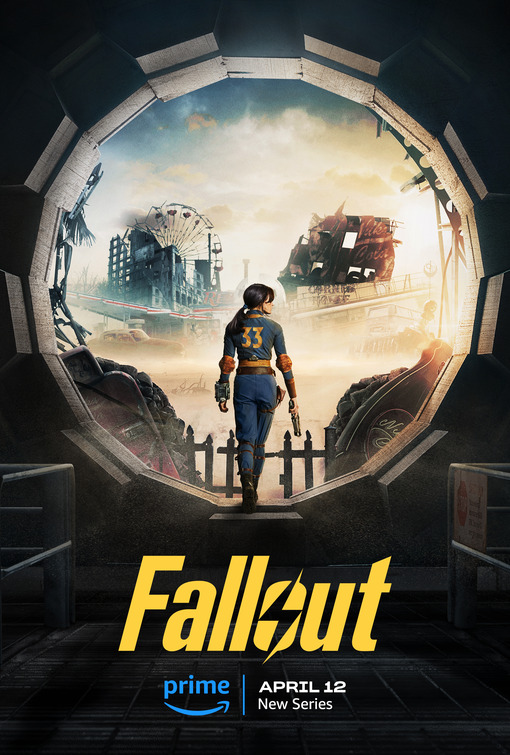
Fallout is Amazon Prime Video's bold and brilliantly realized adaptation of Bethesda's beloved video game series, set in a post-apocalyptic America where nuclear war has reshaped civilization into a darkly comic landscape of vaults, wastelands, and warring factions. The series follows three protagonists whose paths collide: Lucy, a sheltered vault dweller venturing into the surface world for the first time; The Ghoul, a morally ambiguous bounty hunter with centuries of memory; and Maximus, a young Brotherhood of Steel soldier navigating the rigid hierarchy of his order. Their intersecting journeys form a propulsive narrative that reveals the Fallout universe's lore with wit and invention.
Showrunners Geneva Robertson-Dworet and Graham Wagner, along with executive producer Jonathan Nolan, capture the games' distinctive tone equal parts post-apocalyptic horror and absurdist dark comedy, translating it to live action with a visual palette that feels unmistakably Fallout. Ella Purnell, Walton Goggins, and Aaron Moten lead the ensemble with performances that balance the show's tonal complexity, making characters who could easily become caricatures feel genuinely compelling. The production design meticulously recreates the retro-futurism of the games, from vault interiors to the desolate grandeur of the surface wasteland.
Fallout garnered universal acclaim and became one of Amazon's most-watched series at launch, proving that video game adaptations can succeed when creators approach the source material with both reverence and creative confidence. A second season has been confirmed, and the series reignited global interest in the game franchise, with Bethesda reporting significant increases in player numbers following its premiere.