
Verified streaming availability
Editorial verification
Reviewed by the OnlineTVcast Editorial Team against official provider catalogs and authoritative release sources. Material availability changes are recorded by market.
What this status means
Availability is specific to the named country and check date. Prices, plans and catalogs can change.
OnlineTVcast may earn a commission from some provider links. This does not affect which services we list or their order.
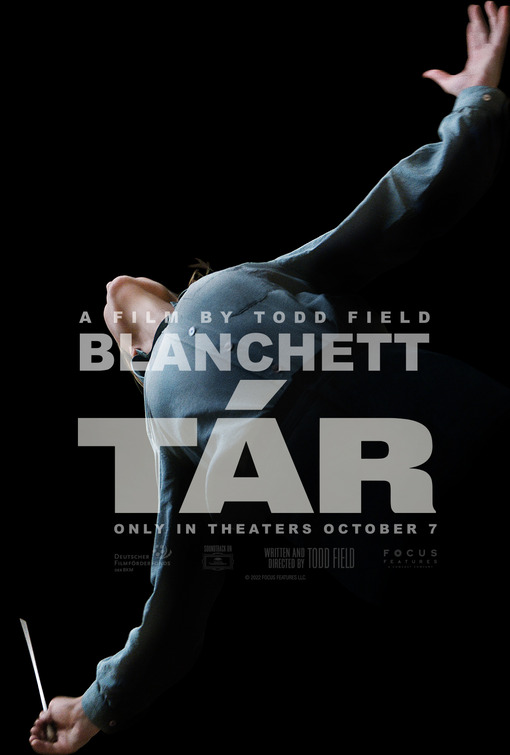
1. Todd Field's first film in sixteen years. Tár marks director Todd Field's return to feature filmmaking after a sixteen-year absence following Little Children (2006), and it was immediately hailed as a triumphant comeback by critics worldwide.
2. Cate Blanchett learned to conduct for the role. To portray Lydia Tár authentically, Cate Blanchett underwent extensive training with conductors and studied classical music deeply, performing many of the conducting scenes herself without the aid of a body double.
3. The title character is entirely fictional. Despite the film's verisimilitude, Lydia Tár is a fictional character, and the film operates as if she is a real historical figure, including fake Wikipedia pages and archival materials created for the production.
4. Filmed on location in Berlin and Germany. The production shot extensively in Berlin, including at the Berlin Philharmonic itself, lending the film an unmistakable authenticity and grounding Lydia's world in a very real center of classical music culture.
5. Six Academy Award nominations. Tár received six Oscar nominations at the 95th Academy Awards including Best Picture, Best Director for Todd Field, Best Actress for Blanchett, Best Original Screenplay, Best Cinematography, and Best Film Editing.
6. Blanchett speaks German, Russian, and conducts in Mahler's style. In preparation, Blanchett learned functional German and Russian for the role and studied Leonard Bernstein's conducting style, whose influence Lydia Tár frequently references throughout the film.
7. The film's opening sequence is nearly twenty minutes long. Tár opens with an extended New Yorker Festival interview scene that introduces Lydia through her own words and self-mythologizing, a bold structural choice that disorients the audience before the story proper begins.
Tár is a 2022 psychological drama film written and directed by Todd Field, his first feature in sixteen years. The film stars Cate Blanchett in what is widely regarded as a career-defining performance as Lydia Tár, a fictional conductor and composer who holds the chief conductor position at the Berlin Philharmonic. As one of the most powerful figures in classical music, Lydia appears to have it all, yet beneath the surface, her life begins to unravel as accusations from her past start to surface in the era of heightened accountability.
The film is a slow-burn character study that resists easy moral categorization. Field's screenplay puts the audience in the uncomfortable position of admiring Lydia's formidable intellect and artistry while also watching her manipulate and abuse those in her orbit. The film explores how power corrupts, how genius is used as a shield, and how institutions protect their most valued assets at the expense of the vulnerable. Structured around a series of escalating crises, Tár builds toward a conclusion that is deliberately ambiguous and deeply unsettling.
Released to critical reverence, Tár earned six Academy Award nominations including Best Picture, Best Director, and Best Actress, with Blanchett winning a Golden Globe and a BAFTA for her performance. Todd Field's meticulous direction, Nina Hoss's understated supporting work, and Florian Hoffmeister's cold, precise cinematography combine to create one of the most discussed and debated films of the decade.
Got a "Not available in your region" message?
No worries. Learn about streaming access by region and explore available titles where the service is available.

Streaming availability and access rules vary by provider and region. Review each service’s terms before subscribing.
View service details and availabilityStreaming access guide →