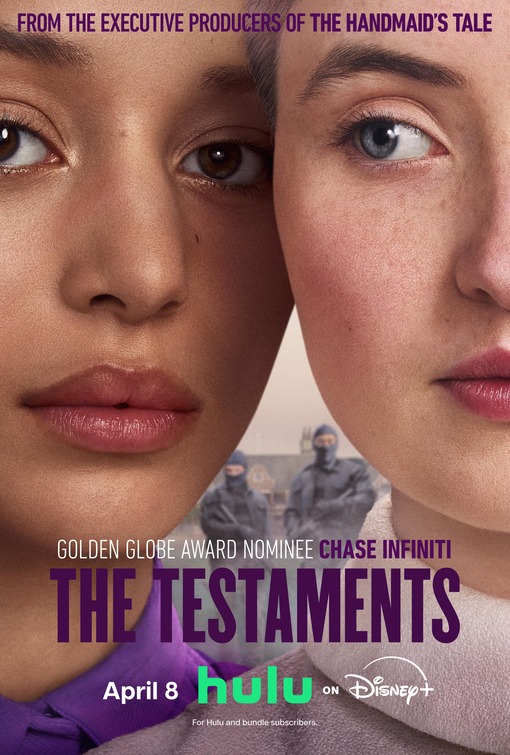
The Testaments is a Hulu dystopian drama and the sequel to The Handmaid's Tale, adapted from Margaret Atwood's 2019 Booker Prize-winning novel. Created by Bruce Miller, who stepped away from running the original series specifically to develop it, the show returns to the theocratic nation of Gilead more than a decade after Offred's story.
Ann Dowd returns as the fearsome Aunt Lydia, narrating the machinery of Gilead from the inside. The story follows two young women on opposite sides of the border: Agnes (Chase Infiniti), raised entirely within Gilead's rigid order, and Daisy (Lucy Halliday), a defiant teenager in Canada. Their converging fates drive a coming-of-age tale about resistance and complicity, with Elisabeth Moss returning as June Osborne.
Premiering in April 2026, The Testaments earned generally favorable reviews, with an 88% score on Rotten Tomatoes, for extending the franchise through a younger lens, and Hulu renewed it for a second season after it crossed 45 million hours streamed. It is streaming on Hulu.

Rivals is a 2024 Disney+ series based on Jilly Cooper's landmark 1988 novel, set in the glamorous, ruthless world of British commercial television in the late 1980s. The series follows the escalating war between two media moguls — Rupert Campbell-Black (Alex Hassell), a debauched, rakish aristocrat and the supremely charming owner of a television franchise, and Tony Baddingham (David Tennant), his uptight, calculating rival who is determined to take Rupert's franchise from him at the next franchise auction. Between them orbit wives, lovers, children, and a constellation of supporting characters who exist somewhere on the spectrum between moral compromise and outright dissolution.
David Tennant is magnetic as the cold, controlled Tony — the performance is a masterclass in repression, with Tennant conveying an entire inner life of frustrated ambition and sexual jealousy through clenched jaw and clipped vowels. Alex Hassell is the effortless charmer against whom every other male character is implicitly measured: Rupert's particular brand of aristocratic roguishness would be unbearable in a less skilled actor's hands, but Hassell makes him infuriating and irresistible in equal measure. Aidan Turner, Claire Rushbrook, Lisa McGrillis, Nafessa Williams, and Katherine Parkinson round out an ensemble that brings Cooper's vast character landscape to life with wit and considerable physical energy.
Rivals arrived as a wildly entertaining prestige drama with the pace and energy of a soap opera and the production value of a prestige cable show — a combination that proved enormously popular with audiences who had spent years asking when Jilly Cooper's beloved novels would receive serious screen adaptations. The series became a genuine cultural event in the UK and performed strongly internationally through Disney+ and Hulu, combining the pleasures of period costume drama with the frank sexuality and competitive excess that made Cooper's original such a phenomenon. It is the kind of show that demands immediate viewing of the next episode and generates passionate audience investment in questions of who will end up with whom. Stream on Hulu.
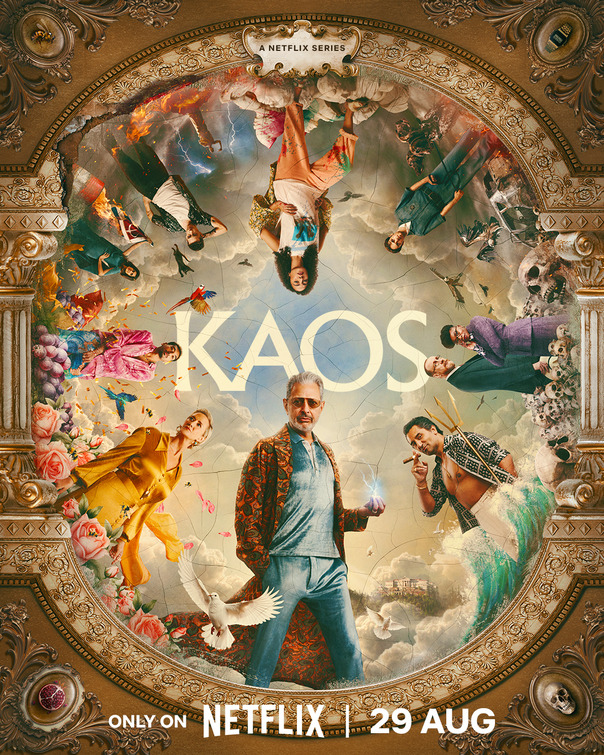
Kaos is Netflix's wildly inventive British fantasy series that reimagines Greek mythology as a contemporary dark comedy, set in a world where the Olympian gods are real, neurotic, and deeply invested in maintaining their dominance over a modern Mediterranean society that closely resembles our own. At the center of it all is Zeus (Jeff Goldblum), an aging, narcissistic god increasingly consumed by a paranoid obsession with a wrinkle on his forehead — which, according to prophecy, signals the beginning of his end. The show cuts between three storylines — Olympus, the mortal world, and the Underworld — weaving together a rich ensemble of characters, both divine and human, who are all entangled in the approaching crisis.
Created by Charlie Covell, Kaos is formally daring in the way it treats its mythological source material as a living, mutable text rather than a fixed canon. Characters from different myths coexist and interact in ways that generate both comedy and tragedy; the show refuses to foreground the gods as its moral center and instead roots its sympathies firmly with the mortals — particularly a young woman named Riddy (Aurora Perrineau) and her entanglement with the Prometheus storyline — who are suffering the consequences of divine whim and institutional neglect.
Jeff Goldblum's performance as Zeus is a tour de force of comic vanity and menace, perfectly calibrated to the tone Covell is after: funny enough to make the satire land, but genuinely threatening enough that the stakes feel real. The show is lush, strange, and strikingly original, one of the more adventurous pieces of genre television produced in recent years, and it suggests a new direction for mythology on screen — not as epic adventure but as a vehicle for political and social satire of the first order.
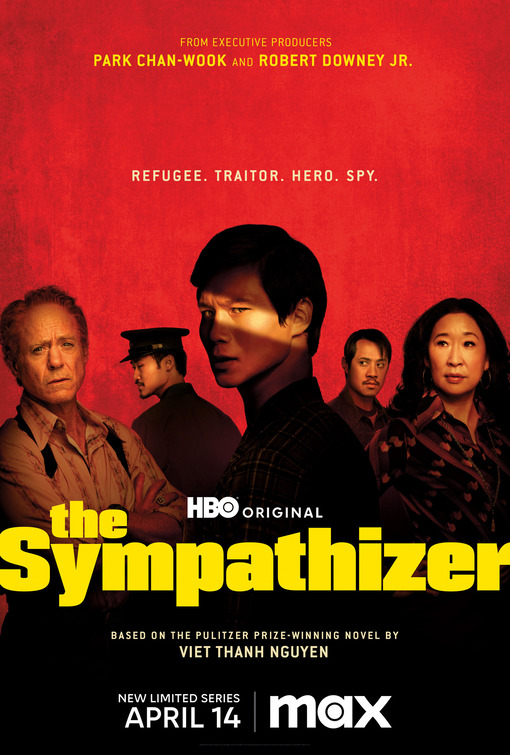
The Sympathizer is a 2024 HBO limited series directed by Park Chan-wook, the acclaimed South Korean filmmaker behind Oldboy and Decision to Leave. Based on Viet Thanh Nguyen's Pulitzer Prize-winning 2015 novel of the same name, the series follows a nameless narrator known only as the Captain, a communist spy of mixed French-Vietnamese heritage embedded within the South Vietnamese military during the final days of the Vietnam War. Played with extraordinary range by Hoa Xuande, the Captain is a man of two faces, two loyalties, and two worlds, perpetually caught between the country he serves and the ideology he secretly holds.
As Saigon falls in April 1975, the Captain is evacuated to the United States alongside the South Vietnamese general he serves, and the show pivots into a darkly comic and deeply subversive portrait of the Vietnamese refugee experience in Los Angeles. The production is visually opulent and tonally audacious, blending spy thriller mechanics with bitter satire of American imperialism and Hollywood's history of Asian representation. Robert Downey Jr. appears in a tour-de-force of character acting, playing multiple white American authority figures across the series to pointed, thematic effect.
The Sympathizer received wide critical acclaim for its ambition, its performances, and its willingness to tell the Vietnam War story from a perspective rarely granted by American film or television. The series earned numerous Emmy nominations and cemented Hoa Xuande as one of the most exciting new screen presences in years.

Pachinko is one of the most ambitious television dramas ever produced — a multigenerational epic based on Min Jin Lee's bestselling 2017 novel that spans nearly a century of Korean-Japanese history through the story of one family's survival, sacrifice, and resilience. The series opens in early twentieth-century Korea, where a young woman named Sunja makes a fateful decision that will reverberate through four generations of her family, eventually reaching a young Solomon (Jin Ha) navigating identity and belonging in 1980s Osaka and New York.
What makes Pachinko extraordinary is its ambition matched by its execution. Showrunner Soo Hugh and her team weave between three distinct time periods and three languages — Korean, Japanese, and English — with total command, finding the thread that connects the grandmother of 1915 to the grandson of 1989 not through plot mechanics but through a shared DNA of stubbornness and love. The performances throughout are exceptional, with Youn Yuh-jung (Oscar winner for Minari) delivering heartbreaking grace as the elder Sunja.
Pachinko is also a rare television drama that places the Korean-Japanese experience — one of the twentieth century's most overlooked stories of displacement and discrimination — at the absolute center of a major prestige production. It is sweeping in scale and intimate in feeling, and it stands as one of the defining works of international television storytelling.
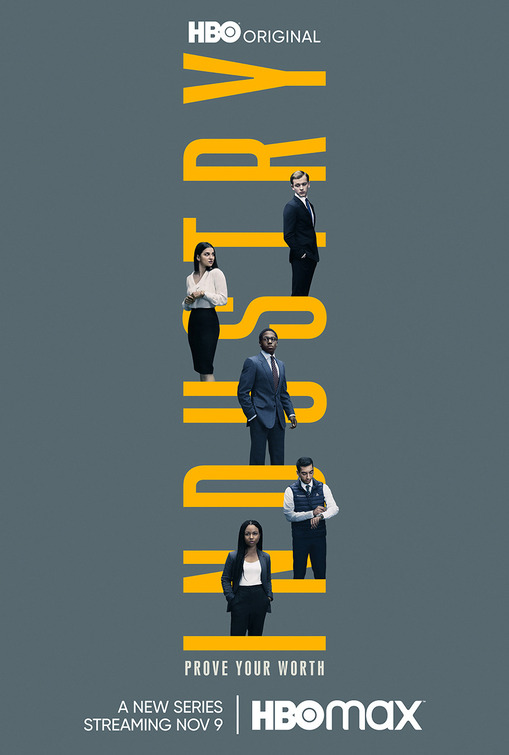
Industry is the most bracingly alive drama on television — a series set inside the brutal meritocracy of a London investment bank that follows a cohort of ambitious young graduates competing for permanent positions in a world that rewards performance, ruthlessness, and the willingness to sacrifice everything. Created by Mickey Down and Konrad Kay, the show follows characters including Harper Stern (Myha'la), an American recruit hiding a secret from her resume; Yasmin Kara-Hanani (Marisa Abela), a well-connected Oxford graduate navigating her own privilege; and Robert Spearing (Harry Lawtey), an emotionally volatile trader from a working-class background.
What elevates Industry above other workplace dramas is its unsparing honesty about power — who holds it, how it is extracted, and what it costs to climb toward it. The show is deeply uncomfortable in the best way: it refuses to make any character purely sympathetic or purely villainous, tracing instead the ways that an institution shapes and deforms the people inside it. The bank becomes a pressure cooker for class, race, gender, and ambition, with the trading floor as the arena where all these forces collide.
By its third season, Industry had evolved from a promising debut into one of the sharpest dramas of its era — tight, stylish, and willing to make choices that major network television would never attempt. It is essential viewing for anyone interested in the contemporary intersection of capitalism and identity.
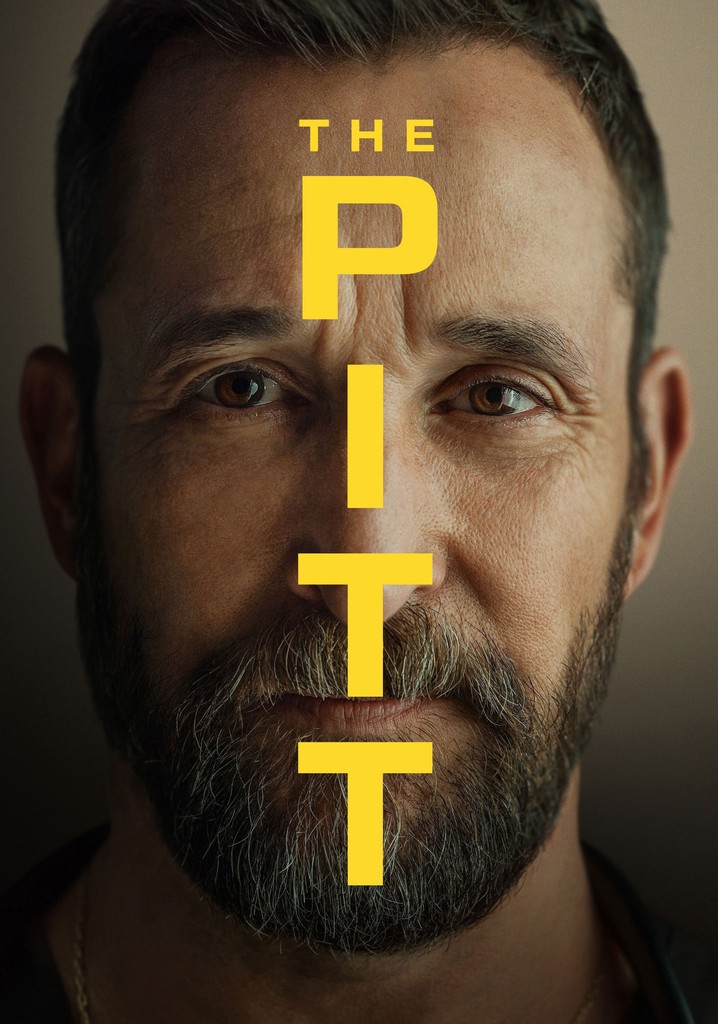
The Pitt is a gripping, technically brilliant medical drama from the creator of the original ER, John Wells, that follows a single fifteen-hour shift in the emergency department of a Pittsburgh trauma hospital. Each of the series' fifteen episodes runs in near-real-time, covering one hour of that shift, placing viewers in the thick of overlapping crises, institutional dysfunction, and the emotional cost borne by people who spend their working lives inches from death. Noah Wyle — returning to the medical drama genre for the first time since ER ended in 2009 — plays Dr. Michael Robinavitch, an attending physician trying to hold his department together while processing his own barely contained grief.
The show distinguishes itself from other medical dramas through its commitment to procedural accuracy — the production employed dozens of actual emergency medicine physicians and nurses as consultants, and the result is a working environment that feels disturbingly real. Patients arrive with actual triage codes, staff communicate in authentic medical shorthand, and the ethical dilemmas that arise — around resource allocation, patient consent, and end-of-life care — are treated with the seriousness they deserve rather than as dramatic devices.
The Pitt is not easy television. It places you inside a crucible of human suffering and expects you to endure it alongside characters you come to care about with startling speed. But it is also intensely rewarding — a reminder that the best network drama can be as morally serious and formally ambitious as anything produced for prestige cable or streaming. Wyle is extraordinary, and the ensemble around him ensures that every corner of the ER feels inhabited and alive.
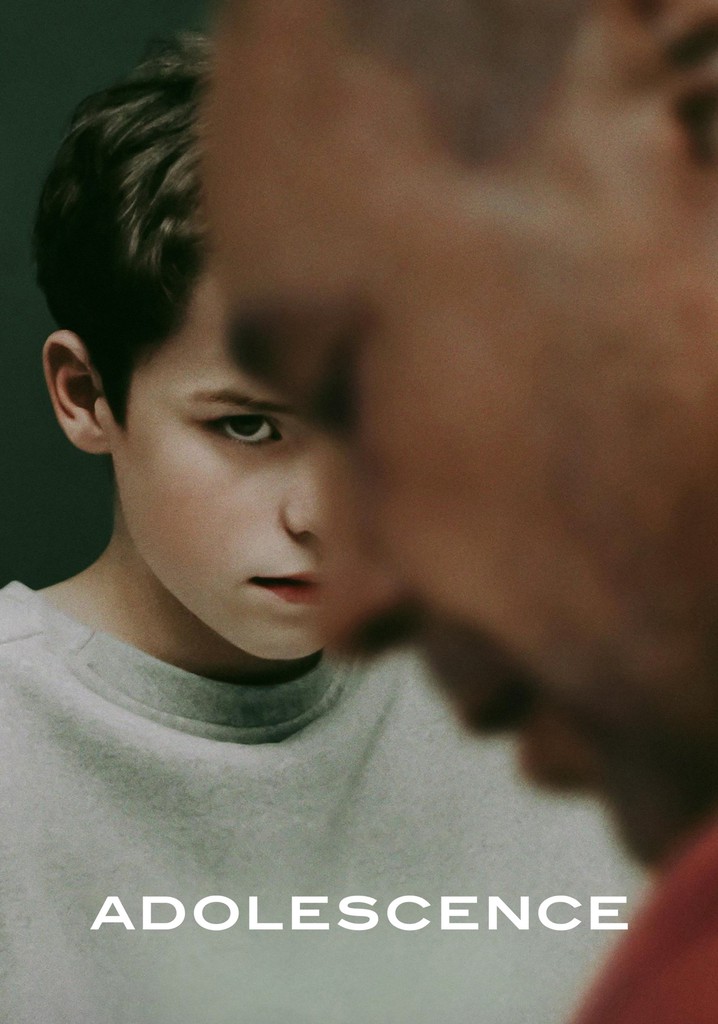
Adolescence is a devastating, formally audacious Netflix miniseries from writer Jack Thorne and director Philip Barantini that explores the aftermath of an unthinkable crime through a deceptively intimate lens. Each of the four episodes is filmed in a single unbroken take, placing the viewer in relentless real time alongside detectives, teachers, and a fractured family struggling to comprehend how their thirteen-year-old son came to kill a classmate. Stephen Graham — who also co-created and produced the series — plays the father, and his performance is one of the most nakedly human things committed to film or television in years.
The show resists the conventions of procedural drama, offering no traditional investigation timeline and no courtroom resolution. Instead, each episode focuses on a single environment — a police station, a school, a family home, a prison — and allows the emotional reality of each space to accumulate in real time without the relief of a cut. Barantini, whose feature Boiling Point pioneered this technique, executes the approach here with even greater ambition, staging scenes of extraordinary complexity with meticulous choreography invisible to the viewer.
What makes Adolescence exceptional is its refusal to explain evil. The series is less interested in why the crime happened than in what it does to everyone around it — how grief, guilt, and the desperate search for causation can consume families, institutions, and communities whole. It earned almost universal critical acclaim upon release and ignited a nationwide conversation in the UK about social media, online radicalization, and the opacity of teenage inner lives. For those who can bear it, Adolescence is essential television.