
Verified streaming availability
Editorial verification
Reviewed by the OnlineTVcast Editorial Team against official provider catalogs and authoritative release sources. Material availability changes are recorded by market.
What this status means
Availability is specific to the named country and check date. Prices, plans and catalogs can change.
OnlineTVcast may earn a commission from some provider links. This does not affect which services we list or their order.
OnlineTVcast may earn a commission from some provider links. This does not affect which services we list or their order.
Nathan Lane, who plays the acerbic Bunny, is one of the most celebrated stage comedians of his generation, known for Broadway productions like The Producers and the film The Birdcage. Lane has said that Mid-Century Modern gave him the opportunity to craft a comedic character with genuine emotional depth in a format that could reach a new generation of viewers who might not know his stage work.
The show was developed with the explicit intention of filling a gap that creators Kohan and Mutchnick identified: while television has featured young gay characters for decades, older gay men and the specific texture of their lives and friendships have been largely invisible on screen. The Palm Springs setting was chosen partly because the city has a long history as a haven for LGBTQ+ Americans.
The title carries a double meaning: it refers both to the iconic mid-century modern architectural style that defines Palm Springs, with its flat roofs and indoor-outdoor living, and to the characters themselves, navigating a modernist approach to a life stage that previous generations had no roadmap for. Production designers leaned fully into the aesthetic with period-accurate furniture and color palettes.
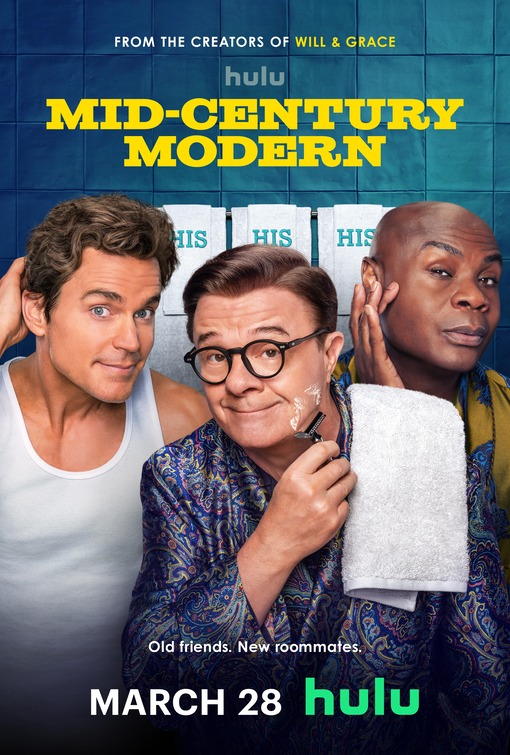
When their mutual best friend dies suddenly, three gay men of a certain age, Bunny, Jerry, and Arthur, find themselves adrift. In need of connection and community, the trio moves in together at Bunny's late mother's Palm Springs home, where they must figure out what the next chapter of their lives looks like with very different ideas about how to live it.
Created by Max Mutchnick and David Kohan, the team behind Will and Grace, Mid-Century Modern brings together Nathan Lane, Matt Bomer, and Nathan Lee Graham in a warm, sharp, old-school sitcom about friendship, aging, and chosen family. The Hulu series channels the spirit of classic ensemble comedies while centering a perspective that television has historically ignored: older gay men facing later life.
Debuting to immediate affection from critics and audiences alike, the show was praised for the chemistry of its leads, for Nathan Lane's particular genius in the role of the caustic and tender Bunny, and for its willingness to be genuinely, unabashedly funny. In an era of irony-drenched comedy, Mid-Century Modern is refreshingly committed to the craft of the joke.
Got a "Not available in your region" message?
No worries. Learn about streaming access by region and explore available titles where the service is available.

Streaming availability and access rules vary by provider and region. Review each service’s terms before subscribing.
View service details and availabilityStreaming access guide →