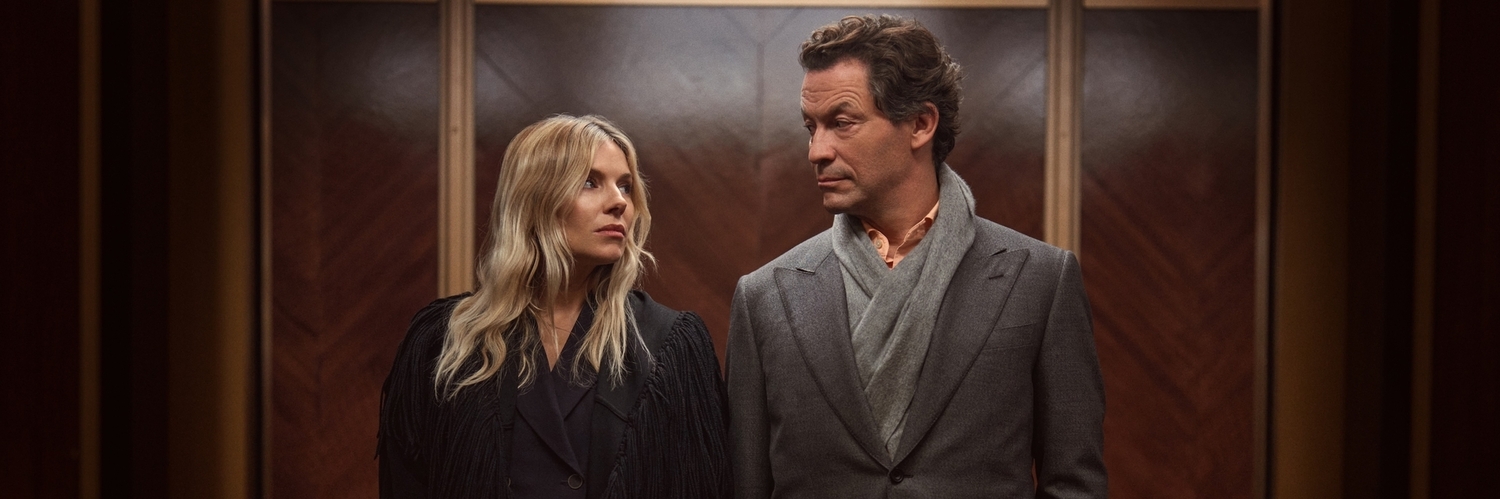
War is streaming on HBO Max in the United States. The eight-episode season debuted on October 1, 2026, and new episodes are released weekly on Thursdays. Availability was checked on October 11; other countries may use different Warner Bros. Discovery or Sky services.
George Kay's legal drama follows rival London firms Cathcarts & Sons and Taylor & Byrne as they fight over the divorce of tech entrepreneur Morgan Henderson and international film star Carla Duval. Dominic West and Sienna Miller play the estranged couple, while Archie Renaux is ambitious lawyer Johnny Warren, drawn into a contest where reputation and loyalty are tactical assets. Ben Taylor is the lead director of the HBO and Sky production.

Days of Our Lives TV Show is a daytime soap opera that centers on to main families; the Brady's and the Horton's. It is set in a midsized make believe Midwest town called Salem that proves to be full of surprises. These families get tangled in everything from being held captive on a secret island to long lost relatives showing up. The characters lives are forever changing and not the way they always want it to. Days of Our Lives TV Show definitely delivers everything from drama to mystery with a strong foundation of characters and history that keeps it going after over forty years of episodes.

Big Love TV show is the controversial drama on HBO that gives a bird's eye view of polygamy and its participants without being discriminatory. The show centers around a man named Bill Henrickson and his three wives; Barb, Nicki and Margene as well as their nine children, all fathered by Bill. After being banished from his home by the prophet, Nicki's father, Bill struggles to live following his polygamous beliefs while appearing normal to the outside world as the owner of a home improvement store chain. Meanwhile Bill has to deal with not just one wife at home, but three as they all compete for his time and attention. Only on the HBO Big Love TV show will you find this storyline that will keep you watching.

For several years, "Law and Order: SVU TV show" has reigned as the most popular title in the "Law and Order" franchise. As the opening intones, In New York's war on crime, sexually-based offenses are considered especially heinous.," and the Special Victims Unit works round the clock on the city's most gut-wrenching cases. "SVU" has held onto its legions of loyal viewers by delivering hard-hitting, compelling and complicated plots week after week. Over the years, the characters have evolved, but the core cast has remained constant. The consistency and continuity undoubtedly contribute to viewers' dedication to Detectives Elliott Stabler (Christopher Meloni) and Olivia Benson (Mariska Hargitay). "Law and Order: SVU TV show" also attracts high-powered stars for special appearances in every episode, and it challenges the guests to step well outside their comfort zones, demanding they play parts radically different from roles that made them famous. In recent years, Julie Bowen and Luke Perry co-starred in an episode that told the story of a woman who unwittingly married the man who raped her. Cynthia Nixon of "Sex and the City" fame played a woman with multiple personality disorder; and superstar Sharon Stone has done a stint as Deputy District Attorney. "SVU's" combination of an exceptionally strong core cast plus great guest stars plus intriguing, engaging, labyrinthine plots often "ripped from the headlines" takes viewers on a weekly thrill ride, keeping it riding high in the ratings.

Chase TV Show is another hit from executive producer Jerry Bruckheimer, but this is not your typical police drama. It is based in Houston, Texas and chronicles a U.S. Marshal team specializing in fugitive apprehension; who are on the chase for the country's most wanted criminals. Deputy Annie Frost (Kelli Giddish) leads the all star team including intelligence and weapons/tactical specialists as well as a true Texan cowboy. Follow this notorious team of five as they capture the really bad guys and overcome their own personal issues at the same time. You can be assured, Chase TV Show is a fast moving action packed one hour drama that you won't want to miss, so stay tuned!

The hot new drama produced by John Eisendrath, Outlaw TV show takes "˜representing the little guy' to a whole new level. Jimmy Smits stars as Cyrus Garza; a well respected, straight shooting Supreme Court justice who is also known as a gambler and playboy. However, after abruptly resigning from his high level position many refer to him as an outlaw as he returns to private practice to "˜represent the little guy'. Garza uses his inside knowledge of the system to battle some very powerful people and take on the today's biggest cases to make sure the law does what he believes it is suppose to.

Everyone has their own skeletons inside a closet. Teenagers are no exemptions. In The Secret Life of the American Teenager TV Show, students are finding it hard to keep their secrets a secret. Tackling sensitive issues cloaking the teenage years, the creators of Nineties' family drama, 7th Heaven, brings out another drama that lends us a compassionate look at the high and lowlights of unplanned teenage pregnancy. The Secret Life of the American Teenager TV Show focuses on teen mom, Amy Juergens (portrayed by Shailene Woodley) who got pregnant after having sex with his boyfriend, Ricky Underwood in band camp. As the seasons unfold, Amy discovers that she's not the only one in Ulysses S. Grant High School that's hiding a secret.

Royal Pains TV Show is one of current rated cable network TV series in the U.S. It's another medical drama that corners the misadventures of an ex-E.R. doctor, Henry Hank Lawson (Mark Feuerstein), turned into an exclusive doctor for the wealthy and famous. This radical career change springs from his expulsion caused by the death of a rich patient under his watch in his former hospital. In Royal Pains TV Show, Dr. Lawson is largely based in the uppity community of the Hamptons. It is local hospital administrator, Jill Casey (Jill Flint) who provides the balance in Dr. Lawson's medical career by egging him to help some poor patients in the area. This TV series is inspired by the rise of the practice of concierge medicine in America.