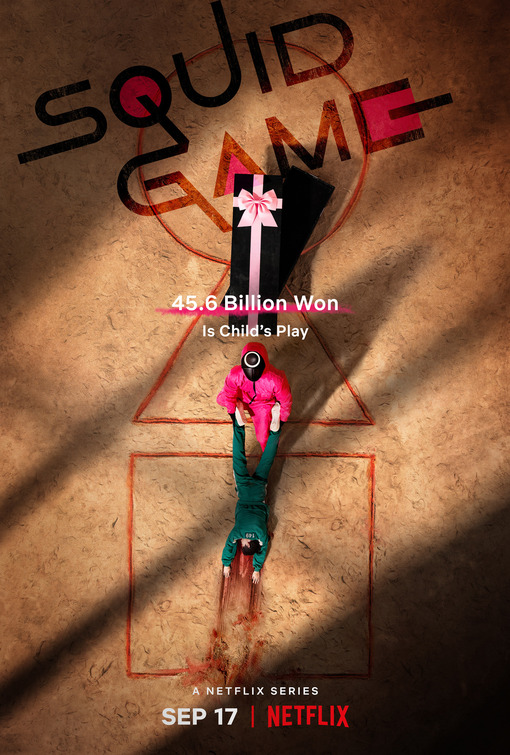
Squid Game Season 3 is the final chapter of Hwang Dong-hyuk's record-shattering South Korean survival drama, the series that became a global phenomenon on Netflix. Picking up immediately after the events of Season 2, it brings Lee Jung-jae's Seong Gi-hun back into the deadly arena for a concluding run of episodes that Hwang originally conceived as part of one larger story.
Reeling from the failed rebellion that closed the previous season, a hardened and grief-stricken Gi-hun re-enters the games determined to bring them down from the inside, while the masked Front Man (Lee Byung-hun) tightens his grip and welcomes the shadowy VIPs. Outside the island, detective Hwang Jun-ho (Wi Ha-joon) presses on with his desperate search as the surviving players are funneled through a final gauntlet of childhood games turned lethal. The season sharpens the show's central question: what people will sacrifice, and whether any decency can survive, inside a machine built on human desperation.
Season 3 launched to staggering numbers, drawing more than 60 million views in its first three days to become Netflix's biggest television premiere ever and topping the charts in dozens of countries. Critics praised its bleak ambition and emotional payoff even as its ending divided some fans. Streaming on Netflix.
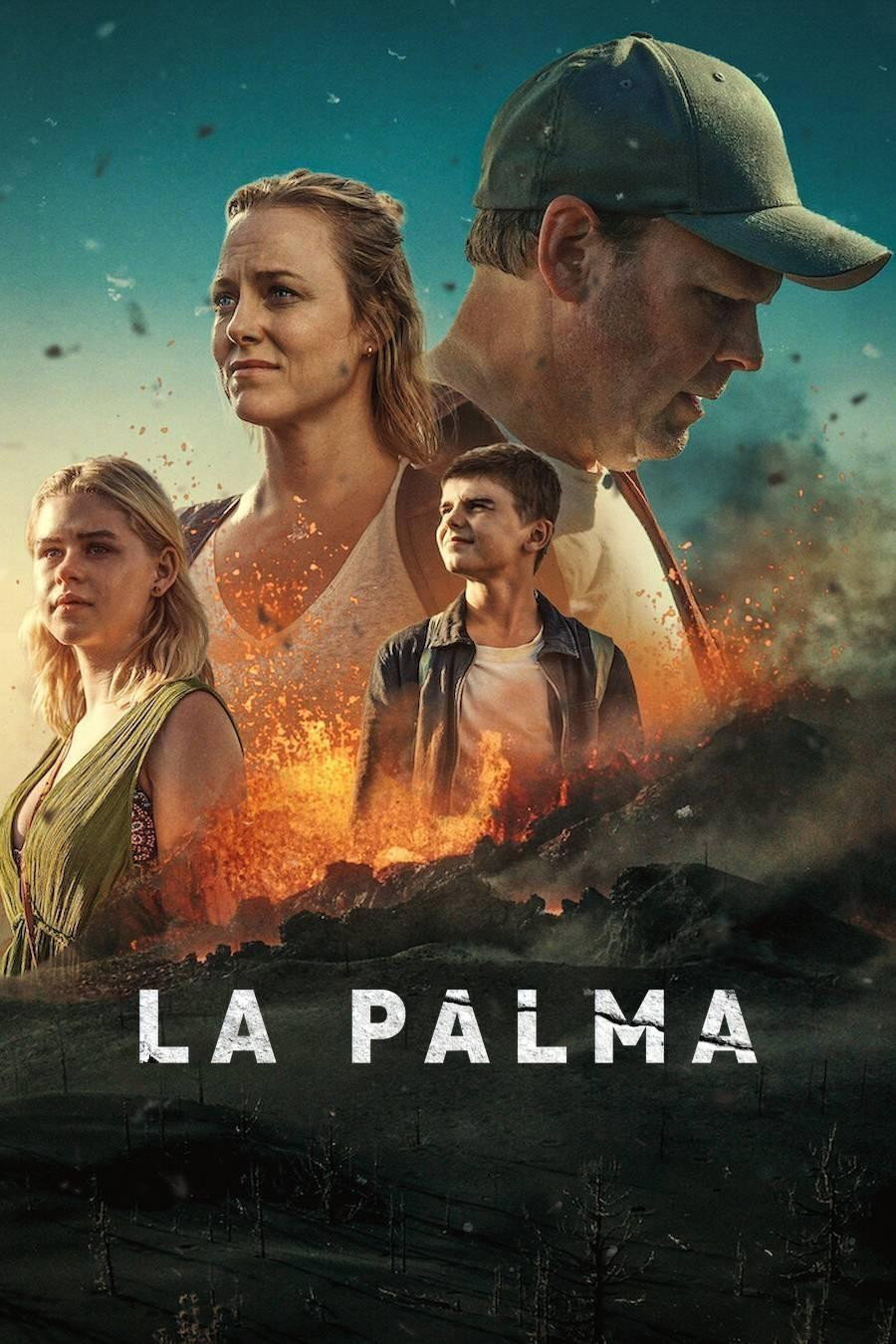
La Palma is a gripping Norwegian disaster drama from Netflix that takes its name from the volcanic island in the Canary Islands chain — a real geological hotspot that scientists have long warned could produce a catastrophic Atlantic tsunami if its western flank were to collapse. The series follows multiple characters on both the island and in Norway as a volcanic eruption escalates beyond all predictions, forcing impossible decisions about evacuation, communication, and the management of panic across two countries simultaneously.
The show belongs to a rich tradition of Nordic disaster and thriller storytelling — precise, character-driven, willing to sit with ambiguity and dread — while drawing specifically from the legacy of Norwegian genre television that includes Occupied and Wisting. Its split focus between La Palma and Norway is both a geographical and thematic device: the series is as interested in how warning systems fail and how institutions respond to crises as it is in the human stories of those directly in the eruption's path. The science is taken seriously, the politics of disaster management are scrutinized, and the personal stakes are never used to simplify what is essentially a systemic story.
La Palma arrived on Netflix as a binge-worthy thriller that doubled as a serious examination of climate vulnerability and emergency preparedness. Filmed partly on location in the Canary Islands and partly in Norway, the series has a visual scope that matches its narrative ambition. It was praised for its restraint — the disaster film's instinct toward spectacle is deliberately held back in favor of procedure, character, and the specific texture of waiting for something catastrophic to either arrive or not. Essential viewing for fans of Nordic drama and anyone drawn to real geological threats.

Apple Cider Vinegar is Netflix's audacious dramatization of one of the most brazen wellness frauds in recent memory — the story of Belle Gibson, the Australian Instagram influencer who built a multimillion-dollar empire on the false claim that she had healed terminal cancer through diet and alternative remedies. Alycia Debnam-Carey stars as Milla (a fictionalized version of Gibson), a young woman who discovers that fabricating a health narrative brings her the connection, meaning, and income that eluded her in her actual life. The series traces the rise and fall of her empire with savage wit and uncomfortable sympathy.
Created by Samantha Strauss and produced in Australia, the series is as interested in the cultural ecosystem that makes frauds like Gibson possible as it is in Gibson herself. It examines the wellness industrial complex — the unregulated testimonial economy of social media, the monetization of vulnerability, the way illness narratives confer moral authority — with the analytical sharpness of a long-form investigation and the visual energy of a thriller. Debnam-Carey's performance is a high-wire act: she makes Milla comprehensible without making her sympathetic, letting the audience understand the hunger driving the lie without excusing its consequences for the cancer patients who trusted her.
Apple Cider Vinegar arrived on Netflix in February 2025 as one of the most discussed new series of the year, praised for its formal ambition and its willingness to interrogate not just its subject but the audience's own relationship to wellness culture. The show's tagline — "A true-ish story, based on a lie" — sets its tone perfectly: a work that knows the difference between truth and narrative, and explores what happens when the two are deliberately confused. It stands as a cautionary tale for the social media age and riveting, uncomfortable television.
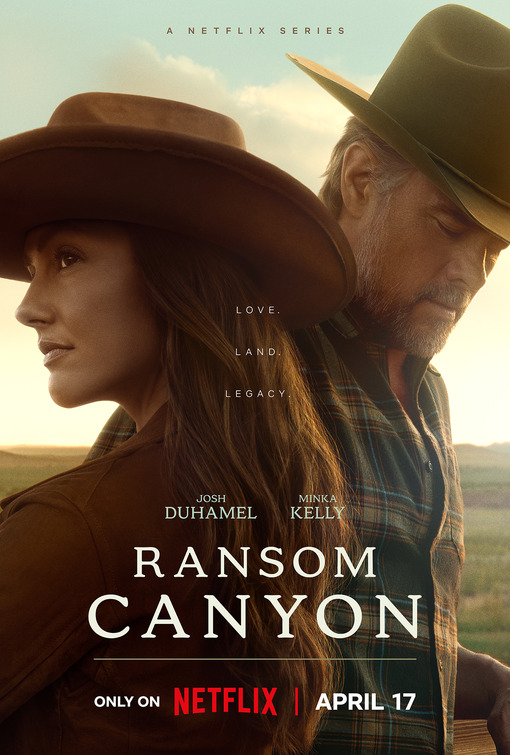
Based on the beloved novels of Jodi Thomas, Ransom Canyon brings the sweeping romance of the Texas Panhandle to Netflix with Josh Duhamel and Minka Kelly as the leads of a multigenerational love story rooted in land, loyalty, and the long shadows that family history casts across our choices. Set in the rugged landscape of West Texas, the series follows Staten Kirkland (Duhamel), the taciturn owner of the vast Kirkland Ranch, and the complicated history between him and Quinn O'Grady (Kelly) — a woman from a neighboring property whose connection to Staten has never fully resolved despite the years and circumstances separating them.
Ransom Canyon works in the tradition of the great American ranch romance, with the visual grandeur of a landscape that demands large screens and the narrative patience of a story interested in people who have lived long enough to accumulate regret. Thomas's novels have sold millions of copies and built a devoted readership precisely because they take their characters' interiority seriously — these are not people who fall in love easily or without consequence, and the series honors that weight. The supporting ensemble deepens the drama by expanding the story beyond its central couple to encompass an entire community navigating change, inheritance, and what it means to stay.
Ransom Canyon premiered on Netflix on April 17, 2025, and became an immediate sensation among viewers drawn to character-driven drama with authentic regional specificity. Praised for its cinematography — West Texas has rarely looked this formally beautiful on a streaming series — and for the lived-in chemistry between Duhamel and Kelly, the show transcends its genre's conventional playbook. It is a series about roots: the ones that hold us to places and people, and the ones that have to be severed before anything new can grow.
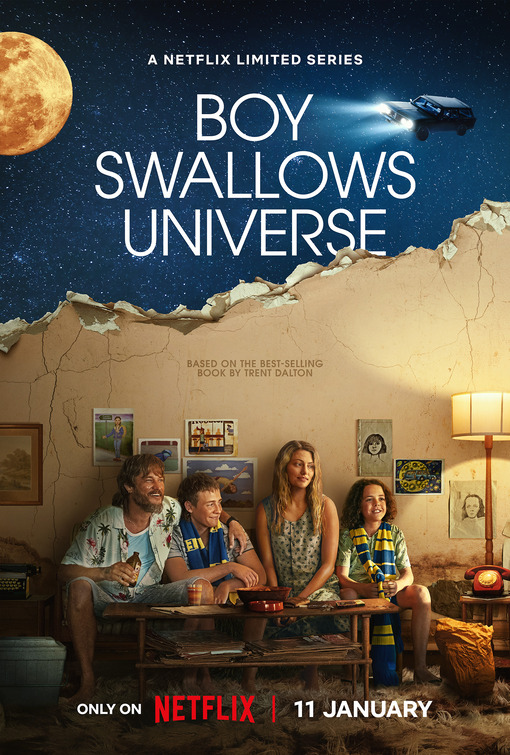
Boy Swallows Universe is a sweeping Australian coming-of-age drama adapted from Trent Dalton's beloved bestselling novel, set in the working-class suburbs of Brisbane during the 1980s. The series follows Eli Bell, a twelve-year-old boy navigating a childhood marked by poverty, drug dealers, a mute best friend who communicates in invisible messages, and a stepfather with deep criminal ties. Despite the darkness surrounding him, Eli possesses an extraordinary imagination and an unshakeable belief that his story will have a meaningful ending, a conviction that drives him toward an unlikely future as a journalist.
The adaptation captures the novel's remarkable balance of gritty social realism and lyrical magic, presenting Eli's world with the heightened intensity of lived childhood memory. The production design recreates the era with loving detail, and the young cast delivers performances of astonishing emotional depth. Travis Fimmel brings brooding complexity to the role of Eli's stepfather Lyle, while Felix Cameron's portrayal of young Eli anchors the series with a naturalism that feels lived-in rather than performed.
Boy Swallows Universe became a cultural event in Australia, the country's most-watched Netflix original series at the time of its release, and earned praise internationally for its ambitious storytelling and emotional impact. Dalton's novel drew heavily from his own childhood, and the series translates its essential spirit intact: a story that insists on finding hope and beauty in the most unlikely circumstances, and on the power of imagination to transform even the hardest life into something worth telling.

One Hundred Years of Solitude brings Gabriel Garcia Marquez's seemingly unfilmable masterpiece to the screen in a grand Netflix production that honors the sweep and magic of the beloved novel. The series follows seven generations of the Buendia family in the mythical town of Macondo, a world where the miraculous and the mundane exist side by side. Shot in Colombia with a largely Latin American cast, the production immerses viewers in the rich sensory world of the original text, from the banana plantation fever to the yellow butterflies that follow the irresistible Mauricio Babilonia.
The adaptation unfolds across sixteen episodes that allow the source material's famously intricate family saga to breathe, with clear structures helping audiences navigate the novel's generational storytelling. Showrunners Jose Rivera and Natalia Santa worked with the approval of the Garcia Marquez estate, and the series was filmed entirely in Colombia, lending it an authentic visual identity rooted in the landscapes and culture the novel describes.
For decades, Garcia Marquez himself refused to sell the rights, doubting that any adaptation could capture the novel's essential spirit. That this series exists at all is remarkable; that it manages to translate the magical realist vision with such fidelity is a genuine achievement, standing as one of the most ambitious literary adaptations in streaming history.
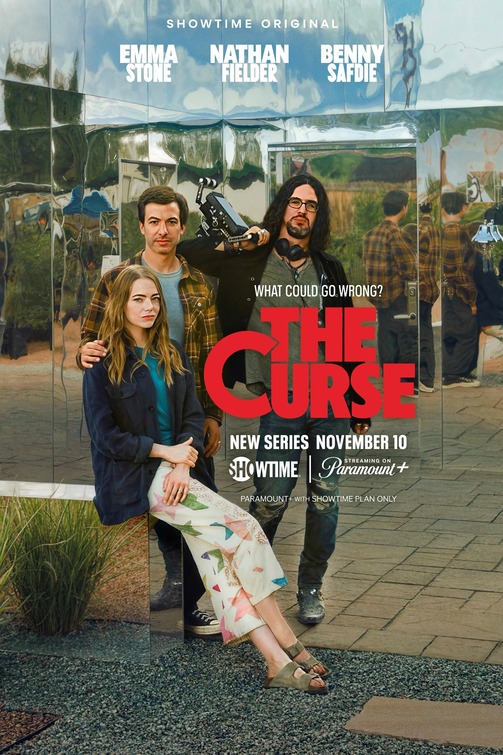
The Curse is the most profoundly uncomfortable television experience of recent years — a cringe comedy and psychological horror hybrid created by Nathan Fielder and Benny Safdie that follows Asher and Whitney Siegel, a couple played by Nathan Fielder and Emma Stone, as they attempt to launch an HGTV-style home renovation show in Española, New Mexico while also trying to genuinely help the community they are simultaneously exploiting for content. The show's premise asks how performance of goodness relates to actual goodness, and refuses to answer in any way that lets its characters or its audience feel comfortable.
Emma Stone gives one of the finest comedic performances of her career as Whitney — a woman whose genuine desire to do good is so thoroughly contaminated by her need to be seen doing good that she can no longer distinguish between the two impulses. Nathan Fielder's Asher is her perfect counterpart — a man so thoroughly engaged in performing normalcy that his real self has become almost entirely inaccessible to him. Benny Safdie plays the couple's television producer with sycophantic menace, and the show's formal experiments — it begins shooting documentary-style and gradually destabilizes its own visual grammar — make its horror feel like a formal inevitability rather than a genre intrusion.
The Curse aired on Paramount+ and Showtime from November 2023 through January 2024, generating the most intense critical conversation of any new series that season and a finale that achieved genuine notoriety for its radical formal choices. Critics debated whether it was comedy, horror, or something neither existing genre category could adequately contain. What seemed clear was that Fielder and Safdie had created something genuinely unprecedented — a work that used the specific textures of lifestyle television to expose the violence encoded in the performance of benevolence. It streams on Paramount+.
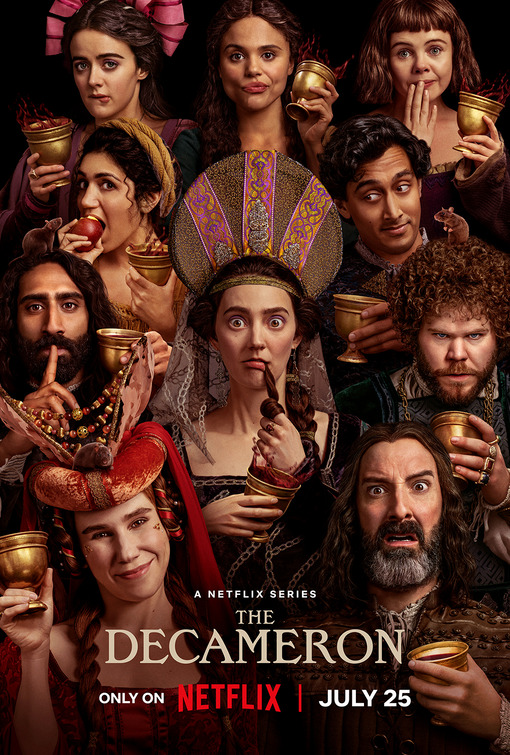
The Decameron is Netflix's wickedly entertaining limited series inspired by Giovanni Boccaccio's fourteenth-century collection of tales, transposed from Florence to a rural Italian villa where a group of nobles and their servants have gathered to wait out the Black Death in 1348. Created by Kathleen Jordan, the show uses its medieval setting as permission for modern sexual politics, class dynamics, and comic mayhem — the historical frame providing a funhouse mirror rather than a documentary, and every character speaking and thinking in ways that are deliberately and productively anachronistic. The pandemic premise has obvious contemporary resonance, but the show wears it lightly.
Zosia Mamet leads an ensemble that includes Tony Hale, Saoirse-Monica Jackson, Tanya Reynolds, and Amar Chadha-Patel in a series that manages to be simultaneously bawdy, politically sharp, and genuinely touching without losing the comic energy that makes its more serious intentions feel earned rather than imposed. The villa and its grounds are rendered with gorgeous production design that makes fourteenth-century Italy feel lush and immediately inhabitable, and Jordan's writing finds contemporary emotional truth in situations that are formally absurd — the wealthy hiding from plague while their servants do the dangerous work of maintaining the illusion of safety.
The Decameron premiered in July 2024 to reviews that praised its wit, its ensemble performances, and its refusal to be simply a period comedy or simply a contemporary allegory. Critics noted that Kathleen Jordan had created something rare — a show that is actually funny in the precise, character-derived way that is genuinely difficult to achieve, while also saying something about class, gender, and survival that remained honest rather than preachy. It streams on Netflix and rewards binge-watching in the way that only genuinely comic television can manage.