
Verified streaming availability
Editorial verification
Reviewed by the OnlineTVcast Editorial Team against official provider catalogs and authoritative release sources. Material availability changes are recorded by market.
What this status means
Availability is specific to the named country and check date. Prices, plans and catalogs can change.
OnlineTVcast may earn a commission from some provider links. This does not affect which services we list or their order.
OnlineTVcast may earn a commission from some provider links. This does not affect which services we list or their order.
1. Belle Gibson, the real person who inspired the series, claimed to have healed terminal brain cancer through diet. Her story generated millions of followers and a bestselling cookbook — The Whole Pantry — before investigative journalists began questioning the medical claims at the heart of her brand.
2. In 2015 Gibson's claims were exposed as fabricated. The Australian newspaper published an investigation revealing she could not substantiate her cancer diagnosis or her claimed recovery; she was subsequently fined over $400,000 by Australian authorities for misleading conduct.
3. Alycia Debnam-Carey spent months preparing for the role. She studied Gibson's public persona through her entire social media archive and researched the psychology of pathological lying and performance anxiety to understand how someone could sustain a false identity for years.
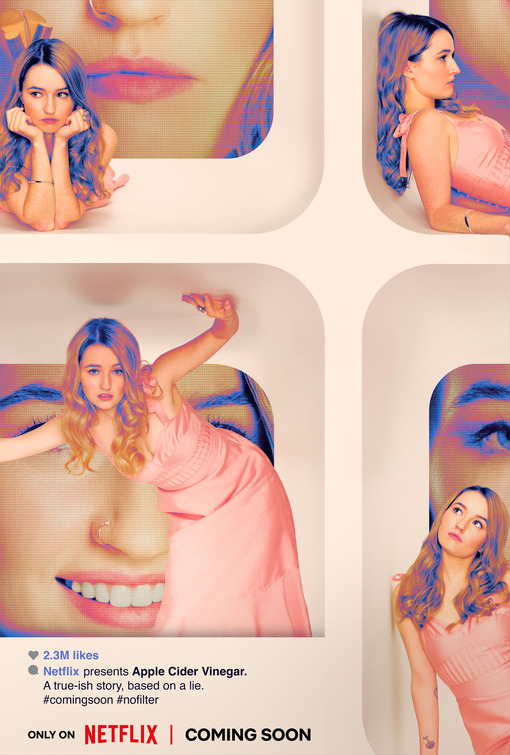
4. The series carries the tagline "A true-ish story, based on a lie." The phrase functions as its own commentary: every dramatization of true events involves selective truth-telling, but Gibson's story is unique because its source material was itself a fabrication from the beginning.
5. The show examines the parallel story of a real cancer patient misled by wellness promises. This secondary narrative thread gives the dark comedy genuine moral stakes — an account of how unregulated wellness content can have life-and-death consequences for vulnerable people.
6. Creator Samantha Strauss has described the show as being about the hunger for meaning that wellness culture exploits. Rather than framing Gibson as simply a villain, Strauss treats her as a symptom of a broader cultural pathology — the gap between the lives people actually have and the curated lives they feel they should present.
7. The show's reception in Australia was particularly intense. Where Belle Gibson's story was a major national scandal, many Australian viewers watched with a charged relationship to the original media coverage — the series became a vehicle for re-examining how the country's media had initially celebrated Gibson before her exposure.
Apple Cider Vinegar is Netflix's audacious dramatization of one of the most brazen wellness frauds in recent memory — the story of Belle Gibson, the Australian Instagram influencer who built a multimillion-dollar empire on the false claim that she had healed terminal cancer through diet and alternative remedies. Alycia Debnam-Carey stars as Milla (a fictionalized version of Gibson), a young woman who discovers that fabricating a health narrative brings her the connection, meaning, and income that eluded her in her actual life. The series traces the rise and fall of her empire with savage wit and uncomfortable sympathy.
Created by Samantha Strauss and produced in Australia, the series is as interested in the cultural ecosystem that makes frauds like Gibson possible as it is in Gibson herself. It examines the wellness industrial complex — the unregulated testimonial economy of social media, the monetization of vulnerability, the way illness narratives confer moral authority — with the analytical sharpness of a long-form investigation and the visual energy of a thriller. Debnam-Carey's performance is a high-wire act: she makes Milla comprehensible without making her sympathetic, letting the audience understand the hunger driving the lie without excusing its consequences for the cancer patients who trusted her.
Apple Cider Vinegar arrived on Netflix in February 2025 as one of the most discussed new series of the year, praised for its formal ambition and its willingness to interrogate not just its subject but the audience's own relationship to wellness culture. The show's tagline — "A true-ish story, based on a lie" — sets its tone perfectly: a work that knows the difference between truth and narrative, and explores what happens when the two are deliberately confused. It stands as a cautionary tale for the social media age and riveting, uncomfortable television.
Got a "Not available in your region" message?
No worries. Learn about streaming access by region and explore available titles where the service is available.

Streaming availability and access rules vary by provider and region. Review each service’s terms before subscribing.
View service details and availabilityStreaming access guide →


