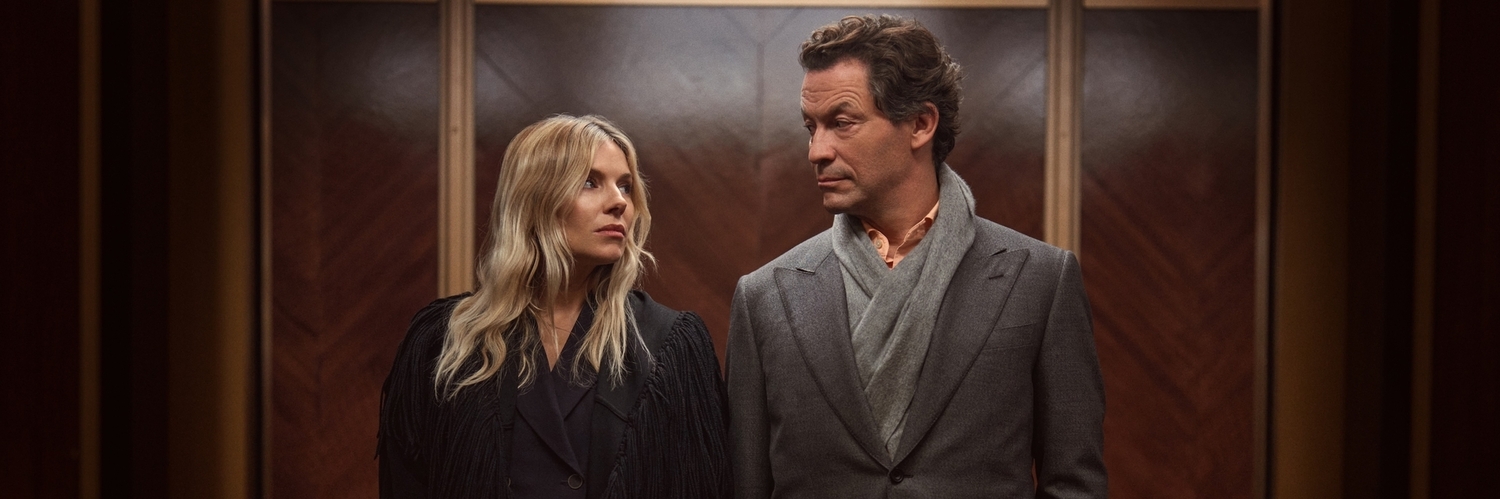
War is streaming on HBO Max in the United States. The eight-episode season debuted on October 1, 2026, and new episodes are released weekly on Thursdays. Availability was checked on October 11; other countries may use different Warner Bros. Discovery or Sky services.
George Kay's legal drama follows rival London firms Cathcarts & Sons and Taylor & Byrne as they fight over the divorce of tech entrepreneur Morgan Henderson and international film star Carla Duval. Dominic West and Sienna Miller play the estranged couple, while Archie Renaux is ambitious lawyer Johnny Warren, drawn into a contest where reputation and loyalty are tactical assets. Ben Taylor is the lead director of the HBO and Sky production.

Describing "Harry's Law," one summary says flatly, "A former patent lawyer brings together a group of misfit associates to form an unconventional law practice." How did the producers ever pitch that concept to the network? Oh, wait. It was NBC. Still, a patent lawyer? Misfit associates? Real exciting, right? Do not judge too quickly, because Kathy Bates applies her quirky charisma to her portrayal of Harriet "Harry" Korn, and she works some small screen magic. A mid-season replacement for one of NBC's cavalcade of epic failures, "Harry's Law" actually looks a lot like a real television drama"”real characters, real actors, real plots, and dialogue peppered with genuinely witty repartee. The premise and some of the best writing come from David E. Kelley, television's answer to John Grisham"”prolific and provocative. As The New York Times observes, "A hallmark of Mr. Kelley's shows is often the thinnest application of logic or reason in depictions of a world dedicated to logic and reason." The settings and courtroom dramas seldom resemble anything in real life, but they tend to recreate the audience's imagination of the legal system and "crusading" criminal attorneys. Close enough. In eight episodes, "Harry's Law" has established a loyal following in a timeslot long dominated by ABC's "Castle." Vegas betting parlours probably will give you odds on "Harry's Law" returning in the fall, and it might be worth risking a dollar or so.

With the plethora of "reality" programming seen everywhere today it is refreshing to see a show like The L Word which deals with a group of people involved with being lesbian, transgender, or who are bisexual. All the ongoing stress and controversy that must be dealt with on a daily basis plays out in and around West Hollywood, in sunny Los Angeles, California. Some powerful writing is provided by Guinevere Turner (American Psycho) and Rose Troche (Six Feet Under) and others. Starring in the L Word are some well known names such as Jennifer Beals (as Betty Porter), Pam Grier (as Kate Porter), and Laurel Holloman (as Tina Kennard). The coded language for lesbian has long been "the L Word" but today simply calling oneself a lesbian is more preferred and common for these women have "come out" proudly. This controversial show deals with same sex marriage and the desire to have a baby. Alcohol and drugs effect lives and ongoing relationships are often threatened by affairs and sexual transgender issues.

The Sopranos is HBO’s completed crime drama about Tony Soprano, a New Jersey mob boss trying to manage two demanding families: the relatives at home and the criminal organization he leads. Panic attacks bring Tony to psychiatrist Dr. Jennifer Melfi, and their sessions provide a lens on his fears, resentments and self-justifications without separating therapy from the consequences of his violence. Created by David Chase and led by James Gandolfini, the series combines organized-crime conflict with marriage, parenting, aging and workplace pressure. Edie Falco’s Carmela and Lorraine Bracco’s Melfi are central to the story’s moral and emotional tension. Across six seasons, relationships change gradually and earlier choices continue to matter, so first-time viewers should start with the pilot.
Where to watch (checked October 7, 2026): Every season is available through HBO Max where the service and title are offered. HBO programming and branded services differ by territory, so verify the local catalog before subscribing.
Official source: Warner Bros. Discovery / HBO.

An American crime drama, The Killing is based on a Danish television program titled Forbrydelsen which means The Crime. American writers say they used the original as a "blue print" but gave it a distinctly Americanized flair with characters that will be more appealing to the viewing audience. The setting for The Killing is Seattle, Washington and the show revolves around police investigators and their daily work load. Each episode will center on one day of an investigation into the homicide of a small girl and follows along with the investigating officers as they track down clues and work to solve the case before the trail runs cold. A dark show, The Killing is brutally honest in many respects regarding the why's and how's of a murder. The police deal with brutality and mayhem but never get used to it entirely. Cast members include Mireille Enos as detective Sarah Linden, Billy Campbell as politician running for Mayor of Seattle Darren Richmond, Michelle Forbes portrays Mitch Larsen (mother of the murdered girl Rosie), Brent Sexton as Stan Larsen (father of Rosie), and Joel Kinnaman who plays the part of Stephen Holder, Sarah Linden's partner and fellow detective

Based on the Italian fifteenth century Borgia dynasty, the made for the Showtime network series titled The Borgias follows Rodrigo Borgia (Jeremy Irons) rise to power and the Papacy. Called the original crime family, the Borgias amassed great wealth, influence, and power as family patriarch Rodrigo committed nearly every sin imaginable as he gained power and vast wealth. Such successors as The Godfather (Mario Puzo) and The Prince (Niccolò Machiavelli) were inspired by the original "bad family" the Borgias and made for entertaining viewing. But the originals were greedy evil people who had no morals. It is at the height of the Renaissance period that we find the Borgia family intriguing to watch and perhaps learn from. Besides Jeremy Irons there are many fine actors in the cast including Francois Arnaud as Cesare Borgia, Holliday Grainger as Lucrezia Borgia, David Oakes as Juan Borgia, and Derek Jacobi portraying Cardinal Orsini. Look for this entertaining television series and see the original "Godfathers of crime".

"Body of Proof" will bring at least one more strong female lead to network television, bringing the sum total to approximately two. Too bad they will compete head-to-head in the same time-slot; good thing we have DVRs. "We need to have more smart women characters on television," says Dana Delany as she prepares to play medical examiner Megan Hunt in ABC's new drama, "Body of Evidence." As plots unfold on the new show, Dr. Megan Hunt's brilliance never will become an issue"”if anything she sometimes is too smart for her own good; but her compassion and human kindness frequently will be in doubt. Dr. Hunt brings a few issues to the autopsy room: Five years ago, she lost everything in the wake of a serious car accident"”her marriage, custody of her daughter,; and, most importantly, her extremely successful practice as a neurosurgeon. Promos for "Body of Evidence" are slick, stylish, sexy, and sassy. Ms. Delany looks seductively into the camera, promising, "Don't believe everything you've heard. The truth is much worse." Adding even more spice and power, Jeri Ryan ends her peripatetic travels across the dial, settling down to play Dr. Kate Murphy, the medical examiner. Set for debut on March 29, 2011, "Body of Evidence" promises to become a Tuesday ten o'clock favourite.

Slackers serving Satan as his bounty hunters? At a bare minimum, "The Reaper" does offer conclusive proof that colluding with the devil is considerably more exciting than a job at the Work Bench, a fictional Seattle home improvement store. Imagine Sam Oliver's surprise when he learns on his twenty-first birthday his parents negotiated a long-ago deal with the captain of the underworld: Save daddy's life, and they will give Satan their first-born child. Of course, mom and dad used every form of contraception imaginable until Satan released their doctor from his gambling debts in exchange for Doc's telling mom and dad they could not conceive. Sam ensues. Satan himself shows-up at the big twenty-first gala to detail "The Reaper's" new job description. Sam, who once complained that college "made him sleepy," naturally balks at the devil's deal; but the devil is at least as persuasive with Sam as he was with Eve. Satan tells Sam, should he decline, his mother forfeits her soul. Sam grudgingly accepts new super-powers and goes to work hunting down wayward sinners who have contrived to escape Hell. Television drama ensues. "The Reaper" earned an extremely devoted"”albeit somewhat cultish"”following. A representative review explained the attraction: "This show is so refreshing - great premise, great characters, and they don't take themselves too seriously. The Devil is a hunk, and just couldn't be played better than Ray Wise."