Get Millie Black is a gritty crime drama created by the Booker Prize-winning novelist Marlon James, marking his first work written for television. A co-production for HBO and the UK's Channel 4, the five-part series is among the first major HBO dramas set and filmed largely in Jamaica, steeping its mystery in the streets, patois and social fault lines of Kingston.
Tamara Lawrance stars as Millie-Jean Black, a Jamaican-born detective who trained at Scotland Yard before returning home to work missing-persons cases for the Jamaica Constabulary Force. When a routine disappearance collides with a Scotland Yard investigation led by a visiting detective, played by Joe Dempsie, Millie is pulled toward a dangerous web of trafficking and long-buried family wounds. Gershwyn Eustache Jnr plays her partner Curtis, and Chyna McQueen appears as Millie's sister Hibiscus.
The limited series earned rapturous reviews on both sides of the Atlantic, holding a perfect critics' score on Rotten Tomatoes and drawing praise for its performances and its vivid, unsentimental sense of place. It aired on HBO and Max in the United States in late 2024 and on Channel 4 in the UK in early 2025. It streams on HBO Max.
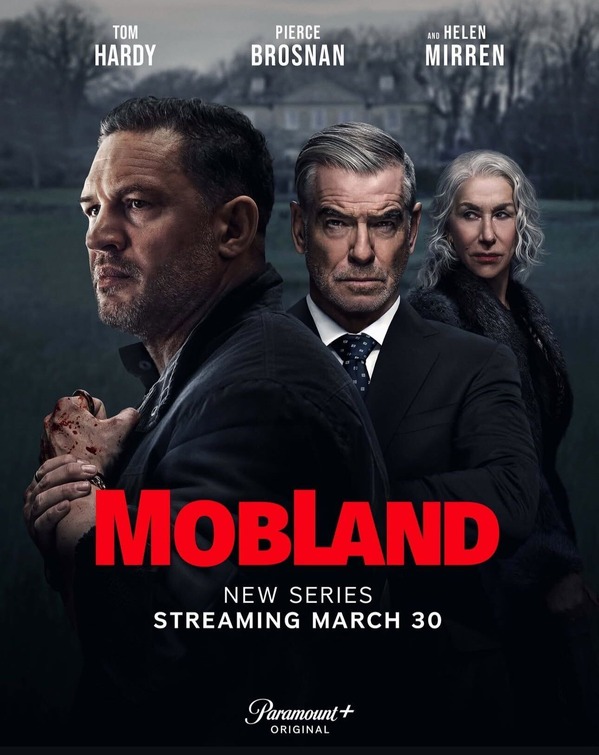
MobLand is a sleek, brutal crime drama created by Ronan Bennett and shaped by executive producer and director Guy Ritchie, who lends the series his kinetic style and underworld swagger. Premiering on Paramount+ in 2025, it quickly became one of the platform's signature prestige dramas, powered by a marquee British cast and a ruthless, twist-laden power struggle.
Tom Hardy stars as Harry Da Souza, a cool-headed fixer who cleans up problems for the Harrigans, a London crime dynasty ruled by patriarch Conrad (Pierce Brosnan) and his formidable, calculating wife Maeve (Helen Mirren). When tensions with the rival Stevenson family erupt into open war, Harry is caught between loyalty, survival, and his own family, as long-buried secrets threaten to bring the whole empire down.
The series drew strong viewership and praise for its heavyweight ensemble — particularly the pairing of Brosnan and Mirren as a monstrous crime-family couple — and for Ritchie's propulsive direction. Paramount+ moved quickly to renew MobLand for a second season, betting on it as a long-running anchor of its original-drama slate.
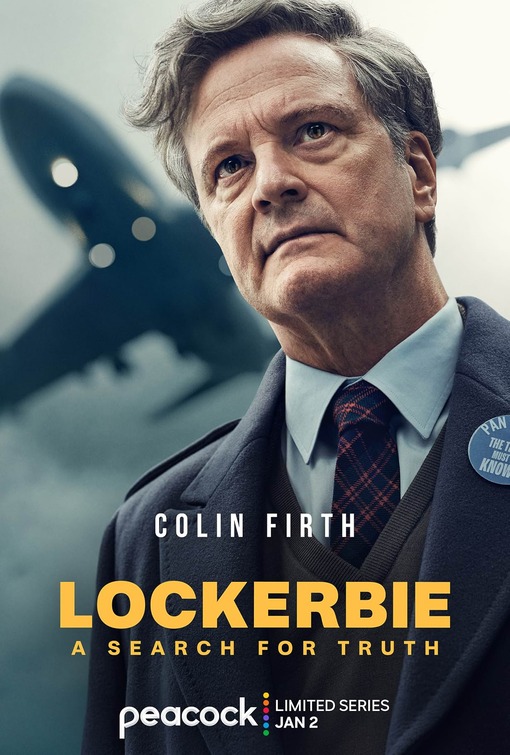
On December 21, 1988, Pan Am Flight 103 exploded over the Scottish town of Lockerbie, killing all 259 people aboard and 11 on the ground — the deadliest terrorist attack on British soil and one of the defining tragedies of the late Cold War. Among the dead was Flora Swire, a 23-year-old medical student. Her father, Dr. Jim Swire, would spend the following three decades refusing to accept the official account of what happened and who was truly responsible. Lockerbie: A Search for Truth, a Peacock limited series starring Colin Firth as Dr. Swire, tells the story of that pursuit — one man's decades-long demand for justice and his evolving understanding of a crime whose full truth remains contested.
Written by Patrick Moran and directed with measured gravity, the series is a procedural in the deepest sense: a step-by-step account of how an ordinary man — a family physician with no intelligence background — became one of the world's most persistent civilian investigators of a state-level terrorist act. Firth's performance is a study in controlled anguish, the grief of a father channeled into the meticulous discipline of inquiry. The series spans three decades, following Swire through the investigation, the trial of Libyan intelligence operative Abdelbaset al-Megrahi, Megrahi's controversial release in 2009, and the still-unresolved questions about the bombing's full context.
Lockerbie: A Search for Truth arrives on Peacock as one of the most substantive and emotionally demanding true-crime series in recent years — a show that takes its subject's complexity seriously and refuses the satisfactions of resolution. Dr. Swire himself cooperated with the production, lending it access and perspective that gives the series its moral ambiguity and its force. Five episodes that together constitute one of television's most rigorous engagements with the question of what justice means when the full truth cannot be known.
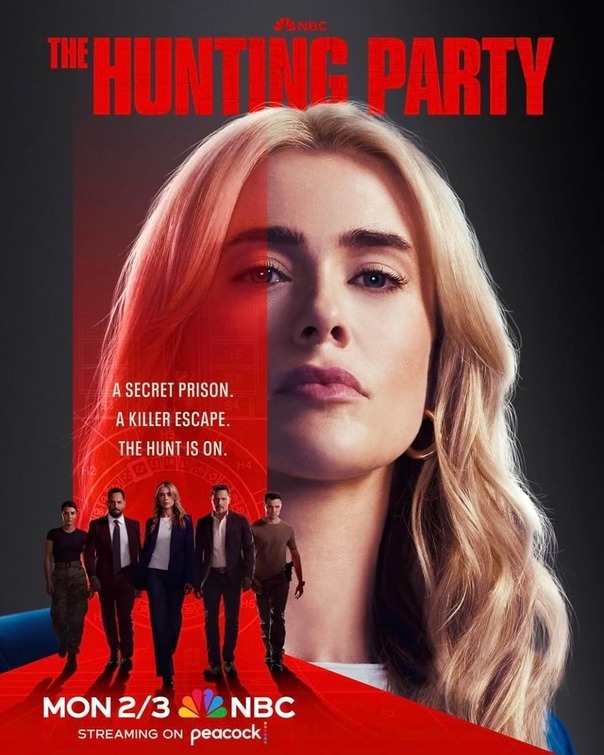
The Hunting Party is a propulsive NBC thriller built around the most dangerous kind of premise: a secure facility housing the world's most dangerous criminals has been breached, and its most unpredictable inmate has escaped. The series follows a specialized elite unit tasked with tracking down the fugitive before they can vanish permanently — a mission that requires the team to think as their quarry does, entering the psychology of someone for whom violence is a first language and evasion is a survival art.
Designed as a tightly wound procedural with a serialized spine, the series benefits from writing that builds tension methodically across each episode while revealing backstory and character in the margins between action sequences. The show draws from the tradition of American cat-and-mouse thrillers — from The Fugitive to Mindhunter — while infusing its premise with contemporary urgency and a genuine interest in the institutional failures that allow someone this dangerous to escape in the first place. The team dynamic at the show's center is one of its strongest elements, each member bringing different expertise to a problem that requires every skill collectively possessed.
The Hunting Party premiered on NBC on February 3, 2025, and became one of broadcast television's most watched new series of the midseason, driven by word-of-mouth enthusiasm for its tightly constructed pilot. Available to stream on Peacock immediately after broadcast, the series represents NBC's commitment to populist genre entertainment executed with genuine craft — a thriller that provides the satisfactions of its form while gesturing toward something larger about the nature of justice and the people tasked with enforcing it.

Set mere days after the catastrophic flood depicted in The Batman, The Penguin follows Oz Cobb as he seizes an opportunity to rise from mid-level enforcer to Gotham's most powerful crime lord. The city is in chaos, the Falcone family is fractured by tragedy, and Oz sees the vacuum at the top as his moment to finally claim the empire he's always believed he deserved.
Creator Lauren LeFranc has constructed a show that draws as much from The Sopranos and The Wire as it does from superhero mythology. Gotham is rendered as a believable urban environment drowning in corruption and grief, where the criminal ecosystem operates with its own bureaucracy, codes, and betrayals. Sofia Falcone — played with magnetic intensity by Cristin Milioti — emerges as Oz's most unpredictable and dangerous adversary.
Colin Farrell disappears entirely beneath prosthetics, a hunched gait, and a thick accent to inhabit Oz with startling humanity and menace. The series explores what drives a man like the Penguin: not just greed, but a lifetime of humiliation and desperate need to be seen as powerful. It's one of the most compelling villain origin stories in superhero television.
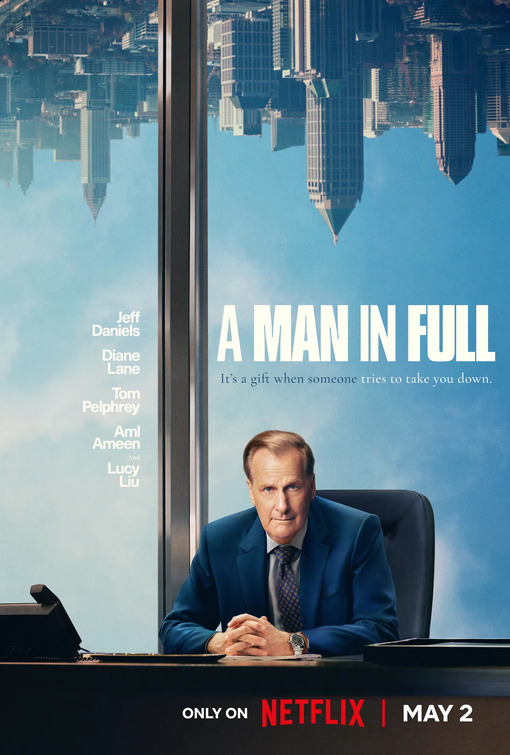
David E. Kelley brings Tom Wolfe's massive 1998 novel to Netflix in a six-episode limited series that captures much of the book's satirical energy while making the necessary compressions for the medium. Jeff Bridges plays Charlie Croker, a larger-than-life Atlanta real estate developer whose financial empire is on the verge of collapse, whose marriage is crumbling, and who finds himself entangled in a racial-political scandal with implications extending across the city's elite. It's a meaty role that draws on everything Bridges does well — swagger, vulnerability, self-delusion — and the veteran actor delivers one of his most physically present performances in years.
The series uses Wolfe's Atlanta as a vehicle for examining the persistent myths of the American South: the plantation-era roots of its real estate fortunes, the complicated performances of masculinity among its business elite, and the racial tensions that simmer beneath the surface of its civic life. Kelley's script doesn't entirely escape the oversimplifications that adapting a 742-page novel inevitably brings, but the production is handsomely mounted and boasts a strong supporting cast including Tom Pelphrey as a conflicted lawyer and Diane Lane as Croker's ex-wife watching his empire crumble from a safe distance.
Matt Bomer co-stars in a parallel storyline following a prisoner whose unlikely journey intersects with Croker's in ways that Wolfe used to explore Stoic philosophy and personal transformation. The Netflix adaptation streamlines some threads, but the essential ambition of Wolfe's project — to paint a panoramic portrait of American class anxiety in a specific time and place — comes through. A Man in Full is entertaining, sprawling prestige television that wears its literary pedigree with pride. Streaming on Netflix.

The third season of Mike White's acclaimed HBO anthology series relocates from Sicily to the sun-saturated luxury of Thailand, where a new cast of troubled, privileged guests descends on the White Lotus resort chain. Walton Goggins anchors the ensemble as a Southern businessman whose arrival sets off a chain of events that none of the guests could have anticipated, while Carrie Coon, Jason Isaacs, and Leslie Bibb round out a cast that White deploys with his trademark precision and mordant wit. The Thai setting allows the show to expand its thematic palette into spiritual tourism, Western fascination with Eastern philosophy, and the particular absurdities that emerge when American wealth encounters Buddhist culture.
White uses the resort as a pressure cooker in which characters' facades crumble with accelerating speed — a structure he has refined across the show's previous seasons, each time finding new ways to use the isolated luxury environment as a mirror for broader social anxieties. The production is gorgeous, the writing is as sharp as ever, and the ensemble brings the same combination of dark humor and genuine pathos that made the previous seasons so compelling. Season 3 expands the show's thematic palette further than either of its predecessors, incorporating questions about legacy, mortality, and the specific discontents of the globalized super-rich.
Season 3 confirms The White Lotus as one of the essential television events of the streaming era — a show that manages to be compulsively watchable and genuinely thoughtful about class at the same time. White's dialogue is as sharp as ever, and the Thai locations give cinematographer Ben Kutchins new material in crafting the show's gorgeous, slightly ominous visual style. A satisfying continuation of one of HBO's most distinctive series, streaming on Max.
.jpeg)
Eric is a riveting Netflix limited series set in 1980s New York, following Vincent Anderson, a volatile puppeteer whose young son Edgar goes missing on the way to school. Benedict Cumberbatch delivers a ferocious and deeply committed performance as Vincent, a man who channels his desperation, guilt, and unraveling mental state into an obsessive quest to construct a massive puppet named Eric. Vincent believes that if the creature his son had drawn is built and broadcast on his television show, it will somehow bring Edgar home. The series unfolds the mystery of Edgar's disappearance against the backdrop of a city grappling with the AIDS crisis, police corruption, and the marginalized communities forgotten by those in power.
Creator Abi Morgan weaves together multiple storylines with remarkable assurance: the detective investigating Edgar's disappearance makes discoveries in the city's underworld that complicate the official narrative, while Vincent's professional and personal life collapses around him in ways that reveal a man long overdue for a reckoning. The 1980s New York setting is recreated with vivid authenticity, capturing both the city's gritty vitality and the systemic injustices of the era.
Eric stands as one of Netflix's most thoughtful and ambitious limited series, praised for the courage of its storytelling and the exceptional quality of its performances. Cumberbatch's portrait of a man in freefall is matched by the ensemble around him, including McKinley Belcher III as the detective whose investigation becomes a moral reckoning of its own. The series asks difficult questions about who society chooses to protect and who it allows to disappear.