
I Love LA is an HBO comedy created by, written by, and starring Rachel Sennott, marking the breakout comedian's arrival as a television auteur. Sharp, self-referential, and steeped in the anxieties of a generation, the series skewers the striving, status-obsessed culture of young creatives trying to make it in Los Angeles.
Sennott plays Maia, a floundering talent agent whose fortunes shift when she reconnects with her estranged former best friend Tallulah (Odessa A'zion), a New York influencer who moves west. Around them orbits a codependent friend group that includes Josh Hutcherson as Maia's boyfriend Dylan, Jordan Firstman as a celebrity stylist, and True Whitaker, as the show mines comedy and cringe from ambition, friendship, and the performative hustle of LA life.
Premiering on HBO and HBO Max in November 2025, I Love LA earned strong reviews for its wit and generational specificity and was quickly renewed for a second season. With Sennott's distinctive voice at its center, it captures the comedy and quiet desperation of twenty-somethings chasing relevance. It streams on HBO Max.
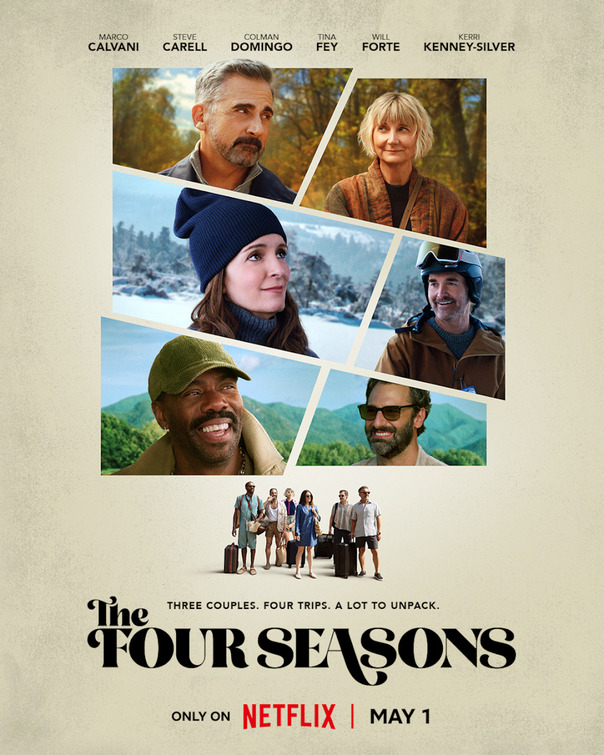
Netflix's The Four Seasons is a warm and quietly heartbreaking comedy about middle age, long marriages, and the way friendships both sustain and complicate our lives. Based on Alan Alda's beloved 1981 film of the same name, the series follows three couples who vacation together across four seasons: spring, summer, fall, and winter. What begins as a celebration of decades-long friendship becomes a reckoning with everything those decades contain, including the secret that one couple is separating — and the disruption that announcement sends through the entire group.
Tina Fey heads the ensemble and her presence — both as a creative force and its most prominent face — gives the show much of its tonal intelligence. The comedy is deeply funny in the way that only works rooted in emotional honesty can be: the laughs arrive from truth, not from performance. Steve Carell, Colman Domingo, Will Forte, Marco Calvani, and Kerri Kenney-Silver round out an ensemble that plays with the genre's romantic comedy conventions while consistently exceeding them. The series never condescends to its characters — these are people in the middle of their lives, trying to figure out what still matters.
The Four Seasons arrived on Netflix as a passionate alternative to youth-fixated content, and found an immediate audience among viewers hungry for comedy that took adult relationships seriously. Praised for the naturalistic ease of its ensemble performances, for each seasonal episode's distinct mood, and for Fey and her collaborators' refusal to resolve the show's central tensions too neatly, it quickly became one of the platform's most-discussed originals of the year. Three couples. Four trips. A lot to unpack.

Set mere days after the catastrophic flood depicted in The Batman, The Penguin follows Oz Cobb as he seizes an opportunity to rise from mid-level enforcer to Gotham's most powerful crime lord. The city is in chaos, the Falcone family is fractured by tragedy, and Oz sees the vacuum at the top as his moment to finally claim the empire he's always believed he deserved.
Creator Lauren LeFranc has constructed a show that draws as much from The Sopranos and The Wire as it does from superhero mythology. Gotham is rendered as a believable urban environment drowning in corruption and grief, where the criminal ecosystem operates with its own bureaucracy, codes, and betrayals. Sofia Falcone — played with magnetic intensity by Cristin Milioti — emerges as Oz's most unpredictable and dangerous adversary.
Colin Farrell disappears entirely beneath prosthetics, a hunched gait, and a thick accent to inhabit Oz with startling humanity and menace. The series explores what drives a man like the Penguin: not just greed, but a lifetime of humiliation and desperate need to be seen as powerful. It's one of the most compelling villain origin stories in superhero television.
Picking up where the first season's shocking revelations left off, Silo Season 2 follows Juliette Nichols as she navigates the hostile landscape outside the silo while her allies inside fight to survive a fractured society on the brink of civil war. The season expands the show's world dramatically, venturing beyond the claustrophobic confines of the underground bunker into territory rife with danger and unexpected discovery.
Based on Hugh Howey's Wool trilogy, the series continues to explore themes of institutional control, manufactured reality, and the human cost of enforced ignorance. Showrunner Graham Yost has deepened the political intrigue within the silo's governance structure, weaving storylines about class, rebellion, and the moral compromises people make to maintain order.
Rebecca Ferguson anchors the season with a physical and emotional performance that carries the weight of the show's central mystery. The supporting cast — including Common, Tim Robbins, and Harriet Walter — bring texture to a world where every character holds secrets. Silo Season 2 is a confident escalation of one of streaming's most compelling sci-fi dramas.
The second season of Severance picks up immediately after the explosive events of the season finale, with Mark Scout and his innie counterparts facing the full weight of what they've uncovered about Lumon Industries. The severed floor is in disarray, loyalties are tested, and the line between the innies' underground rebellion and the outies' oblivious surface lives grows increasingly dangerous.
Creator Dan Erickson and director Ben Stiller have crafted a season that doubles down on the show's signature atmospheric dread. The sprawling Lumon corridors feel even more labyrinthine, and the corporate rituals more sinister. New characters arrive who complicate the innies' fragile alliances, while the mysterious purpose of the severed program inches closer to revelation.
Adam Scott delivers a tour de force performance navigating the fractured psyche of Mark S., while Britt Lower, Zach Cherry, and John Turturro each get expanded arcs that redefine what it means to be severed. Severance Season 2 cements the show as one of television's most original and intellectually daring dramas.
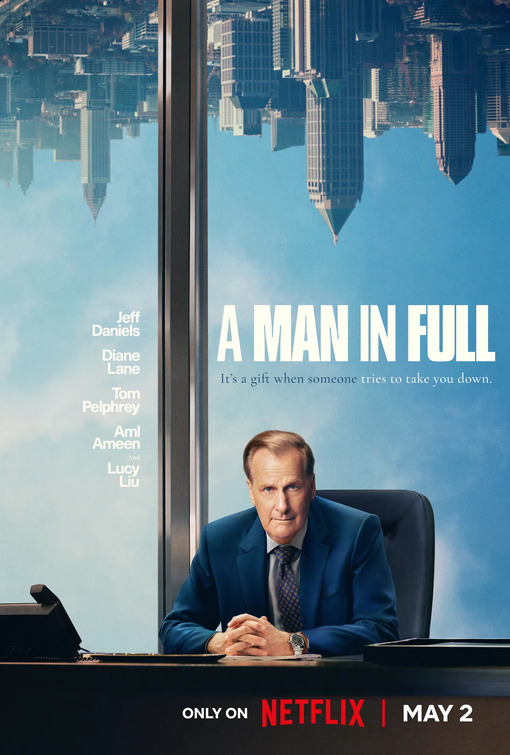
David E. Kelley brings Tom Wolfe's massive 1998 novel to Netflix in a six-episode limited series that captures much of the book's satirical energy while making the necessary compressions for the medium. Jeff Bridges plays Charlie Croker, a larger-than-life Atlanta real estate developer whose financial empire is on the verge of collapse, whose marriage is crumbling, and who finds himself entangled in a racial-political scandal with implications extending across the city's elite. It's a meaty role that draws on everything Bridges does well — swagger, vulnerability, self-delusion — and the veteran actor delivers one of his most physically present performances in years.
The series uses Wolfe's Atlanta as a vehicle for examining the persistent myths of the American South: the plantation-era roots of its real estate fortunes, the complicated performances of masculinity among its business elite, and the racial tensions that simmer beneath the surface of its civic life. Kelley's script doesn't entirely escape the oversimplifications that adapting a 742-page novel inevitably brings, but the production is handsomely mounted and boasts a strong supporting cast including Tom Pelphrey as a conflicted lawyer and Diane Lane as Croker's ex-wife watching his empire crumble from a safe distance.
Matt Bomer co-stars in a parallel storyline following a prisoner whose unlikely journey intersects with Croker's in ways that Wolfe used to explore Stoic philosophy and personal transformation. The Netflix adaptation streamlines some threads, but the essential ambition of Wolfe's project — to paint a panoramic portrait of American class anxiety in a specific time and place — comes through. A Man in Full is entertaining, sprawling prestige television that wears its literary pedigree with pride. Streaming on Netflix.
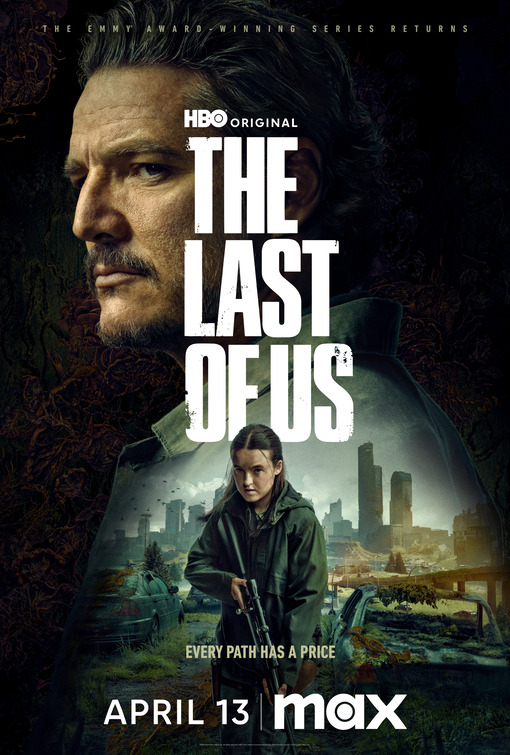
The second season of HBO's acclaimed adaptation arrives with the full weight of expectation and largely meets it. Craig Mazin and Neil Druckmann's continuation draws from the second game in the franchise, picking up several years after Season 1 as Ellie (Bella Ramsey) and Joel (Pedro Pascal) have built a life in the fortified settlement of Jackson, Wyoming. The fragile peace between them is about to be shattered, and the season's central dramatic engine is the chain of events that follows with devastating, morally complex momentum that the show refuses to simplify or sentimentalize.
Season 2 introduces Kaitlyn Dever as Abby, a character whose arc becomes increasingly central as the season progresses, and it's in the writing and performance of Abby that the season takes its boldest creative risks. The show is not afraid to make its audience uncomfortable or to withhold the easy emotional satisfactions that genre convention might demand — a fidelity to the source material that will divide audiences but gives the series a genuine sense of moral seriousness rare in prestige television. The production values remain extraordinary throughout.
The post-apocalyptic Pacific Northwest is rendered with a grim beauty that makes the world feel simultaneously lived-in and haunted. The Last of Us Season 2 is a harder watch than its predecessor, more willing to sit with grief and moral failure, and ultimately more ambitious in what it asks of both its characters and its viewers. Essential television for anyone willing to follow where it leads. Streaming on Max.
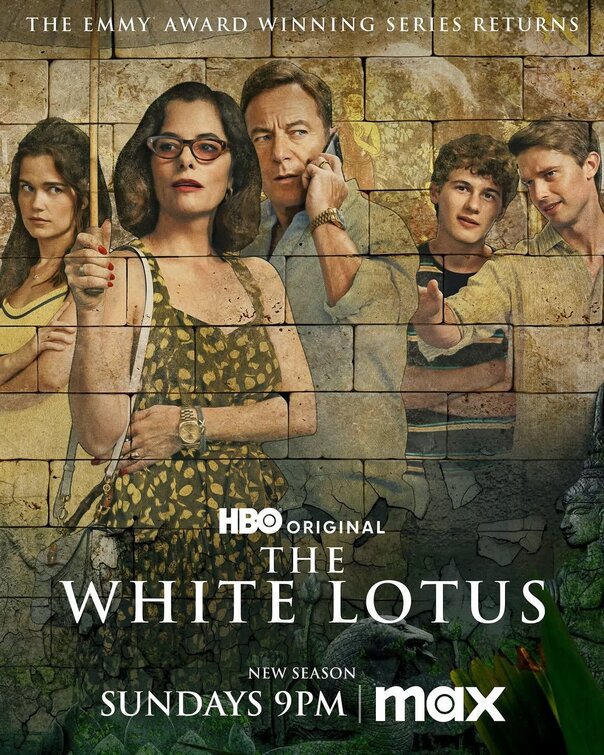
The third season of Mike White's acclaimed HBO anthology series relocates from Sicily to the sun-saturated luxury of Thailand, where a new cast of troubled, privileged guests descends on the White Lotus resort chain. Walton Goggins anchors the ensemble as a Southern businessman whose arrival sets off a chain of events that none of the guests could have anticipated, while Carrie Coon, Jason Isaacs, and Leslie Bibb round out a cast that White deploys with his trademark precision and mordant wit. The Thai setting allows the show to expand its thematic palette into spiritual tourism, Western fascination with Eastern philosophy, and the particular absurdities that emerge when American wealth encounters Buddhist culture.
White uses the resort as a pressure cooker in which characters' facades crumble with accelerating speed — a structure he has refined across the show's previous seasons, each time finding new ways to use the isolated luxury environment as a mirror for broader social anxieties. The production is gorgeous, the writing is as sharp as ever, and the ensemble brings the same combination of dark humor and genuine pathos that made the previous seasons so compelling. Season 3 expands the show's thematic palette further than either of its predecessors, incorporating questions about legacy, mortality, and the specific discontents of the globalized super-rich.
Season 3 confirms The White Lotus as one of the essential television events of the streaming era — a show that manages to be compulsively watchable and genuinely thoughtful about class at the same time. White's dialogue is as sharp as ever, and the Thai locations give cinematographer Ben Kutchins new material in crafting the show's gorgeous, slightly ominous visual style. A satisfying continuation of one of HBO's most distinctive series, streaming on Max.
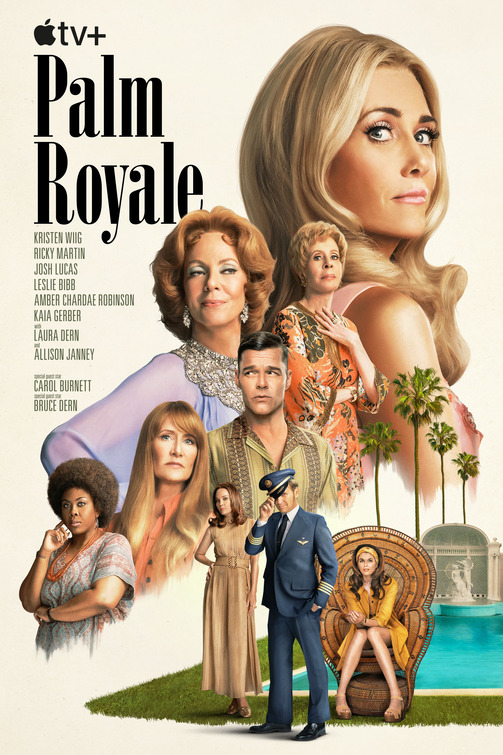
Palm Royale is a sun-drenched comedy set in the glittering social world of 1960s Palm Beach, Florida, following Maxine Simmons, a determined woman of modest means who schemes her way into the exclusive enclave of the ultra-wealthy. Kristen Wiig is radiant in the lead role, bringing both comic precision and unexpected emotional depth to a character who wants desperately to belong and is willing to do almost anything to get there. The series captures the era's spectacular fashion and social rituals with a knowing wit that skewers the absurdities of upper-class aspiration while finding genuine humanity in its characters.
The supporting ensemble is a comedy lover's dream: Carol Burnett plays a comatose socialite whose estate Maxine is determined to inherit, while Allison Janney commands every scene as the imperious queen of Palm Beach society who sees Maxine as both a threat and an amusement. Ricky Martin, Laura Dern, Josh Lucas, and Leslie Bibb round out a cast that seems to be having enormous fun inhabiting this pastel world of parties, rivalries, and secrets. Creator Mindy Kaling and showrunner Abe Sylvia strike a tonal balance between screwball comedy and soap opera melodrama that keeps each episode careening forward in delightful directions.
Palm Royale arrives at a moment of renewed enthusiasm for prestige comedies that blend lush period aesthetics with sharp social satire, and it earns its place in that tradition. Wiig's performance alone would make it required viewing, but the series' generosity toward even its most outrageous characters and its genuine warmth beneath the comedy make Palm Royale a genuinely pleasurable escape into a world of gorgeous excess.
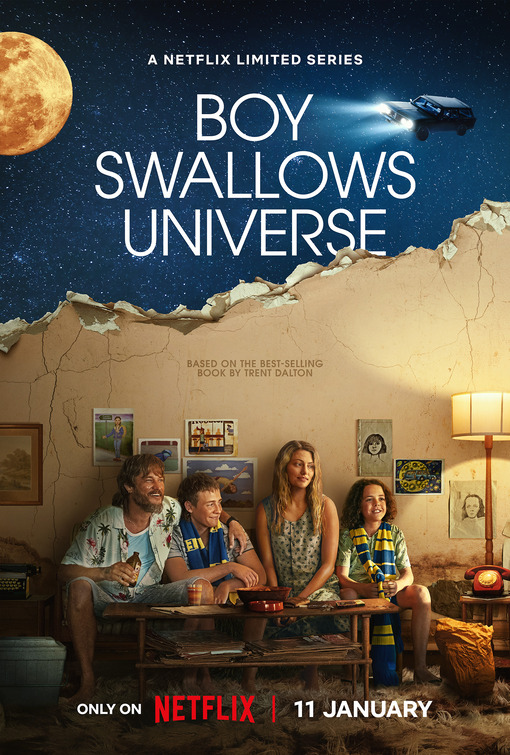
Boy Swallows Universe is a sweeping Australian coming-of-age drama adapted from Trent Dalton's beloved bestselling novel, set in the working-class suburbs of Brisbane during the 1980s. The series follows Eli Bell, a twelve-year-old boy navigating a childhood marked by poverty, drug dealers, a mute best friend who communicates in invisible messages, and a stepfather with deep criminal ties. Despite the darkness surrounding him, Eli possesses an extraordinary imagination and an unshakeable belief that his story will have a meaningful ending, a conviction that drives him toward an unlikely future as a journalist.
The adaptation captures the novel's remarkable balance of gritty social realism and lyrical magic, presenting Eli's world with the heightened intensity of lived childhood memory. The production design recreates the era with loving detail, and the young cast delivers performances of astonishing emotional depth. Travis Fimmel brings brooding complexity to the role of Eli's stepfather Lyle, while Felix Cameron's portrayal of young Eli anchors the series with a naturalism that feels lived-in rather than performed.
Boy Swallows Universe became a cultural event in Australia, the country's most-watched Netflix original series at the time of its release, and earned praise internationally for its ambitious storytelling and emotional impact. Dalton's novel drew heavily from his own childhood, and the series translates its essential spirit intact: a story that insists on finding hope and beauty in the most unlikely circumstances, and on the power of imagination to transform even the hardest life into something worth telling.
.jpeg)
Eric is a riveting Netflix limited series set in 1980s New York, following Vincent Anderson, a volatile puppeteer whose young son Edgar goes missing on the way to school. Benedict Cumberbatch delivers a ferocious and deeply committed performance as Vincent, a man who channels his desperation, guilt, and unraveling mental state into an obsessive quest to construct a massive puppet named Eric. Vincent believes that if the creature his son had drawn is built and broadcast on his television show, it will somehow bring Edgar home. The series unfolds the mystery of Edgar's disappearance against the backdrop of a city grappling with the AIDS crisis, police corruption, and the marginalized communities forgotten by those in power.
Creator Abi Morgan weaves together multiple storylines with remarkable assurance: the detective investigating Edgar's disappearance makes discoveries in the city's underworld that complicate the official narrative, while Vincent's professional and personal life collapses around him in ways that reveal a man long overdue for a reckoning. The 1980s New York setting is recreated with vivid authenticity, capturing both the city's gritty vitality and the systemic injustices of the era.
Eric stands as one of Netflix's most thoughtful and ambitious limited series, praised for the courage of its storytelling and the exceptional quality of its performances. Cumberbatch's portrait of a man in freefall is matched by the ensemble around him, including McKinley Belcher III as the detective whose investigation becomes a moral reckoning of its own. The series asks difficult questions about who society chooses to protect and who it allows to disappear.