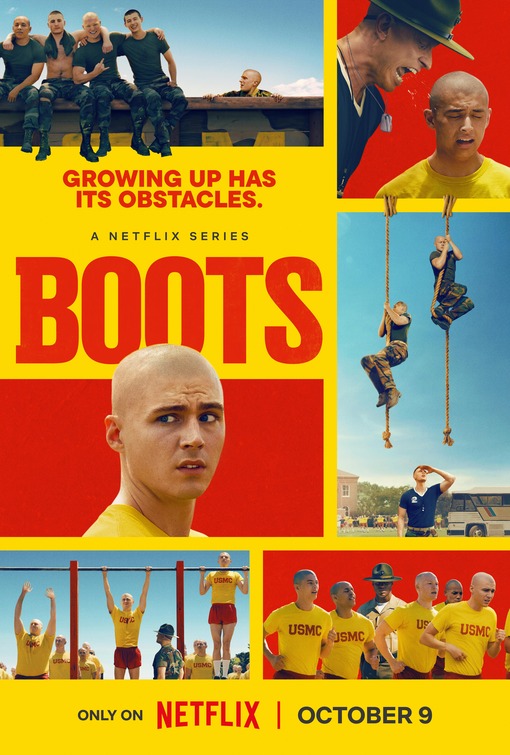
Boots is a Netflix comedy-drama series created by Andy Parker, adapted from Greg Cope White's memoir The Pink Marine. Set in 1990, it follows a directionless young man who impulsively joins the United States Marine Corps alongside his best friend and must survive the brutal crucible of boot camp while carrying a secret about who he is. Executive produced by the legendary Norman Lear in one of his final projects, it balances raw military rigor with warmth and humor.
Miles Heizer stars as Cameron Cope, an aimless teenager with no obvious prospects who signs up largely on a whim and finds himself utterly unprepared for the punishing world of Marine training. Vera Farmiga plays his loving but overbearing mother, and Max Parker, Liam Oh, and Angus O'Brien fill out the ensemble of recruits and drill instructors who become Cameron's unlikely found family. The series mines both comedy and genuine drama from the pressure cooker of basic training and the secrets its recruits carry.
Critics responded enthusiastically, and the show earned a strong 92% Rotten Tomatoes score along with a top-ten streaming run, praised for its heart, its period specificity, and Heizer's grounded lead performance. Though Netflix ultimately did not renew it beyond its first season, Boots was widely embraced as a standout dramedy. It streams on Netflix.
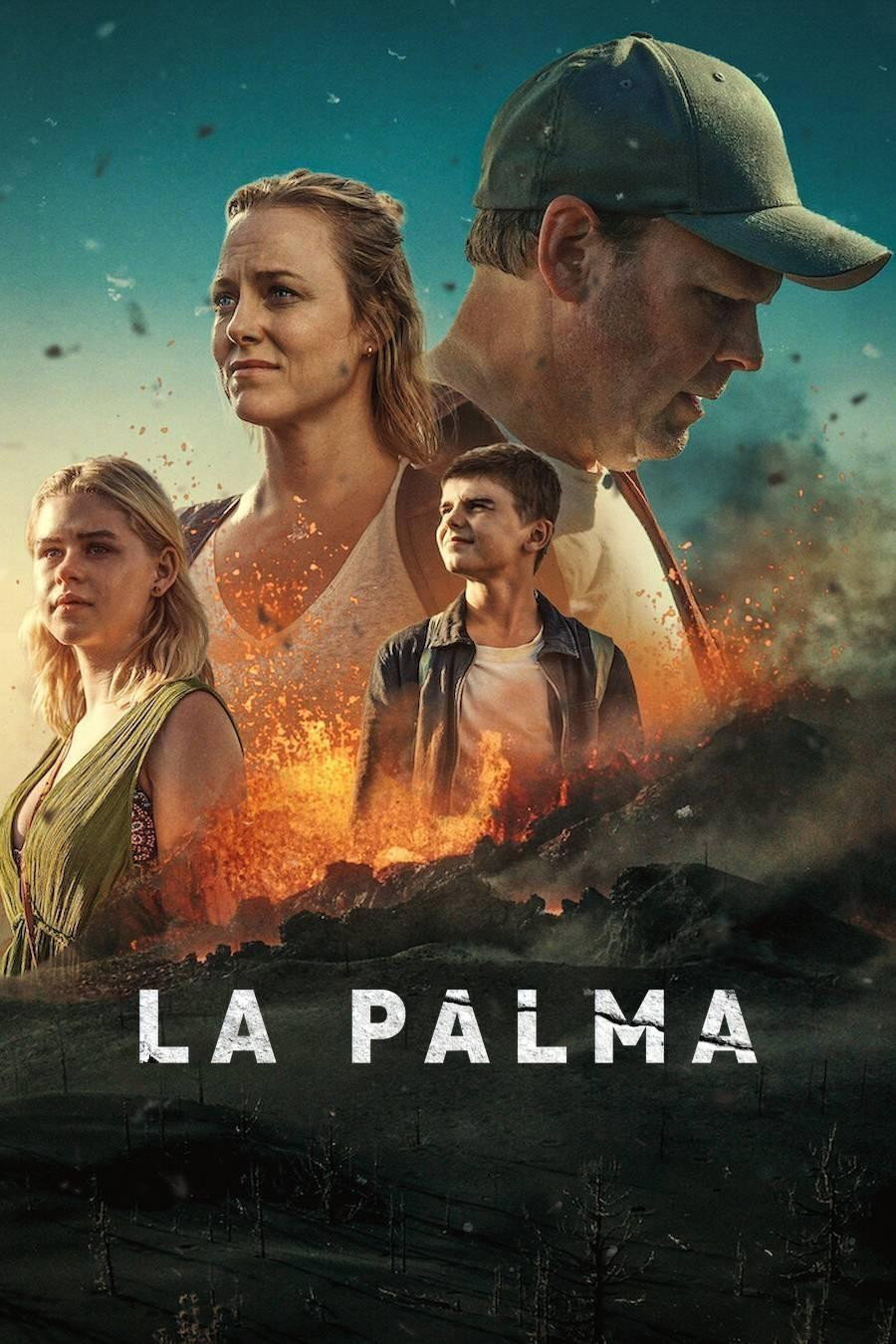
La Palma is a gripping Norwegian disaster drama from Netflix that takes its name from the volcanic island in the Canary Islands chain — a real geological hotspot that scientists have long warned could produce a catastrophic Atlantic tsunami if its western flank were to collapse. The series follows multiple characters on both the island and in Norway as a volcanic eruption escalates beyond all predictions, forcing impossible decisions about evacuation, communication, and the management of panic across two countries simultaneously.
The show belongs to a rich tradition of Nordic disaster and thriller storytelling — precise, character-driven, willing to sit with ambiguity and dread — while drawing specifically from the legacy of Norwegian genre television that includes Occupied and Wisting. Its split focus between La Palma and Norway is both a geographical and thematic device: the series is as interested in how warning systems fail and how institutions respond to crises as it is in the human stories of those directly in the eruption's path. The science is taken seriously, the politics of disaster management are scrutinized, and the personal stakes are never used to simplify what is essentially a systemic story.
La Palma arrived on Netflix as a binge-worthy thriller that doubled as a serious examination of climate vulnerability and emergency preparedness. Filmed partly on location in the Canary Islands and partly in Norway, the series has a visual scope that matches its narrative ambition. It was praised for its restraint — the disaster film's instinct toward spectacle is deliberately held back in favor of procedure, character, and the specific texture of waiting for something catastrophic to either arrive or not. Essential viewing for fans of Nordic drama and anyone drawn to real geological threats.

Apple Cider Vinegar is Netflix's audacious dramatization of one of the most brazen wellness frauds in recent memory — the story of Belle Gibson, the Australian Instagram influencer who built a multimillion-dollar empire on the false claim that she had healed terminal cancer through diet and alternative remedies. Alycia Debnam-Carey stars as Milla (a fictionalized version of Gibson), a young woman who discovers that fabricating a health narrative brings her the connection, meaning, and income that eluded her in her actual life. The series traces the rise and fall of her empire with savage wit and uncomfortable sympathy.
Created by Samantha Strauss and produced in Australia, the series is as interested in the cultural ecosystem that makes frauds like Gibson possible as it is in Gibson herself. It examines the wellness industrial complex — the unregulated testimonial economy of social media, the monetization of vulnerability, the way illness narratives confer moral authority — with the analytical sharpness of a long-form investigation and the visual energy of a thriller. Debnam-Carey's performance is a high-wire act: she makes Milla comprehensible without making her sympathetic, letting the audience understand the hunger driving the lie without excusing its consequences for the cancer patients who trusted her.
Apple Cider Vinegar arrived on Netflix in February 2025 as one of the most discussed new series of the year, praised for its formal ambition and its willingness to interrogate not just its subject but the audience's own relationship to wellness culture. The show's tagline — "A true-ish story, based on a lie" — sets its tone perfectly: a work that knows the difference between truth and narrative, and explores what happens when the two are deliberately confused. It stands as a cautionary tale for the social media age and riveting, uncomfortable television.
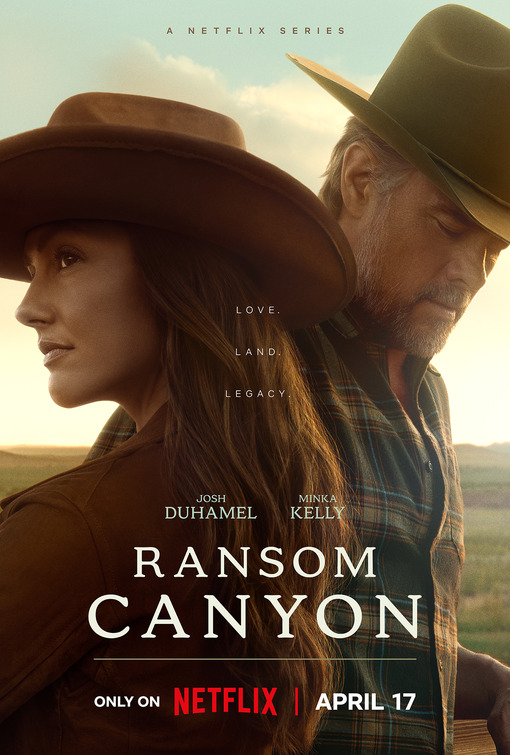
Based on the beloved novels of Jodi Thomas, Ransom Canyon brings the sweeping romance of the Texas Panhandle to Netflix with Josh Duhamel and Minka Kelly as the leads of a multigenerational love story rooted in land, loyalty, and the long shadows that family history casts across our choices. Set in the rugged landscape of West Texas, the series follows Staten Kirkland (Duhamel), the taciturn owner of the vast Kirkland Ranch, and the complicated history between him and Quinn O'Grady (Kelly) — a woman from a neighboring property whose connection to Staten has never fully resolved despite the years and circumstances separating them.
Ransom Canyon works in the tradition of the great American ranch romance, with the visual grandeur of a landscape that demands large screens and the narrative patience of a story interested in people who have lived long enough to accumulate regret. Thomas's novels have sold millions of copies and built a devoted readership precisely because they take their characters' interiority seriously — these are not people who fall in love easily or without consequence, and the series honors that weight. The supporting ensemble deepens the drama by expanding the story beyond its central couple to encompass an entire community navigating change, inheritance, and what it means to stay.
Ransom Canyon premiered on Netflix on April 17, 2025, and became an immediate sensation among viewers drawn to character-driven drama with authentic regional specificity. Praised for its cinematography — West Texas has rarely looked this formally beautiful on a streaming series — and for the lived-in chemistry between Duhamel and Kelly, the show transcends its genre's conventional playbook. It is a series about roots: the ones that hold us to places and people, and the ones that have to be severed before anything new can grow.
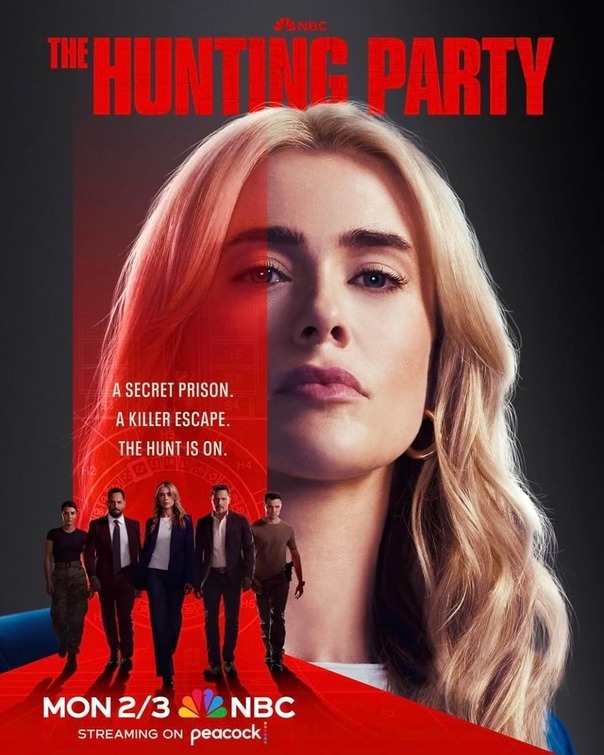
The Hunting Party is a propulsive NBC thriller built around the most dangerous kind of premise: a secure facility housing the world's most dangerous criminals has been breached, and its most unpredictable inmate has escaped. The series follows a specialized elite unit tasked with tracking down the fugitive before they can vanish permanently — a mission that requires the team to think as their quarry does, entering the psychology of someone for whom violence is a first language and evasion is a survival art.
Designed as a tightly wound procedural with a serialized spine, the series benefits from writing that builds tension methodically across each episode while revealing backstory and character in the margins between action sequences. The show draws from the tradition of American cat-and-mouse thrillers — from The Fugitive to Mindhunter — while infusing its premise with contemporary urgency and a genuine interest in the institutional failures that allow someone this dangerous to escape in the first place. The team dynamic at the show's center is one of its strongest elements, each member bringing different expertise to a problem that requires every skill collectively possessed.
The Hunting Party premiered on NBC on February 3, 2025, and became one of broadcast television's most watched new series of the midseason, driven by word-of-mouth enthusiasm for its tightly constructed pilot. Available to stream on Peacock immediately after broadcast, the series represents NBC's commitment to populist genre entertainment executed with genuine craft — a thriller that provides the satisfactions of its form while gesturing toward something larger about the nature of justice and the people tasked with enforcing it.
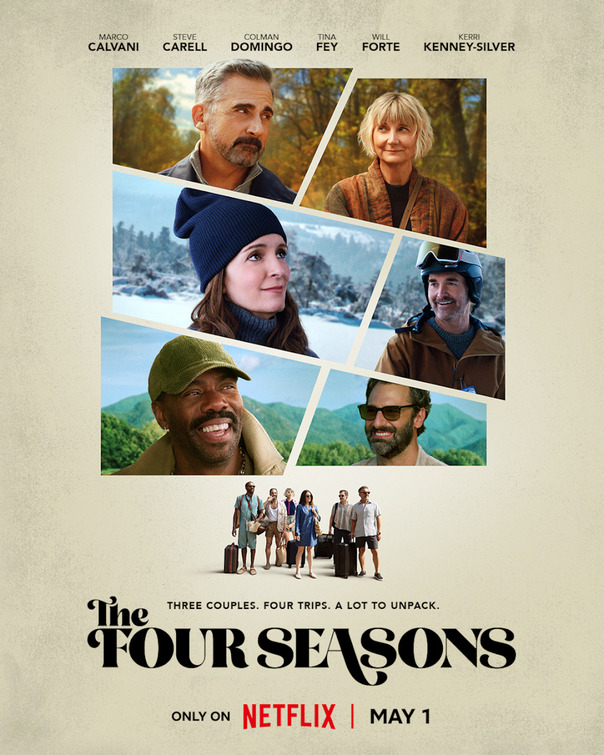
Netflix's The Four Seasons is a warm and quietly heartbreaking comedy about middle age, long marriages, and the way friendships both sustain and complicate our lives. Based on Alan Alda's beloved 1981 film of the same name, the series follows three couples who vacation together across four seasons: spring, summer, fall, and winter. What begins as a celebration of decades-long friendship becomes a reckoning with everything those decades contain, including the secret that one couple is separating — and the disruption that announcement sends through the entire group.
Tina Fey heads the ensemble and her presence — both as a creative force and its most prominent face — gives the show much of its tonal intelligence. The comedy is deeply funny in the way that only works rooted in emotional honesty can be: the laughs arrive from truth, not from performance. Steve Carell, Colman Domingo, Will Forte, Marco Calvani, and Kerri Kenney-Silver round out an ensemble that plays with the genre's romantic comedy conventions while consistently exceeding them. The series never condescends to its characters — these are people in the middle of their lives, trying to figure out what still matters.
The Four Seasons arrived on Netflix as a passionate alternative to youth-fixated content, and found an immediate audience among viewers hungry for comedy that took adult relationships seriously. Praised for the naturalistic ease of its ensemble performances, for each seasonal episode's distinct mood, and for Fey and her collaborators' refusal to resolve the show's central tensions too neatly, it quickly became one of the platform's most-discussed originals of the year. Three couples. Four trips. A lot to unpack.

Set mere days after the catastrophic flood depicted in The Batman, The Penguin follows Oz Cobb as he seizes an opportunity to rise from mid-level enforcer to Gotham's most powerful crime lord. The city is in chaos, the Falcone family is fractured by tragedy, and Oz sees the vacuum at the top as his moment to finally claim the empire he's always believed he deserved.
Creator Lauren LeFranc has constructed a show that draws as much from The Sopranos and The Wire as it does from superhero mythology. Gotham is rendered as a believable urban environment drowning in corruption and grief, where the criminal ecosystem operates with its own bureaucracy, codes, and betrayals. Sofia Falcone — played with magnetic intensity by Cristin Milioti — emerges as Oz's most unpredictable and dangerous adversary.
Colin Farrell disappears entirely beneath prosthetics, a hunched gait, and a thick accent to inhabit Oz with startling humanity and menace. The series explores what drives a man like the Penguin: not just greed, but a lifetime of humiliation and desperate need to be seen as powerful. It's one of the most compelling villain origin stories in superhero television.
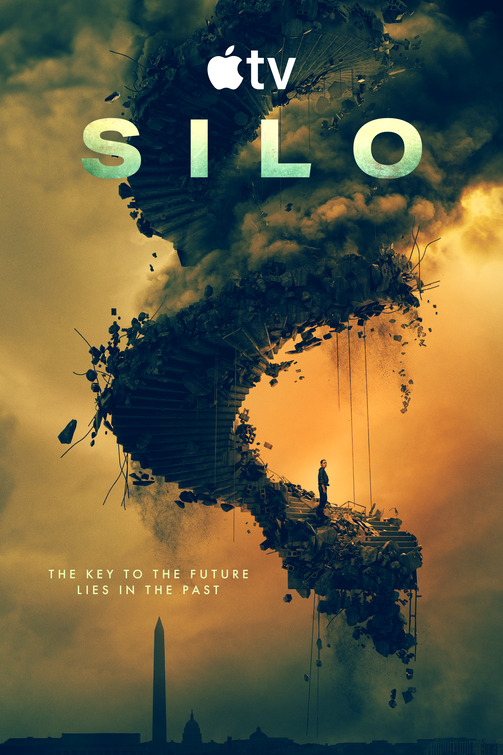
Picking up where the first season's shocking revelations left off, Silo Season 2 follows Juliette Nichols as she navigates the hostile landscape outside the silo while her allies inside fight to survive a fractured society on the brink of civil war. The season expands the show's world dramatically, venturing beyond the claustrophobic confines of the underground bunker into territory rife with danger and unexpected discovery.
Based on Hugh Howey's Wool trilogy, the series continues to explore themes of institutional control, manufactured reality, and the human cost of enforced ignorance. Showrunner Graham Yost has deepened the political intrigue within the silo's governance structure, weaving storylines about class, rebellion, and the moral compromises people make to maintain order.
Rebecca Ferguson anchors the season with a physical and emotional performance that carries the weight of the show's central mystery. The supporting cast — including Common, Tim Robbins, and Harriet Walter — bring texture to a world where every character holds secrets. Silo Season 2 is a confident escalation of one of streaming's most compelling sci-fi dramas.
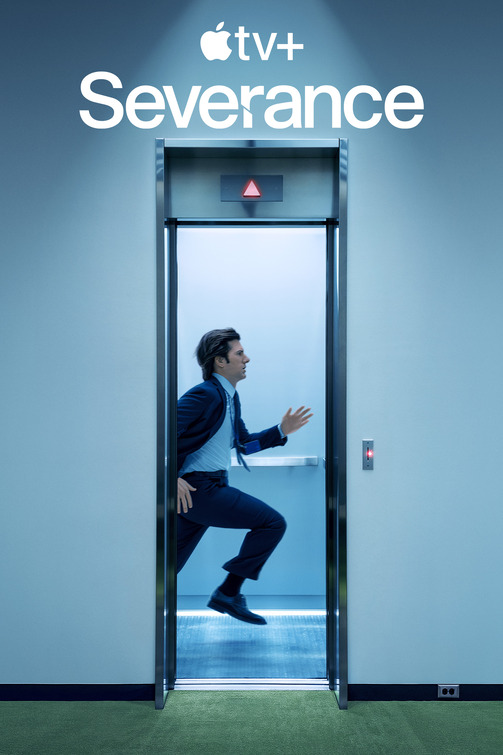
The second season of Severance picks up immediately after the explosive events of the season finale, with Mark Scout and his innie counterparts facing the full weight of what they've uncovered about Lumon Industries. The severed floor is in disarray, loyalties are tested, and the line between the innies' underground rebellion and the outies' oblivious surface lives grows increasingly dangerous.
Creator Dan Erickson and director Ben Stiller have crafted a season that doubles down on the show's signature atmospheric dread. The sprawling Lumon corridors feel even more labyrinthine, and the corporate rituals more sinister. New characters arrive who complicate the innies' fragile alliances, while the mysterious purpose of the severed program inches closer to revelation.
Adam Scott delivers a tour de force performance navigating the fractured psyche of Mark S., while Britt Lower, Zach Cherry, and John Turturro each get expanded arcs that redefine what it means to be severed. Severance Season 2 cements the show as one of television's most original and intellectually daring dramas.
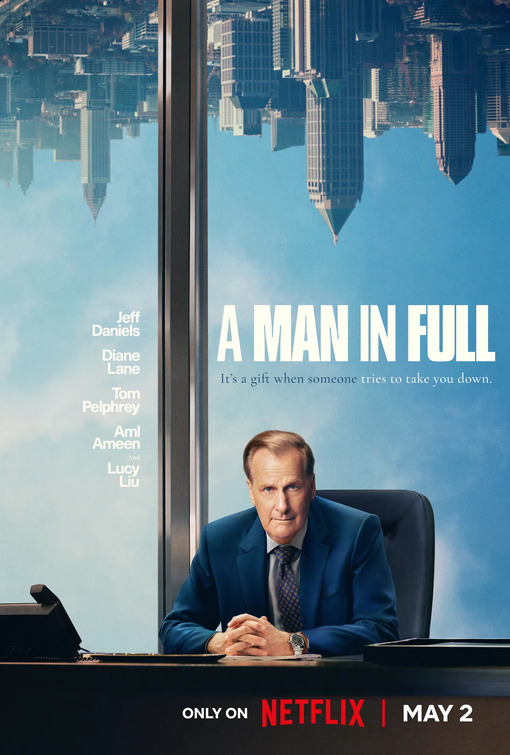
David E. Kelley brings Tom Wolfe's massive 1998 novel to Netflix in a six-episode limited series that captures much of the book's satirical energy while making the necessary compressions for the medium. Jeff Bridges plays Charlie Croker, a larger-than-life Atlanta real estate developer whose financial empire is on the verge of collapse, whose marriage is crumbling, and who finds himself entangled in a racial-political scandal with implications extending across the city's elite. It's a meaty role that draws on everything Bridges does well — swagger, vulnerability, self-delusion — and the veteran actor delivers one of his most physically present performances in years.
The series uses Wolfe's Atlanta as a vehicle for examining the persistent myths of the American South: the plantation-era roots of its real estate fortunes, the complicated performances of masculinity among its business elite, and the racial tensions that simmer beneath the surface of its civic life. Kelley's script doesn't entirely escape the oversimplifications that adapting a 742-page novel inevitably brings, but the production is handsomely mounted and boasts a strong supporting cast including Tom Pelphrey as a conflicted lawyer and Diane Lane as Croker's ex-wife watching his empire crumble from a safe distance.
Matt Bomer co-stars in a parallel storyline following a prisoner whose unlikely journey intersects with Croker's in ways that Wolfe used to explore Stoic philosophy and personal transformation. The Netflix adaptation streamlines some threads, but the essential ambition of Wolfe's project — to paint a panoramic portrait of American class anxiety in a specific time and place — comes through. A Man in Full is entertaining, sprawling prestige television that wears its literary pedigree with pride. Streaming on Netflix.
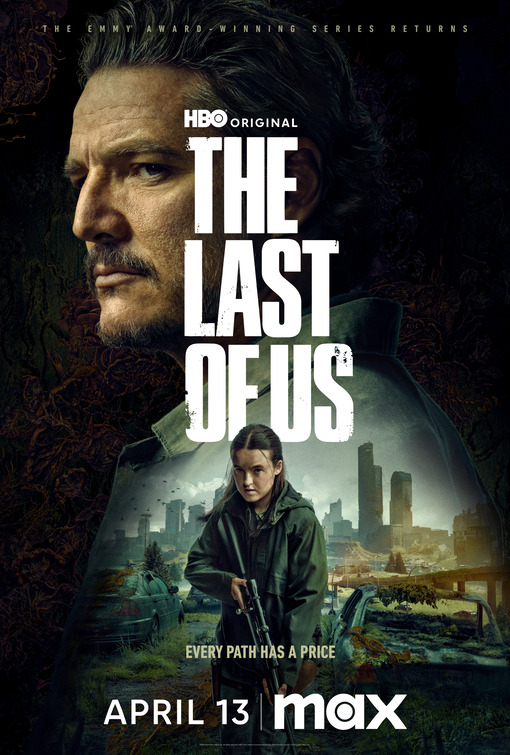
The second season of HBO's acclaimed adaptation arrives with the full weight of expectation and largely meets it. Craig Mazin and Neil Druckmann's continuation draws from the second game in the franchise, picking up several years after Season 1 as Ellie (Bella Ramsey) and Joel (Pedro Pascal) have built a life in the fortified settlement of Jackson, Wyoming. The fragile peace between them is about to be shattered, and the season's central dramatic engine is the chain of events that follows with devastating, morally complex momentum that the show refuses to simplify or sentimentalize.
Season 2 introduces Kaitlyn Dever as Abby, a character whose arc becomes increasingly central as the season progresses, and it's in the writing and performance of Abby that the season takes its boldest creative risks. The show is not afraid to make its audience uncomfortable or to withhold the easy emotional satisfactions that genre convention might demand — a fidelity to the source material that will divide audiences but gives the series a genuine sense of moral seriousness rare in prestige television. The production values remain extraordinary throughout.
The post-apocalyptic Pacific Northwest is rendered with a grim beauty that makes the world feel simultaneously lived-in and haunted. The Last of Us Season 2 is a harder watch than its predecessor, more willing to sit with grief and moral failure, and ultimately more ambitious in what it asks of both its characters and its viewers. Essential television for anyone willing to follow where it leads. Streaming on Max.