The Gilded Age Season 3 continues Julian Fellowes's opulent period drama about old money and new money colliding in 1880s New York. From the creator of Downton Abbey, the HBO series charts the social warfare between the tradition-bound Van Rhijn-Brook household and their brashly ambitious neighbors, the railroad-rich Russells, as America's industrial fortunes rewrite the rules of high society.
Fresh off Bertha Russell's triumph in the opera war, the new season follows the Russells as they reach for even greater heights — most consequentially through the marriage prospects of their daughter Gladys, a storyline that tests how far Bertha (Carrie Coon) will go to secure a title and a legacy. Christine Baranski's imperious Agnes van Rhijn, Cynthia Nixon's Ada and Louisa Jacobson's Marian navigate their own upheavals as the show widens its lens on the era's Black elite through the Scott family.
Premiering June 22, 2025, Season 3 arrived as the drama's most-watched yet, buoyed by its lavish costumes and the real Gilded Age mansions of Newport, Rhode Island that stand in for the Russells' world. Fellowes's blend of drawing-room wit and genuine historical texture has made the series a comfort-watch phenomenon and a showcase for one of television's deepest ensembles.
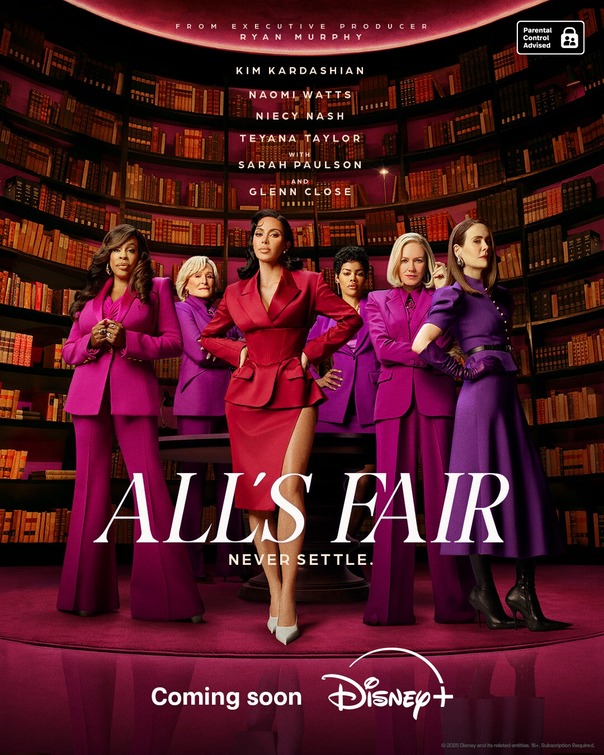
All's Fair is a glossy Hulu legal drama from the prolific Ryan Murphy, the creator behind American Horror Story, Glee, and Feud, built around an all-female divorce law firm in New York City. Co-created by Murphy with Jon Robin Baitz and Joe Baken, the series is a splashy, soap-operatic ensemble piece and one of the most heavily marketed television launches of the year, anchored by a cast of Hollywood heavyweights.
Kim Kardashian stars as Allura Grant, a powerhouse divorce attorney who breaks away from a male-dominated firm to launch her own practice alongside a team of formidable women. Naomi Watts, Niecy Nash-Betts, and Teyana Taylor play her partners, with Sarah Paulson as a fierce rival and Glenn Close among the ensemble, as the firm takes on high-net-worth clients, explosive settlements, and the personal betrayals that blur the line between business and vengeance. The show trades in designer wardrobes, palatial interiors, and the melodramatic power struggles that are Murphy's signature.
The series became a genuine cultural talking point on arrival: it drew scathing reviews from critics, who made it one of the most negatively reviewed shows of the year, even as it pulled enormous viewership numbers for Hulu and quickly earned a second-season renewal. Marking Kim Kardashian's first major scripted leading role, All's Fair is streaming on Hulu.
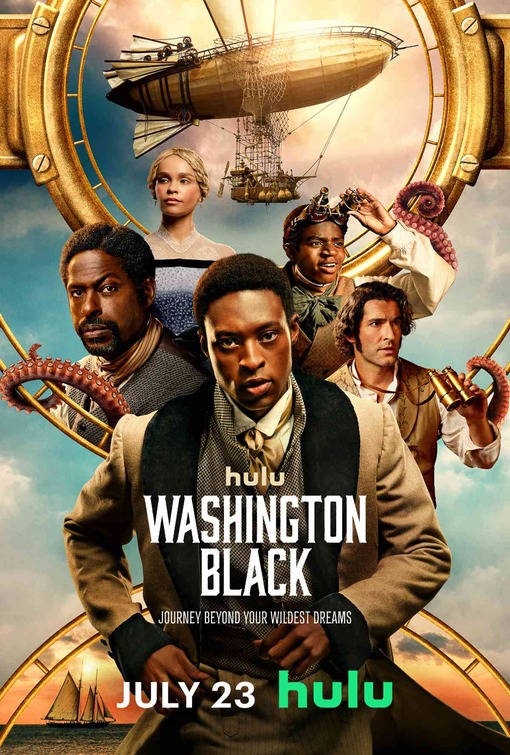
Washington Black is a sweeping Hulu limited series adapted from Esi Edugyan's acclaimed 2018 novel, a coming-of-age adventure that carries its hero from bondage to the far corners of the globe. Ernest Kingsley Jr. stars as the adult George Washington “Wash” Black, a boy born into slavery on a Barbados sugar plantation whose prodigious scientific gifts are recognized by an eccentric abolitionist inventor. When a death forces him to flee, Wash embarks on an odyssey across oceans and continents that transforms him from fugitive to scientist, artist, and explorer.
Sterling K. Brown, who also executive produces, plays Medwin Harris, a charismatic community leader in Halifax whose role is expanded from the novel, while Eddie Karanja plays the younger Wash and Tom Ellis, Iola Evans, and Sharon Duncan-Brewster fill out the cast. Told across dual timelines and multiple continents, the series pairs the propulsive momentum of a nineteenth-century adventure yarn with a thoughtful meditation on freedom, identity, and who gets to author their own story.
Adapting a novel that won Canada's Giller Prize and was shortlisted for the Booker, the series reaches for the grandeur of classic adventure storytelling while centering a Black hero's journey toward self-invention. Lavishly mounted and spanning locations from the Caribbean to the Arctic, Washington Black streams on Hulu.
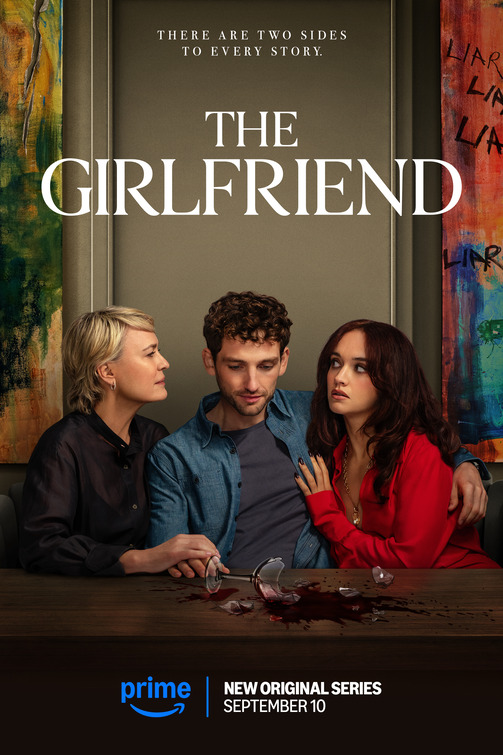
The Girlfriend is a slippery, dual-perspective psychological thriller on Prime Video, adapted from Michelle Frances's 2017 bestselling novel. Robin Wright, who also directs several episodes and executive produces, stars as Laura, a successful gallery owner and fiercely protective mother whose comfortable life tilts off its axis when her adored son Daniel brings home a new girlfriend. Olivia Cooke plays Cherry, the ambitious young woman who may be a devoted partner or a calculating opportunist, depending entirely on whose version of events you believe.
The series' central formal trick is to refuse to take a side. As the relationship between the two women curdles from wary politeness into open psychological warfare, the show replays key events from each woman's point of view, subtly altering a glance, a line of dialogue, or a gesture so that the same scene reads as either menacing or perfectly innocent. The effect keeps the audience permanently off balance, unsure whether Laura is a mother rightly sensing danger or a snob poisoning her son's happiness, and whether Cherry is a victim or a predator.
Wright and Cooke are both excellent, circling each other with icy precision, and critics praised the series as a tense, morally ambiguous adult thriller elevated by its two committed leads. Stylish and coolly unnerving, The Girlfriend is streaming on Prime Video.
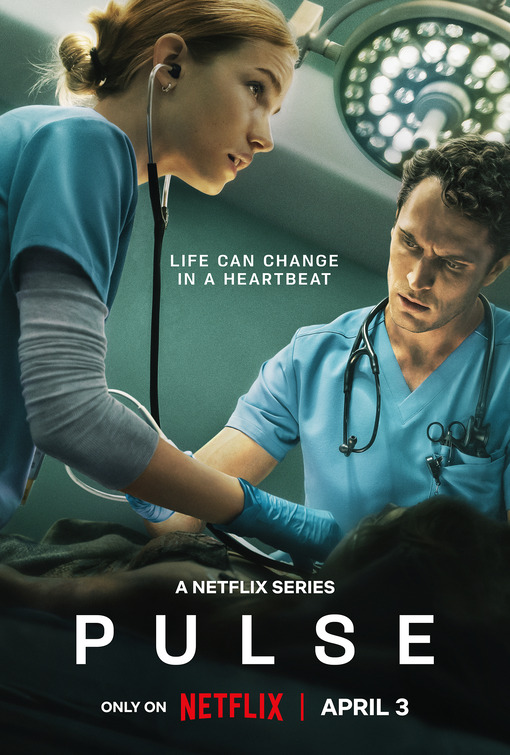
Pulse holds the distinction of being Netflix's first original English-language medical drama, a fast-paced ensemble series set in the high-pressure trauma center of Miami's Maguire Medical Center. Created by Zoe Robyn and developed with veteran showrunner Carlton Cuse, the series follows a team of emergency-medicine residents whose personal and professional lives collide as they treat a relentless stream of patients, all under the added strain of a looming hurricane bearing down on South Florida.
Willa Fitzgerald stars as Dr. Danny Simms, a third-year resident who is unexpectedly promoted to interim chief resident just as she files a complaint against her supervisor and former romantic partner, Dr. Xander Phillips (Colin Woodell). The series unfolds across two timelines, gradually revealing what happened between them while its ensemble contends with the day-to-day intensity of emergency medicine. The result blends the workplace-romance intrigue and rapid-fire medical cases that have long made the genre a staple, updated for a streaming binge model.
Premiering in April 2025, Pulse drew a large audience hungry for a new medical drama and quickly became one of Netflix's most-watched titles of its season, even as critics offered mixed reviews. Its central storyline, which foregrounds a workplace power imbalance and a harassment complaint, gave the familiar genre a contemporary edge. It streams on Netflix.
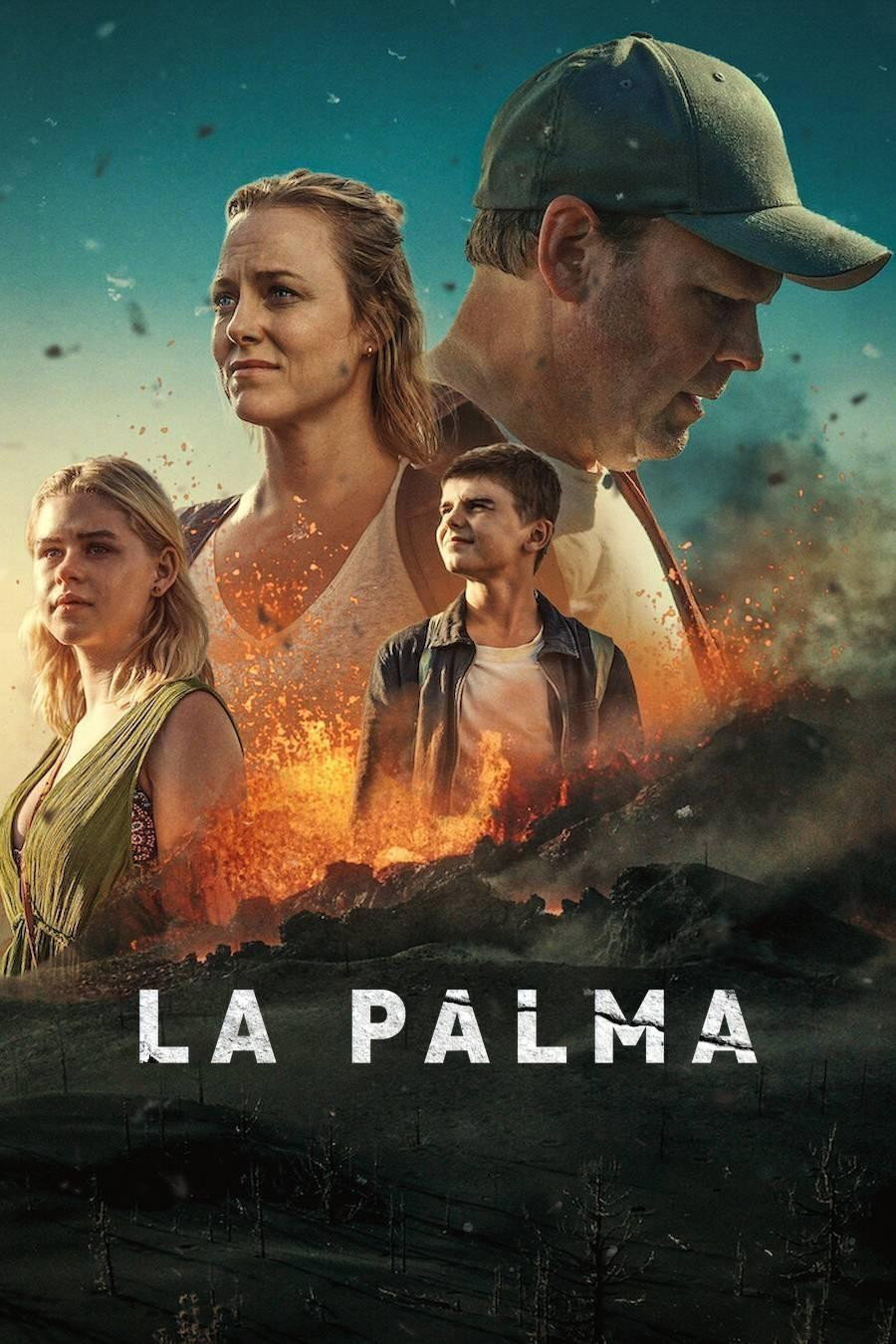
La Palma is a gripping Norwegian disaster drama from Netflix that takes its name from the volcanic island in the Canary Islands chain — a real geological hotspot that scientists have long warned could produce a catastrophic Atlantic tsunami if its western flank were to collapse. The series follows multiple characters on both the island and in Norway as a volcanic eruption escalates beyond all predictions, forcing impossible decisions about evacuation, communication, and the management of panic across two countries simultaneously.
The show belongs to a rich tradition of Nordic disaster and thriller storytelling — precise, character-driven, willing to sit with ambiguity and dread — while drawing specifically from the legacy of Norwegian genre television that includes Occupied and Wisting. Its split focus between La Palma and Norway is both a geographical and thematic device: the series is as interested in how warning systems fail and how institutions respond to crises as it is in the human stories of those directly in the eruption's path. The science is taken seriously, the politics of disaster management are scrutinized, and the personal stakes are never used to simplify what is essentially a systemic story.
La Palma arrived on Netflix as a binge-worthy thriller that doubled as a serious examination of climate vulnerability and emergency preparedness. Filmed partly on location in the Canary Islands and partly in Norway, the series has a visual scope that matches its narrative ambition. It was praised for its restraint — the disaster film's instinct toward spectacle is deliberately held back in favor of procedure, character, and the specific texture of waiting for something catastrophic to either arrive or not. Essential viewing for fans of Nordic drama and anyone drawn to real geological threats.
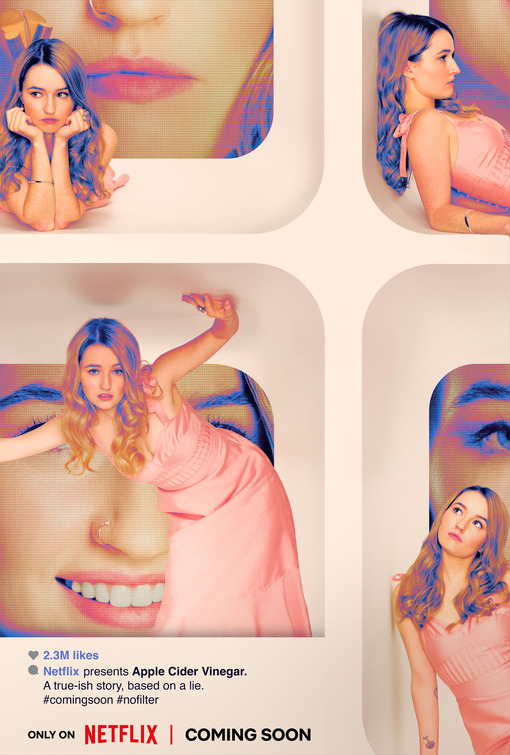
Apple Cider Vinegar is Netflix's audacious dramatization of one of the most brazen wellness frauds in recent memory — the story of Belle Gibson, the Australian Instagram influencer who built a multimillion-dollar empire on the false claim that she had healed terminal cancer through diet and alternative remedies. Alycia Debnam-Carey stars as Milla (a fictionalized version of Gibson), a young woman who discovers that fabricating a health narrative brings her the connection, meaning, and income that eluded her in her actual life. The series traces the rise and fall of her empire with savage wit and uncomfortable sympathy.
Created by Samantha Strauss and produced in Australia, the series is as interested in the cultural ecosystem that makes frauds like Gibson possible as it is in Gibson herself. It examines the wellness industrial complex — the unregulated testimonial economy of social media, the monetization of vulnerability, the way illness narratives confer moral authority — with the analytical sharpness of a long-form investigation and the visual energy of a thriller. Debnam-Carey's performance is a high-wire act: she makes Milla comprehensible without making her sympathetic, letting the audience understand the hunger driving the lie without excusing its consequences for the cancer patients who trusted her.
Apple Cider Vinegar arrived on Netflix in February 2025 as one of the most discussed new series of the year, praised for its formal ambition and its willingness to interrogate not just its subject but the audience's own relationship to wellness culture. The show's tagline — "A true-ish story, based on a lie" — sets its tone perfectly: a work that knows the difference between truth and narrative, and explores what happens when the two are deliberately confused. It stands as a cautionary tale for the social media age and riveting, uncomfortable television.
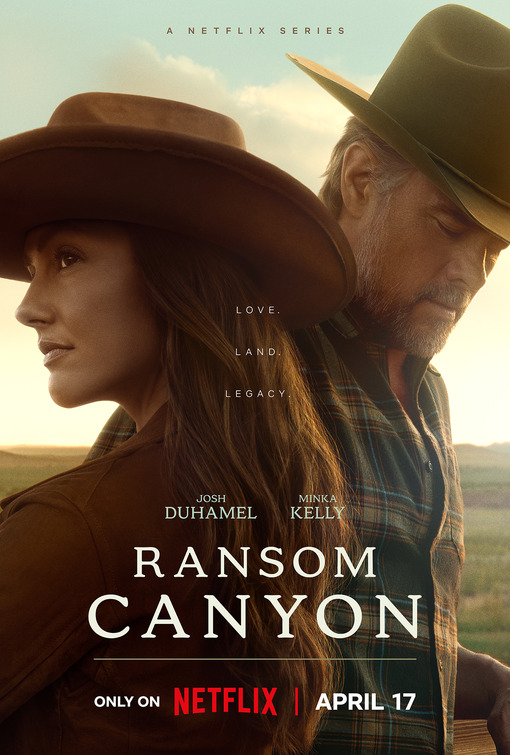
Based on the beloved novels of Jodi Thomas, Ransom Canyon brings the sweeping romance of the Texas Panhandle to Netflix with Josh Duhamel and Minka Kelly as the leads of a multigenerational love story rooted in land, loyalty, and the long shadows that family history casts across our choices. Set in the rugged landscape of West Texas, the series follows Staten Kirkland (Duhamel), the taciturn owner of the vast Kirkland Ranch, and the complicated history between him and Quinn O'Grady (Kelly) — a woman from a neighboring property whose connection to Staten has never fully resolved despite the years and circumstances separating them.
Ransom Canyon works in the tradition of the great American ranch romance, with the visual grandeur of a landscape that demands large screens and the narrative patience of a story interested in people who have lived long enough to accumulate regret. Thomas's novels have sold millions of copies and built a devoted readership precisely because they take their characters' interiority seriously — these are not people who fall in love easily or without consequence, and the series honors that weight. The supporting ensemble deepens the drama by expanding the story beyond its central couple to encompass an entire community navigating change, inheritance, and what it means to stay.
Ransom Canyon premiered on Netflix on April 17, 2025, and became an immediate sensation among viewers drawn to character-driven drama with authentic regional specificity. Praised for its cinematography — West Texas has rarely looked this formally beautiful on a streaming series — and for the lived-in chemistry between Duhamel and Kelly, the show transcends its genre's conventional playbook. It is a series about roots: the ones that hold us to places and people, and the ones that have to be severed before anything new can grow.